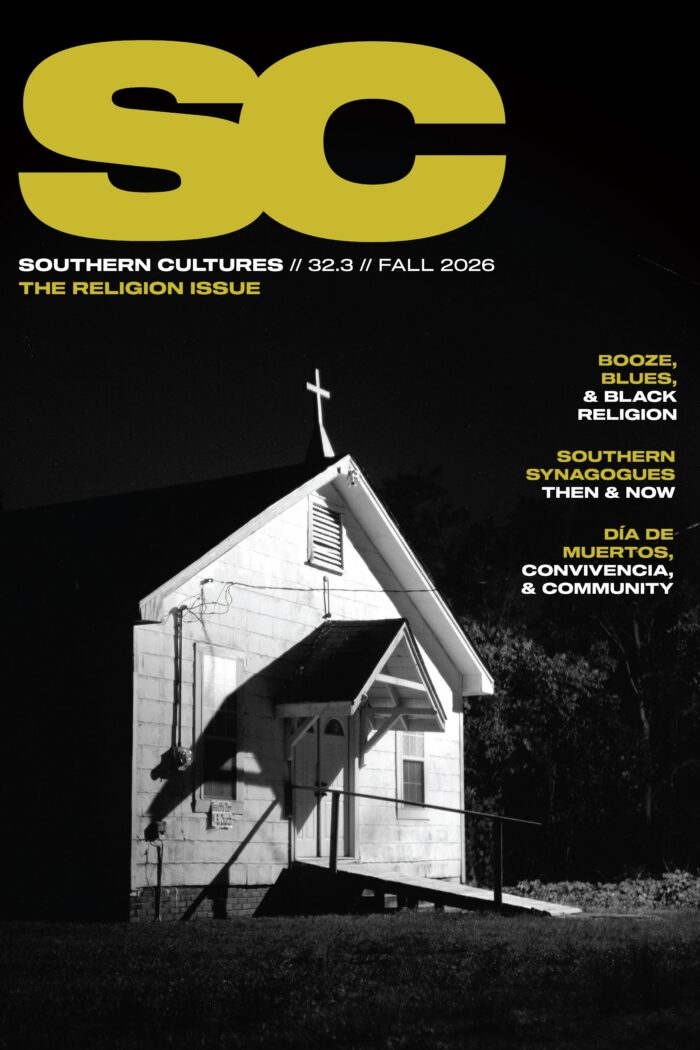
In his recent magnum opus, Religion in the Lands that Became America, religious studies scholar Thomas Tweed locates the earliest evidence of religious practice in the Americas at the Horn Shelter burial site, not far from present-day Waco, Texas. More than eleven thousand years ago, a man and a girl were buried, on their sides, facing the same direction. The man, likely a shaman, who manipulated the physical world to engage the spiritual realm and enact human desires, was buried with more than one hundred carefully arranged objects, including beads and animal artifacts like turtle shells. In an earlier work,Tweed defined religions as “confluences of organic-cultural flows that intensify joy and confront suffering by drawing on human and suprahuman forces to make homes and cross boundaries.” While these Indigenous practitioners in what we now know of as the South left no written scripture or comprehensive theology, long before European colonization they were, through shamanism and burial practices, engaging in what we might call religion.1
Religion is a messy category, one that scholars have defined in countless ways. In the US South, “religion” has most often meant Christianity. Forms of Christianity have profoundly shaped understandings of race, gender, politics, and nearly every other facet of private and public life in the region. It is impossible to understand southern history without them.
In the earliest years of European colonization, parts of the region were under the rule of the Spanish and French empires that demanded Catholic uniformity. Protestant England allowed more room for individual conscience, although the 1606 charter for Jamestown mentioned the expectation that the colony “may, by the Providence of Almighty God, hereafter tend to the Glory of his Divine Majesty, in propagating of Christian Religion” to Indigenous peoples.2
Historians have tended to see the colonial South as irreligious compared to Puritan New England, but it was, in its own way, imbued with Christianity. Whereas the northern colonies varied in their religious establishments, the southern colonies all established the Church of England, meaning that public funds went to the support of Anglican churches. The Fundamental Constitutions of Carolina, coauthored in 1669 by a young John Locke, anticipated an Anglican establishment, but also made the case for freedom of worship for “Jews, heathens, and other dissenters.” Carolina, and Georgia after it, did host significant communities of dissenting Protestants, including Baptists, Quakers, Presbyterians, Huguenots, Lutherans, Moravians, and others. After American Independence, which led to legal disestablishment, new groups, including Catholics and Enlightenment-inspired Unitarians, also gathered.3
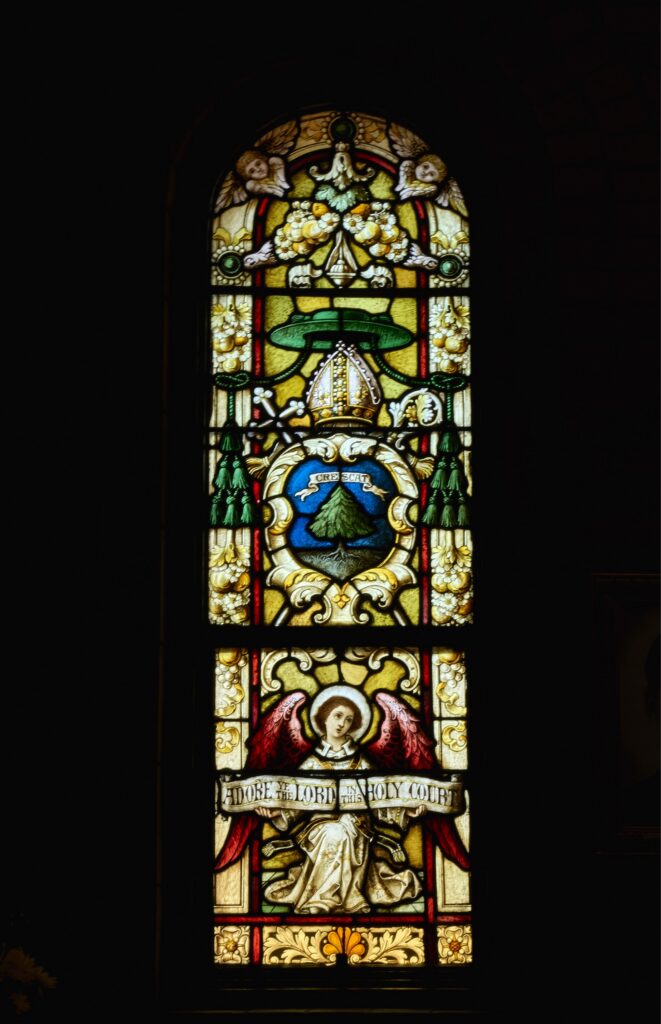
In the mid-eighteenth and early nineteenth centuries, revivalists brought the movements known, respectively, as the “Great Awakening”and the “Second Great Awakening” to the region, helping to popularize a new cross-denominational style of Protestantism. Its proponents encouraged individual experiences of conversion, emphasized the centrality of biblical texts, and worked to enshrine forms of piety—like Sabbath observance—in state law, creating what historian David Sehat has described as a “moral establishment.”4
While initially Baptists and Methodists were rebellious, outsider denominations, their innovative ecclesiastical forms, along with their leaders’ acquiescence to the priorities of southern enslavers, helped them become the most popular Protestant denominations in the region. Baptists were known for their objection to infant baptism—early on, they denigrated other Christians as “infant sprinklers”—as well as their insistence on congregational autonomy and religious liberty. Methodists sent preachers on circuits to spread resources across a larger number of far-flung congregations, organized class meetings to keep members accountable, and worked toward the achievement of Christian perfection.
In the twentieth century, southerners embraced two new Christian movements: Pentecostalism and Fundamentalism. The former offered its followers blessings of the holy spirit, like faith healing and glossolalia, or speaking in tongues. Proponents of the latter vehemently defended the literal truth of the biblical text. They ascended to the national stage in 1925, when John Scopes, a teacher in Dayton, Tennessee, was put on trial for teaching Darwin’s theory of evolution instead of the biblical account of creation.
The most recent Pew Religious Landscape Study highlights the importance of Christianity in the contemporary South. Whereas Christians constituted 62 percent—and evangelical Protestants, 23 percent—of the total US population in 2024, their numbers were 68 percent and 31 percent, respectively, in the South. On a range of related metrics—like belief in God,religious attendance, and importance of religion in one’s life—southerners reported greater levels of piety than Americans in general.5
There have always been multiple Christianities in the South, and multiple religious systems.Native Americans have long nurtured their own rituals, divinities, and ways of understanding human existence. So too did the millions of Africans enslaved in the region until 1865. They came with Catholicism and Islam, as well as diverse African traditions. Early Virginia laws mention“frequent meeting” among enslaved people for “feasts and burrialls” in order to prohibit them.
Historian Alexis Wells-Oghoghomeh has argued that rather than convert wholesale to Christianity, enslaved people engaged with Christianity as one source of spiritual power that they could incorporate into African-derived cosmologies. The two most famous Black antislavery insurrectionists, Denmark Vesey and Nat Turner, both grounded their efforts in Christian religious authority. Vesey was a member of the African Methodist Episcopal Church in Charleston; Black Protestant churches like it would grow by leaps and bounds after emancipation, as large numbers of freed people sought spiritual autonomy and community. Even today, 9 percent of southerners (as compared to 5 percent of Americans) are members of historically Black Protestant churches.6
Jews, who had been banned from English territory altogether until the mid-1650s, were present in Carolina in the 1690s and were worshipping the God of Israel in Georgia in 1733. The initial Jewish settlers were descendants of Portuguese Jews who had converted to Catholicism in 1492 and maintained Judaism in secret, but they were joined by immigrants from Germanlands, Eastern Europe, the Ottoman Empire, and other places of Jewish settlement around the globe. While many southern Jews embraced the modernizing approach of Reform Judaism, others maintained a commitment to the obligations of Jewish law, affiliating with Orthodox Judaism or the middle path of Conservative Judaism.
The presence of Jews in the region was made possible by an early change, in the English colonies, from “Christian” to “white” as the primary category for accessing rights. This shift was designed to limit Black and Native freedom, even as it paved the way for white people to practice non-Christian religions. And yet, Christian residue lingered within southern conceptions of whiteness, and vice versa. This has been visible in occasional flareups of antisemitism, most dramatically in 1915, when a mob lynched a Jewish man named Leo Frank in Marietta, Georgia. It followed a barrage of vicious rhetoric that had described Jewish difference in both racial and religious terms. At the same time, Black churches and religious leaders were rarely granted the same respect as white churches and even, occasionally, as white synagogues.When the Temple in Atlanta was bombed in 1958, it inspired widespread outrage, which some observers noticed had been missing from the numerous white supremacist attacks on Black churches. And of course, in 2015, nine members of a Bible study group were massacred at Denmark Vesey’s church, now known as Mother Emanuel; two years later, white supremacists opposing the removal of Confederate monuments chanted “Jews will not replace us” as they marched through the streets of Charlottesville, Virginia. The history of southern racism, in short, is not fully separable from the history of religious bigotry.
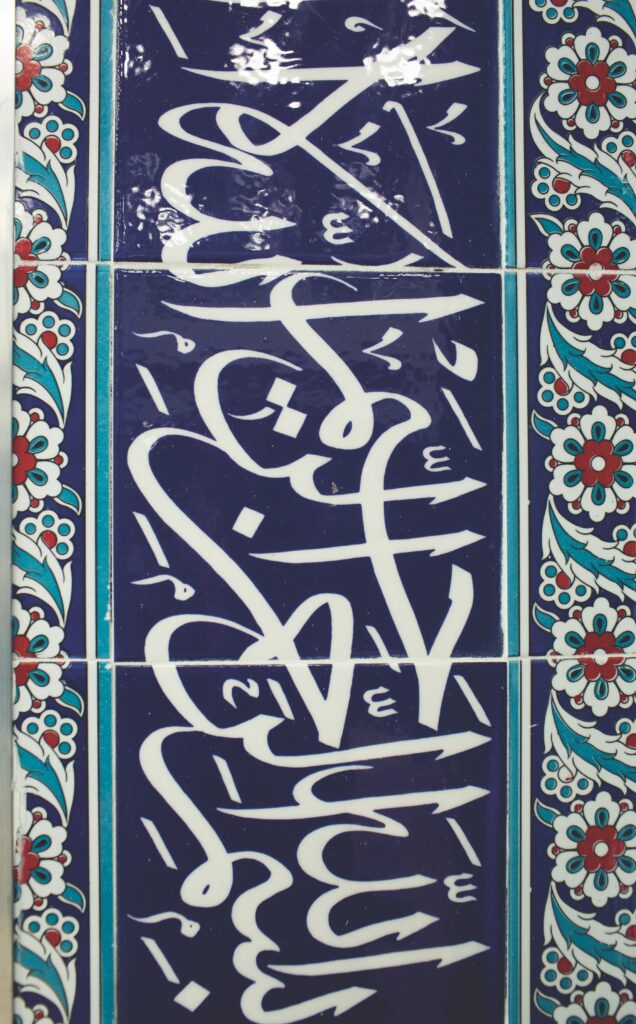
The essays in this issue describe individual pieces of a massive puzzle of southern religious life, highlighting a multiplicity of settings and traditions over the last century. In terms of geography, some contributions cover the whole region, while others offer case studies rooted in New Orleans, Louisiana; Durham, North Carolina; Warm Springs, Georgia; and Dallas, Texas. The region does not appear singular, or hermetically sealed; we meet recent arrivals from other regions and countries, as well as members of the southern diaspora in the North. There are, in fact, many Souths, shaped by different religious histories of migration. Absent from these essays, but increasingly present in many southern communities—and expressed in the Snapshots in the issue—are traditions like Buddhism, Islam, Shintoism, and many South Asian religions,which have been brought by more recent migrants to the South; they too have worked to live according to their traditions while navigating the rocky shoals of post–Jim Crow racial politics.In this issue, we do encounter white, Black, and Mexican American communities and a number of Christianities, as well Jewish, Africana, and Indigenous American traditions. We learn about ministers and houses of worship, as well as idiosyncratic forms of “lived,” “folk, or “popular” religion, and what scholars of religion call “civil religion.” This term, originally coined by sociologist Robert N. Bellah, refers to forms of thought and practice that sacralize a political entity, like the nation. Across this array of geographic and religious examples, I see several overarching themes.7
First, the South is a place where moral reasoning is high stakes and politically inflected.Christian ideas shape public debates, which can themselves be understood as more broadly religious, in the terms defined by Kathryn Lofton. For her, religion is “a word to intensify what we do when we name authority, practice interactions, and interpret life itself.” Religion was certainly present in this way, in the antebellum South, when white Christians marshalled biblical texts to defend slavery and secession. Indeed, one of the region’s most important religious institutions—the Southern Baptist Convention—owes its existence to this debate, which also led to regional divides, albeit less permanent ones, among Methodists and Presbyterians.8
Particular Christian ideas of right living also led to the temperance movement and the eighteenth amendment to the US Constitution, which are important backdrops for Ahmad Greene-Hayes’s essay about Black alcohol consumption in the mid-twentieth century. Even as alcohol could soothe the pain of southern racism, and coexist with pious churchgoing,some saw it as fuel for Black sin and crime. A century later, and following a Civil Rights–era reorientation of white Christian politics away from its most explicitly racist positions, Michaela Calahan shows us how Christians in North Texas diverge in their evaluation of Immigration and Customs Enforcement. Some pray for ICE agents as vehicles of morally right “order,”while others practice “accompaniment” with immigrants impacted by ICE procedures.
Second, southern religious actors regularly orient themselves toward literal and symbolic ancestors. In this way, they align with Robert Orsi’s understanding of religion as “a network of relationships between heaven and earth involving humans of all ages and many different sacred figures together.” All religious communities are of course products of those who came before them, and many orient themselves to the past. We can see this, for instance, in the white southern civil religion of the Lost Cause, which turned Confederate soldiers into celebrated martyrs.9
In this issue, we encounter ancestors explicitly in the practices of women like Mama Jamilah and Sula Spirit, interviewed by Mark K. Dolan. When Mama Jamilah plays the drums in Congo Square in New Orleans, it is in keeping with, and in order to honor, enslaved African ancestors. Sula Spirit has made her home into a shrine for honoring spirits and ancestors alike. In Durham,North Carolina, the Day of the Dead celebration helps community members mourn their physically distant relatives as well as the deceased children of the Avila Center’s cemetery, who serve as proximate chosen kin. The Little White House turns Franklin Delano Roosevelt into a sacred political ancestor for southern and northern liberals alike. Finally, Emily Williams’s photographs of small-town synagogues are arguably themselves a kind of ancestor work; her black-and-white images, in particular, movingly document Jewish communities that are no more.
It is striking how many of the essays center religious diversity in the contemporary South. These authors clearly demonstrate that religion—including, but not limited to, evangelical Protestantism—continues to shape how southerners navigate their lifeworlds. The so-called Bible Belt, in other words, is studded with a range of other sacred texts, ideas, and practices. According to the Pew Survey, 32 percent of southerners are unaffiliated or practice non-Christian “world religions.” This is less than in the North, where that number is 36 percent, but still significant—it is roughly equal in size to the region’s culturally dominant evangelicals.10
The authors in this issue help us understand some of the texture of religious life among this population. At the same time, they model forms of engagement across lines of difference. When an author listens to Black women describing their spiritual histories, documents the sacred spaces of struggling Jewish communities, introduces undergraduates to the work of a Día de Muertos ceremony, or observes Christians on opposite sides of the immigration debate, they are doing something important and all too rare. To offer one final definition, David Chidester understands religion as “ways of being a human person in a human place.” These authors, then,are exploring various religious traditions in the South, but they are also working to understand the humanity of their neighbors with both sensitivity and clarity. At this particularly fraught moment in American history, we could all use a little more of that.
Shari Rabin teaches in Jewish studies and religion at Oberlin College. She is the author of Jews on the Frontier: Religion and Mobility in Nineteenth-Century America (New York University Press, 2017) and The Jewish South: An American History (Princeton University Press, 2025). She is currently vice president of the Southern Jewish Historical Society.
Header image: Sanctuary in Congregation Beth Israel, Corpus Christi, Texas, 2022, by Emily Williams.
NOTES
- Thomas Tweed, Cross and Dwelling: A Theory of Religion (Harvard University Press, 2006), 54; Thomas Tweed, Religion in the Lands that Became America: A New History (Yale University Press, 2025), 21, 35–41.
- “The First Charter of Virginia; April 10, 1606,” The Avalon Project: Documents in Law, History and Diplomacy, accessed July 6, 2026, https://avalon.law.yale.edu/17th_century/va01.asp.
- “The Fundamental Constitutions of Carolina: March 1, 1669,” The Avalon Project: Documents in Law, History and Diplomacy, accessed July 6, 2026, https://avalon.law.yale.edu/17th_century/nc05.asp.
- David Sehat, The Myth of American Religious Freedom (Oxford University Press, 2011).
- “Religious Landscape Study,” Pew Research Center, accessed July 6, 2026, https://www.pewresearch.org/religious-landscape-study/.
- “Slavery Becomes a Legal Fact in Virginia,” in A Documentary History of Slavery in North America, ed.Willie Lee Rose (University of Georgia Press, 1999), 16–22; Alexis Wells-Oghoghomeh, The Souls of Womenfolk: The Religious Cultures of Enslaved Women in the Lower South (University of North CarolinaPress, 2021); “Religious Landscape Study.”
- Robert N. Bellah, “Civil Religion in America,” Daedalus 96, no. 1 (Winter 1967): 1–21.
- Kathryn Lofton, Consuming Religion (University of Chicago Press, 2017), 13.
- Robert Orsi, Between Heaven and Earth: The Religious Worlds People Make and the Scholars Who Study Them (Princeton University Press, 2005), 2.
- “Religious Landscape Study.”
- David Chidester, Authentic Fakes: Religion and American Popular Culture (University of California Press, 2005), vii.