
My mother loves to tell the story of how I came into the world “bellering like a bull” and continued throughout my childhood to produce cries that rattled the walls, matched by an equally big laugh. This is proof, she implies, that I’ve always been more fire than she can handle. But life has a way of dulling that edge. Heartbreak, responsibility, and the need to protect myself taught me to put on armor. I became her toughest, most independent child—the one my parents didn’t have to worry about.
The one place that armor was never needed was with my dad. I was softer in his presence because it was so easy to be loved by him. The way he beamed when he saw me taught me so much about what love is.
Alzheimer’s disease dulled that twinkle in his eye. For years, I have grieved losing his love and adoration, losing the positive spirit and servant’s heart that he brought to everyone in our family. Now, though, I find myself softening after the recent death of my father. His illness was long, and the loss was gradual. But when the end came, I was caught off guard by how deep the physical loss still felt. In his last nights, I rolled the hospital couch over next to his bed and slept with my hand on his forearm. I prayed that as his kind and loving spirit left his body, at least some of it would find a home in my heart, that I may be more like him.
As his organs slowed, he retained some fluid. His arms reminded me of the thick, brickmason’s arms I had grown up with instead of those atrophied by old age and disease. I remembered his strong arms that held me as I rode on the front of his water skis, and his capable hands, always ready to hang a shelf or load a trailer to move me across the country. I wrapped my hand around his index finger to remember the dad who guided my sister and me down the church steps, always leaving it up to us whether to hang on. They were the same fingers that skillfully lowered fish into popping oil and affectionately booped dozens of baby noses over the years.

In the stillness of his hospice rest, I could almost imagine him as his old self again, before Alzheimer’s began its long erasure. He was my rock, my greatest fan, my steadiest, most grounding, and dependable love. The weight of his hands in mine carried the memory of all the ways he had carried me. Letting go felt like losing not just his touch but the very ground beneath me.
Those first days after my dad’s death, I moved through time like a zombie, wrung out from hospital vigils and from our family’s grief lashing at each other in different directions. But the second week, I unfurled and looked around. Something had shifted. Maybe the crisp fall air stirred me. Maybe grief wears different clothes every day. But suddenly I found myself porous—music pierced me, a stranger’s kindness felt holy, even eye contact with the train conductor felt like communion. I both loved and wept more easily. I am now trying to stretch those feelings out and into personal growth. Instead of hurrying past what I feel, I want to lean into it—to pay attention and to treat tenderness as a gift of insight rather than a weakness. Perhaps this isn’t a departure from who I was but a return to the truest self I’ve sheltered all along.
What the Figs Can Teach Us
This morning, I carried that intention into the garden, where picking figs has become a meditation on life and love and loss. I took a bowl from the kitchen and stepped out the back door to the corner of the house. My late-summer garden is messy and fading and smells of fermented fig funk. Tall, yellowed weeds, still damp from last night’s rain, slapped my bare legs as I stepped into September’s interwoven fecundity and decline. I surveyed the whole fig tree, surprised to see how many fruits had ripened to yellow, since I had picked some just two days earlier.
Setting the bowl beneath the branches, I reached for the nearest fig. I pinched the stem between my thumb and forefinger right where it met the branch. Then I lifted it up and away with a gentle twist and turned the fig over into the delicate cradle of my palm to avoid squishing it. Figs cannot be greedily stripped all at once. Each must be held gingerly, coaxed with care from just the right angle.
I juggled figs between my hands, then crouched to nestle them in the bowl before rising into the boughs again. I looked up, surprised to see more figs revealed from this new vantage point, and considered them one by one. Some things ripen in shadow until a second glance reveals them.
I looked for a slight droop in the stem, which means the fruit is heavy with sweetness. I pressed its neck gently to gauge the risk of leaving it one more day. It would be sweeter. But it may be ruined. Or perhaps that is a self-centered view of it. How can abundance be ruined by offering it to others? Still, there’s a gamble in waiting for the sweetest figs.
Because I skipped a day of picking, many figs are dripping nectar from their “eyes.” Others have completely split open, their glittering, honied flesh a feast for ants, bees, and birds. Figs don’t wait.
I know one half of love well—the dutiful, everyday kind, the one that tends the garden every day. My dad set the best example of that: steady, dependable, always there. I’ve carried that into my own life, and it has shaped me into someone strong, someone others can count on.
But there is another, riskier half. The unguarded, tender love that dares to be seen. In this season, I intend to practice both—steadiness and sweetness, duty and vulnerability. Like the figs, I too am split open. My tenderness draws connection, the way a fig’s sweetness draws pollinators that carry life forward. The fruit teaches me that what seems fragile can also be what draws us into deeper relationship. It is a lesson I am still learning.
Author Robin Wall Kimmerer asks, “How can you fall in love with the world if you don’t pick berries?” I think she would say the same thing about figs. Picking figs is a gateway to developing connection and deep love with nature. It slows me down enough to fall in love with the world again—its fragility, yes, but also its tenderness, its abundance. If figs teach me to fall in love with the earth, then grief teaches me to fall in love with life itself, to notice its sweetness even as it slips away.
Is it surprising that these lessons arrived with the autumn equinox, the day when light and dark come into balance? As fall enters in, I am reminded that life is always a braid of both. Sweetness and sorrow, fruitfulness and decline, life and death, grief and love. The equinox asks us to honor both what is ripening and what is falling away and to sit with that tension without rushing to resolve it. The sitting with it—the presence and openness to feel all the feelings, to allow that for myself without dismissing it as weakness or just barreling forward with life because vulnerability is uncomfortable—feels like the wisdom I am supposed to take forward.
Maybe this was the lesson of the equinox too: to hold loss and abundance softly in the same palm. To let what is falling away feed what is coming on, the new fruit. I will live here for a while, cracked open, letting love gather, making offerings of sweet fig cake with just a touch of bitter.
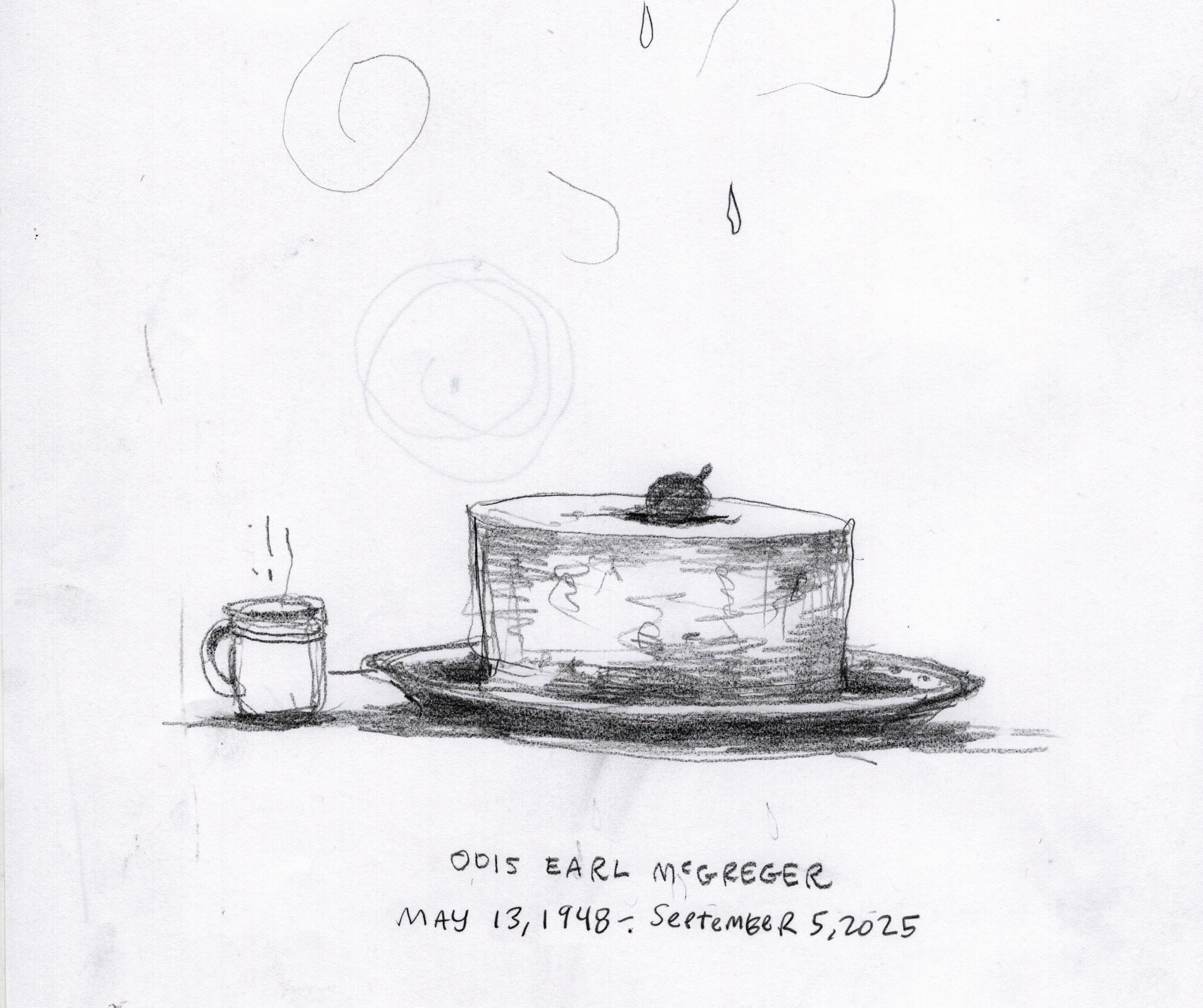
Recipe: Coffee Walnut Fig Cake
Fresh figs are so perishable, and their season so brief, that savoring them at that perfect moment of ripeness feels incredibly fortuitous. After you’ve gorged yourself with all the juicy, sensual fresh figs you can, I hope you’ll make fig preserves, one of my favorite cultural foods and most revered products in my preserving business, Farmer’s Daughter Preserves.
Those preserves make the absolute best version of the cake, which is a combination of two of my favorite cakes—old-fashioned fig cake / jam cake and coffee-walnut cake—because we are holding our sweetness and bitterness at the same time. Is that not life for all of us these days?
A good fig jam from your favorite cheese counter works wonderfully in this recipe as well.
My husband has enough sweetness in his life, I guess, because he never wants me to glaze this cake. I do love this buttermilk glaze though, and the cake is also exquisite with cream cheese icing if you want more of a celebration cake. Make it for those you love, yourself included.
Coffee-Walnut-Fig Cake
Makes one 10-inch tube or bundt pan OR two loaf pans (or one larger Pullman loaf)
4 eggs
1 cup sugar
1 cup vegetable oil
2 cups all-purpose flour
1/2 teaspoon nutmeg
1/4 teaspoon allspice
1 teaspoon cinnamon
1 teaspoon salt
1 teaspoon baking soda
1/2 cup buttermilk
1 tablespoon instant espresso dissolved in 1 tablespoon boiling water
1 teaspoon vanilla
2 tablespoons whiskey or bourbon (optional)
1 1/2 cups coarsely chopped fig preserves, or 1 cup fig jam
1 cup coarsely chopped toasted walnuts
Buttermilk Glaze
1/2 cup buttermilk
1/2 cup brown sugar
1/4 cup butter
1 1/2 teaspoon cornstarch
1/4 teaspoon baking soda
1 teaspoon vanilla
Preheat the oven to 350 degrees. Grease and flour a 10-inch tube or bundt pan and set aside.
In a large bowl (or in the bowl of an electric mixer) beat the eggs with an electric mixer until light yellow and smooth. Add the sugar and oil and continue beating well to make a thick, smooth batter.
Whisk together the flour, nutmeg, allspice, cinnamon, salt, and baking soda in a medium bowl until well blended. Add half the flour mixture to the egg-and-sugar mixture and stir with a wooden spoon to blend well. Add the buttermilk, espresso, vanilla, and bourbon if using and mix well. Add the remaining flour and stir gently until well blended. Gently fold in the chopped figs and the walnuts.
Scrape the batter into the prepared pan, and bake at 350 degrees for 40 to 50 minutes (this will vary if you use two smaller loaf pans) until the cake is brown and firm to the touch on top. It should spring back when you gently press it, and a wooden skewer inserted in the center of the cake should come out clean.
While the cake bakes, prepare the buttermilk glaze.
Combine the buttermilk, raw sugar, butter, cornstarch, and baking soda in a medium saucepan and bring to a gentle boil. Remove at once, stir well, and cool to room temperature. Add the vanilla, and set aside until the cake is done.
When the cake is done, remove it from the oven and cool it in the pan on a wire rack for about 15 minutes. Loosen the cake from the pan gently by running a table knife around the sides of the pan, and then turn it out onto the wire rack. Carefully transfer the cake right side up to a serving plate or cake stand, then spoon the glaze over the warm cake.
Covered tightly, this cake will keep for about a week.
April McGreger is an award-winning fermenter, jam maker, writer, pastry chef, cooking teacher, and recipe developer whose work and recipes have been featured in Bon Appetit, Southern Living, the New York Times, and many other publications. Before moving to Philadelphia in 2018, she founded and operated the pickling and preserving business, Farmer’s Daughter, in Chapel Hill, North Carolina, for more than a decade. Her passion for social justice, and food justice in particular, led her to 215 People’s Alliance and then People’s Kitchen Philadelphia, where she is excited to share her fermentation and food preservation skills to help build food security, sovereignty, and community in Philadelphia. She is the author of two books, Sweet Potatoes (UNC Press) and Canning and Preserving (Centennial Media).
Phil Blank is an illustrator, musician, art teacher, and ex-librarian. See more of his work at http://philblank.com.
