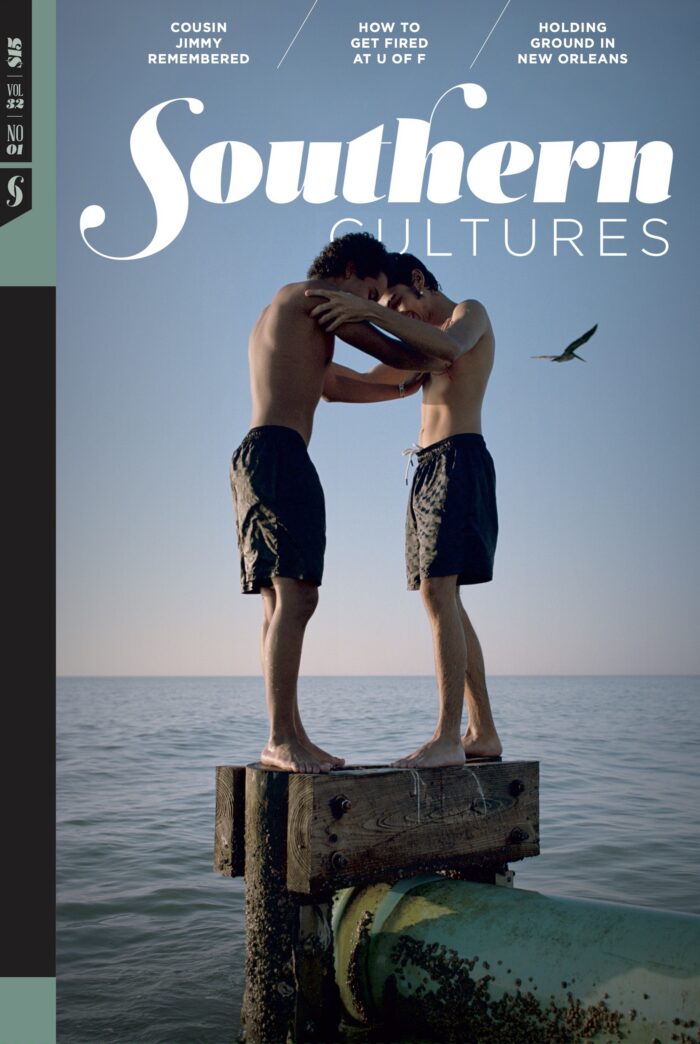
For the past five years, Florida has been my studio and my muse. It is something I’ve been circling, leaving, returning to, and trying to understand. I moved here from Canada when I was three, and I grew up with that strange double feeling. I was an insider because I was raised in the Sunshine State, and an outsider because my family had no roots here. For a long time, I thought I knew Florida, but I only knew its edges—the suburbs, the highways, the palm-lined shortcuts between errands. I didn’t really know the springs, the swamps, the forests. I didn’t know how vast it was, or how haunted.
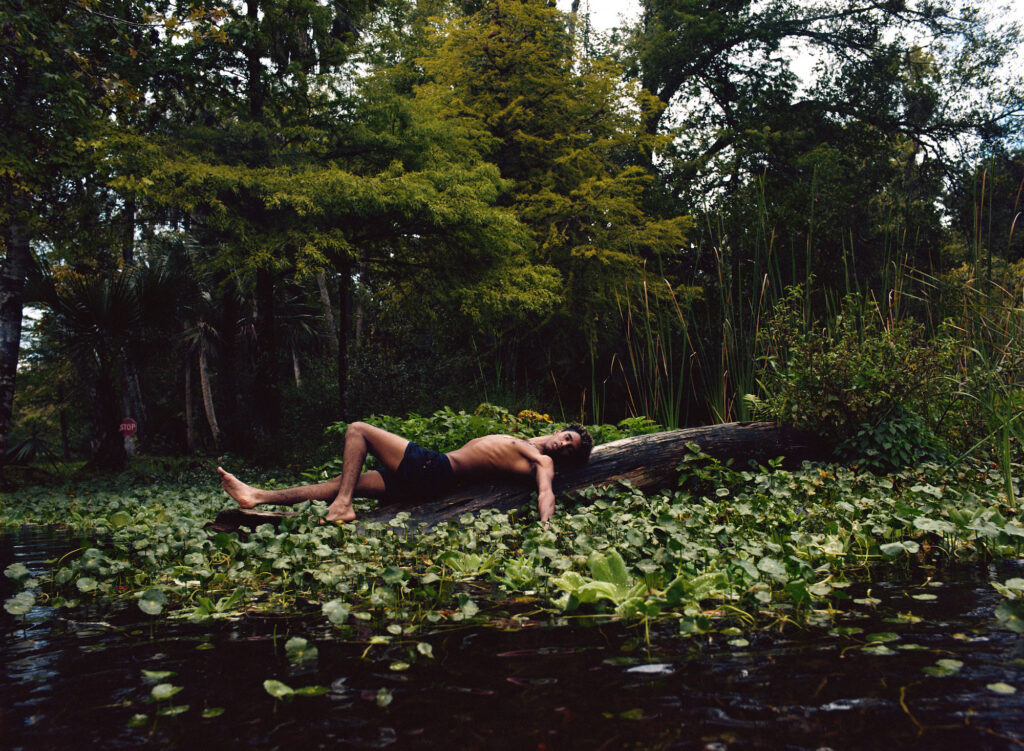
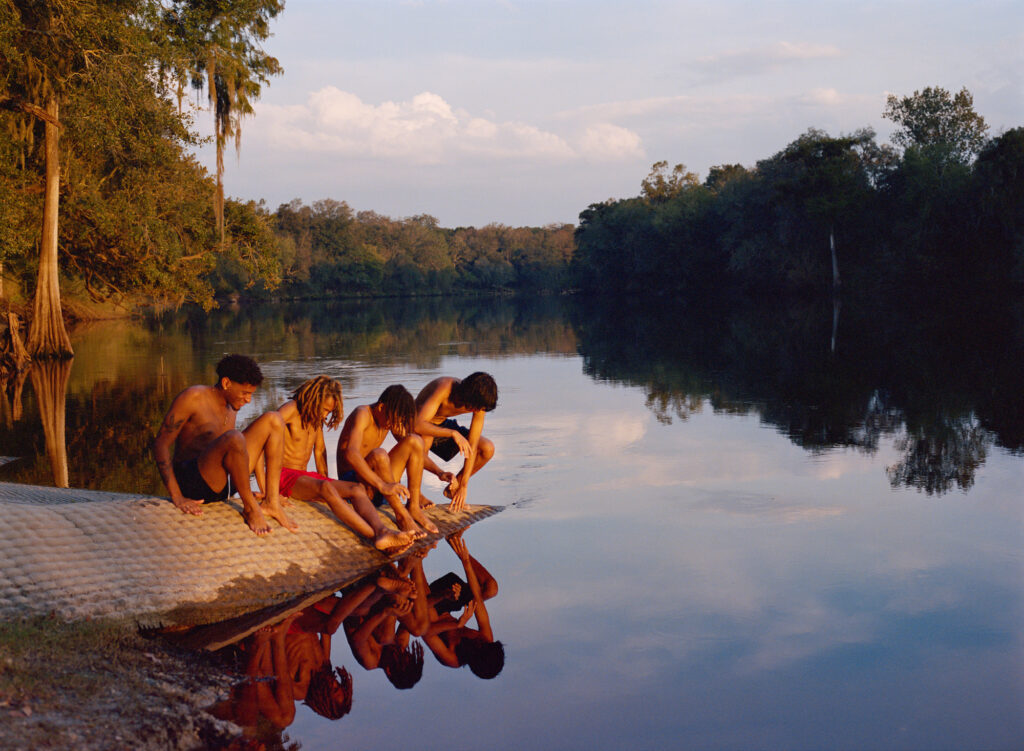
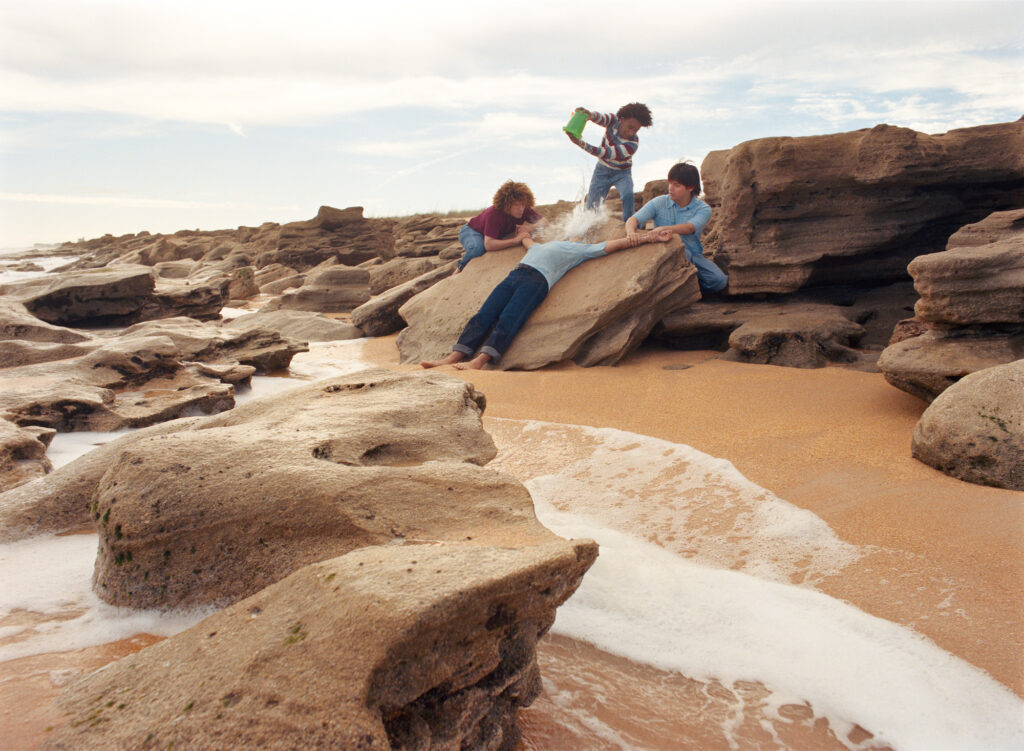
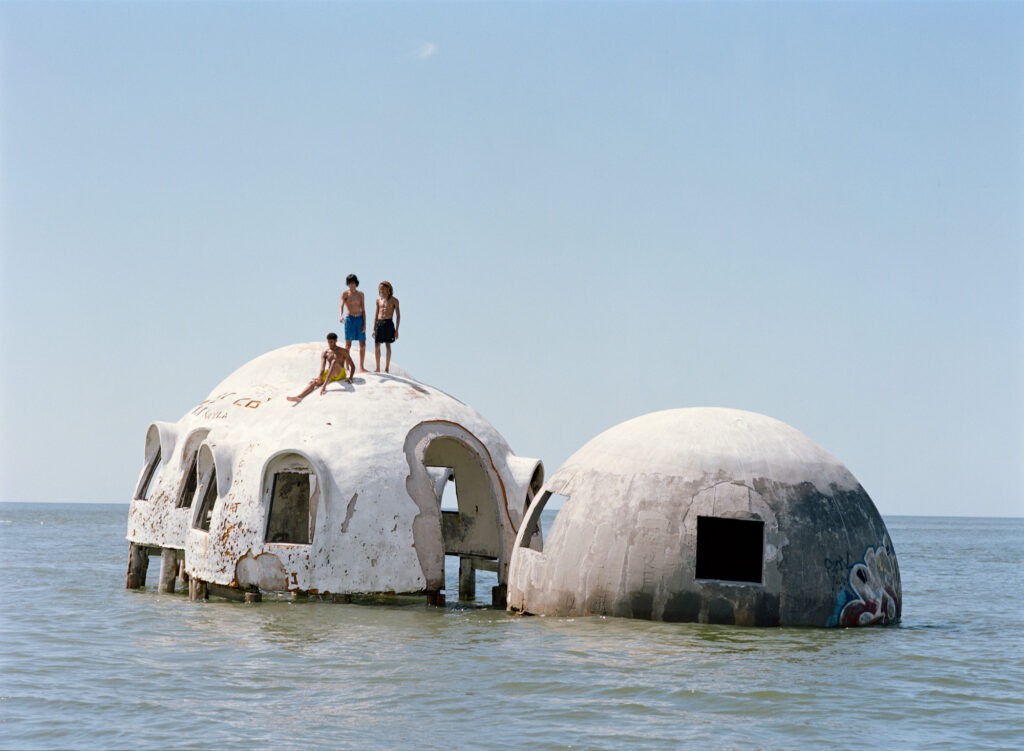
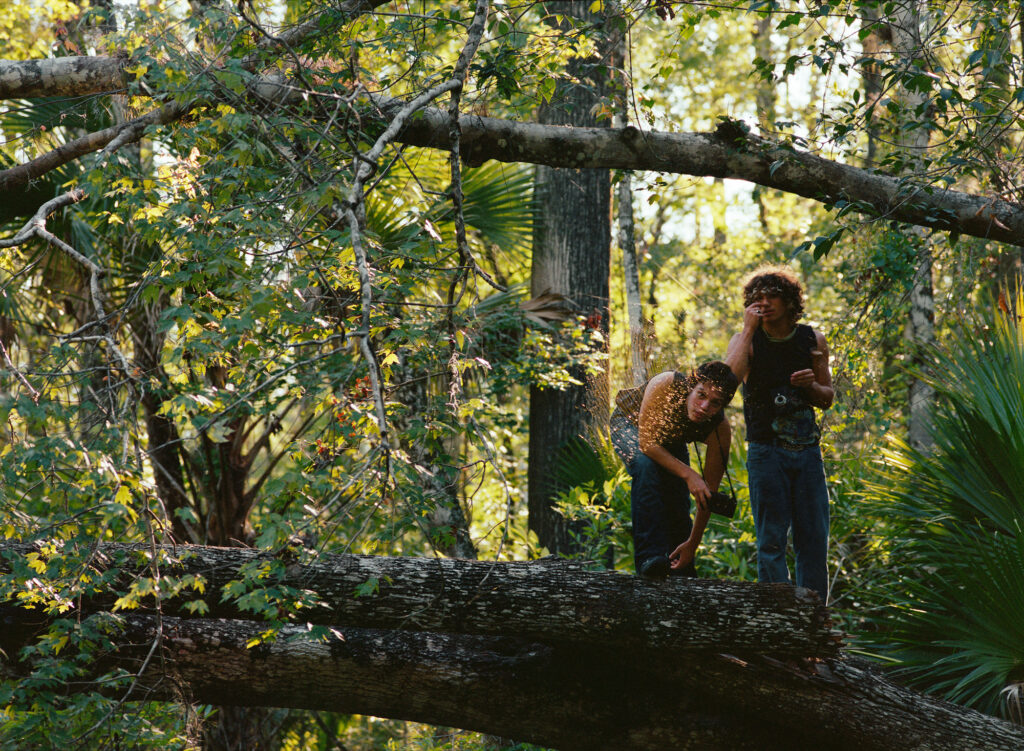
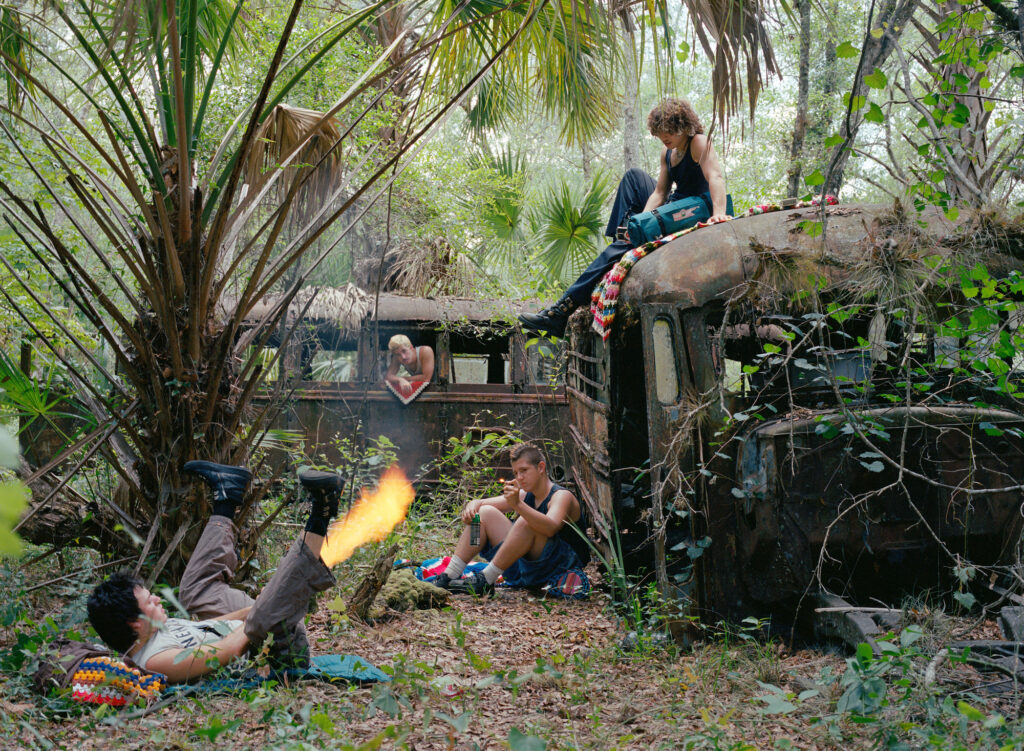
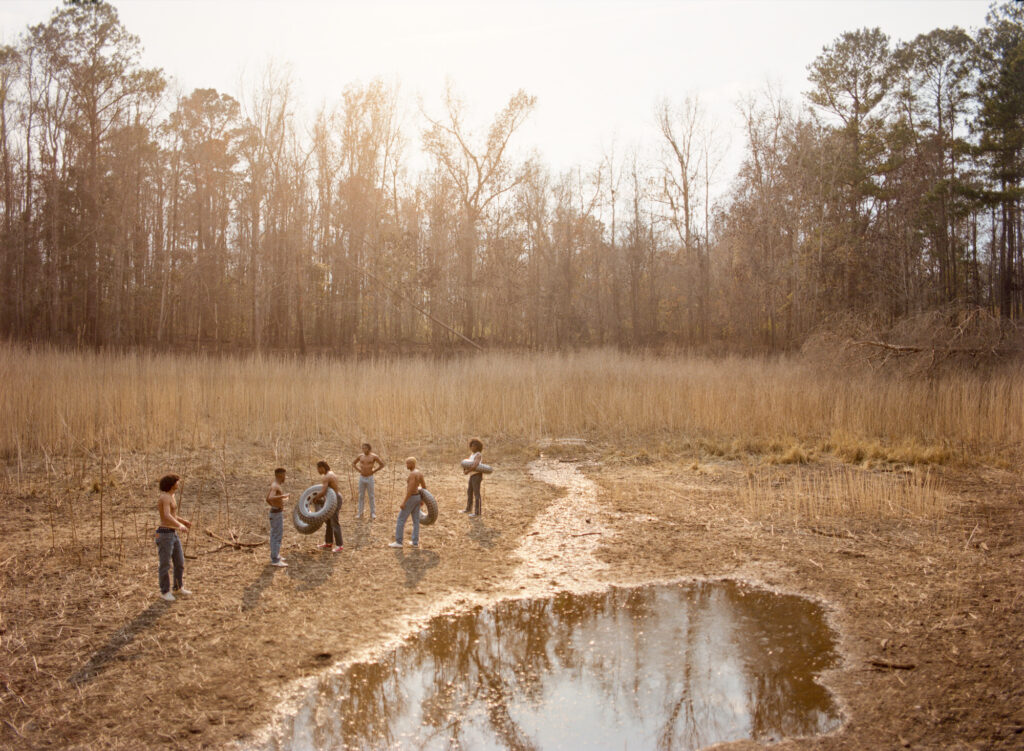
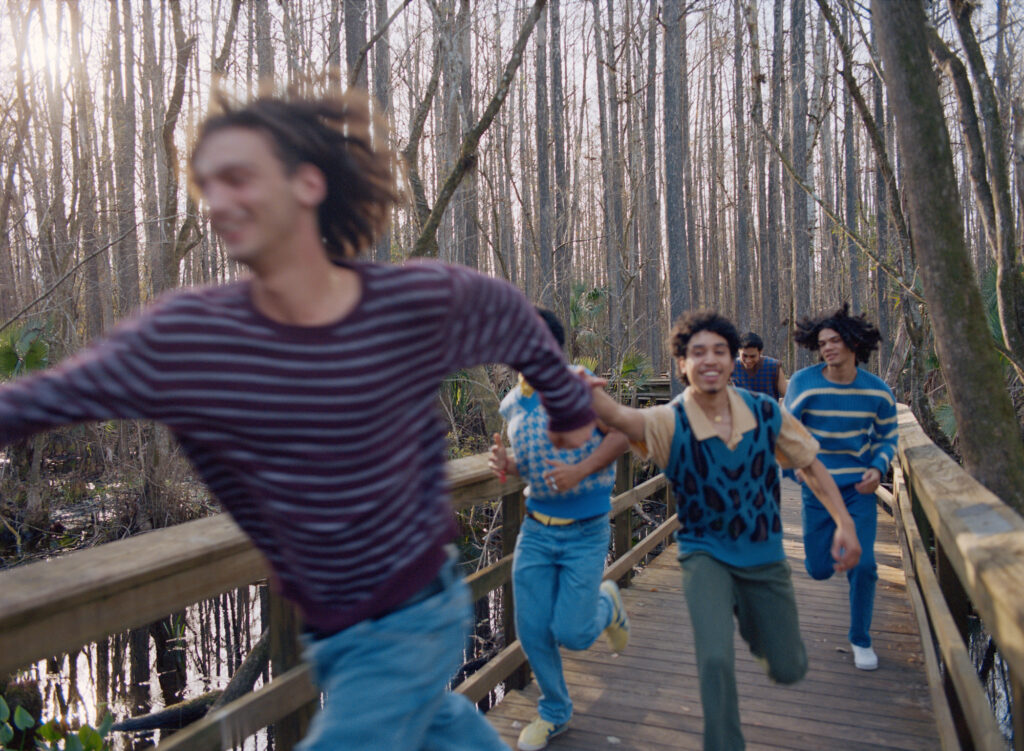
I began Florida Boys in late 2020 as an attempt to look closer. The pandemic made the car feel like the only reliable way to be in public, and I started driving, alone at first, down backroads, with my phone full of location pins and references. Then I began inviting people to come with me. Young men from Miami’s creative community, often first-generation like me, often strangers to one another. My pitch was simple and a little absurd: Do you want to get in a van for three days and make pictures in places we’ve never seen?
Somewhere between scouting and storyboarding, gas station snacks and drive-thru dinners, the project stopped being only about photographs. The road trip experience became the artwork’s nervous system. I’d arrive with an image in mind, and then the boys, the weather, and the landscape would rewrite it. That balance, structure, and slippage taught me how to trust collaboration, and how to let control soften.
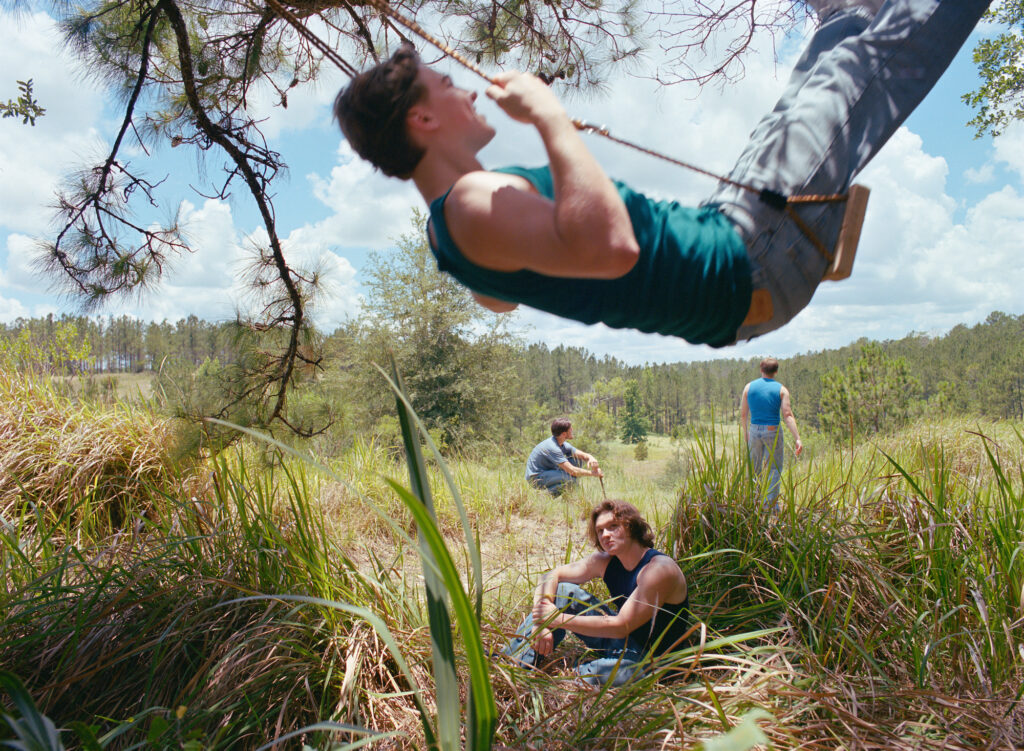
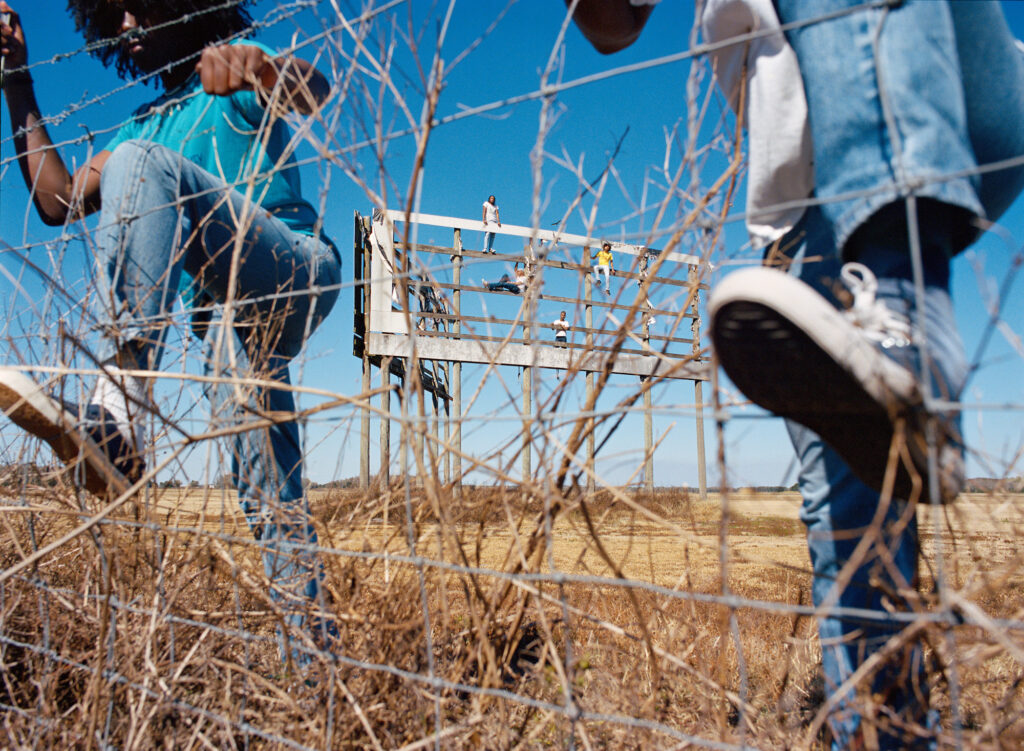
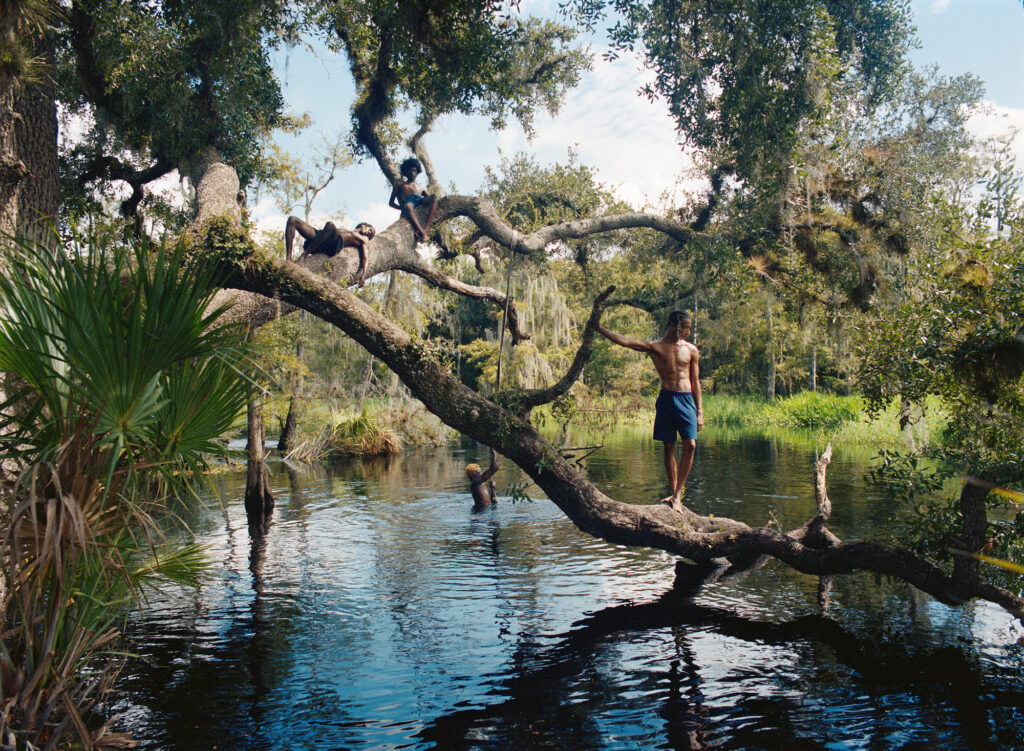
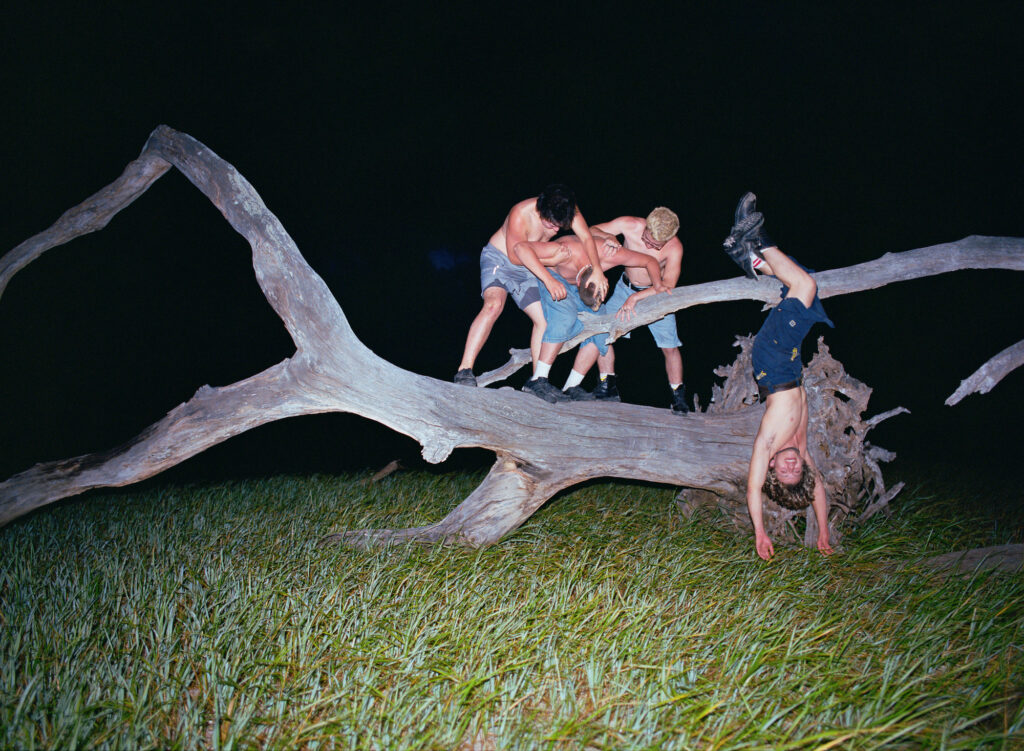
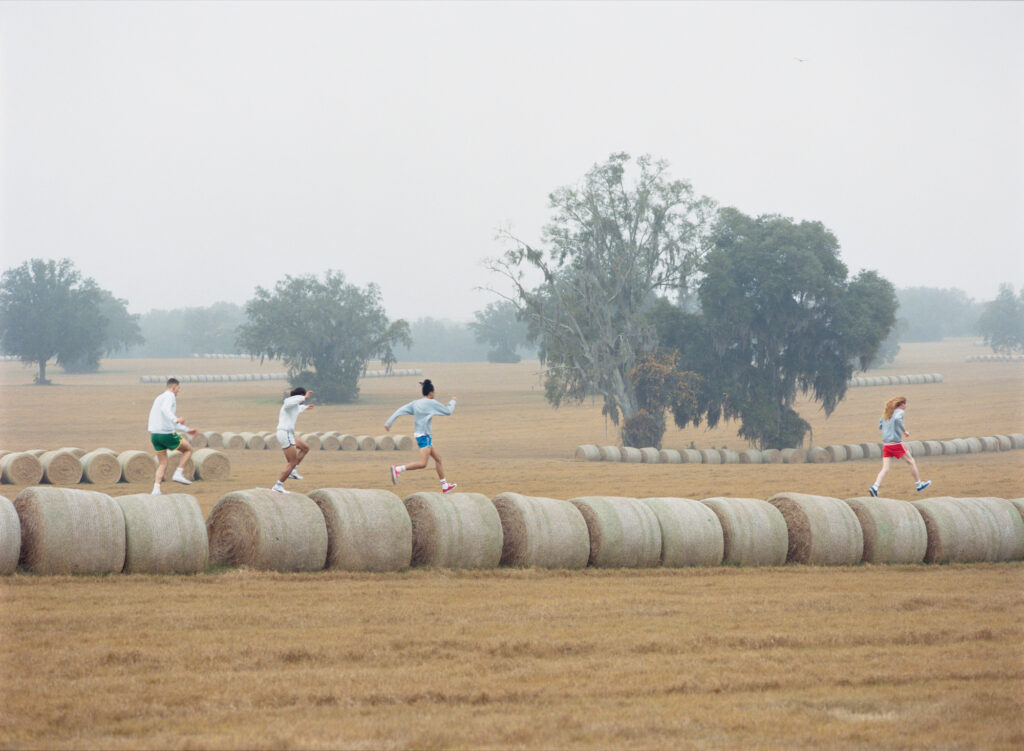
Over time, I began digging into Florida’s photographic history and found the Florida School for Boys archive. It changed the temperature of everything. The land stopped feeling neutral. I couldn’t un-know what sat beneath the beauty. Histories of exclusion, violence, and who has been allowed to rest or roam without fear. Florida is lush and decaying, seductive and brutal. It is a picture postcard with a shadow. So the pictures became tableaux, collective fictions, dreamlike reconstructions, where tenderness could take up space. I wanted to make a counterimage to the loud, flattened mythology of “Florida Man,” and to the screen-shaped masculinity so many young men are handed now. I wanted to picture another way. Boys at ease with one another, bored, affectionate, playful. Porous masculinity that breathes.
Working with film gave me distance. I didn’t always see what we made until years later, and that delay became part of the meaning. Memory edits. Time edits. The work kept teaching me what it wanted to be.
Looking back, I think Florida Boys is the most honest way I’ve ever tried to share myself. Not by claiming Florida is simple, or innocent, or “mine,” but by returning again and again, bringing people with me, and rehearsing a version of home where softness is possible. Photography, for me, has been a way to imagine belonging somewhere, and then, for a moment, to make that fantasy real.
Josh Aronson is a Miami-based artist whose work explores masculinity and landscape in the American South. His photographs have appeared in the New York Times, Paris Review, Financial Times, Frieze, Italian Vogue, Teen Vogue, Dazed, i-D, British Journal of Photography, Document Journal, and Apartamento. www.josharonson.us
Header image: Birdwatchers, 2025. All photos from the Florida Boys series.