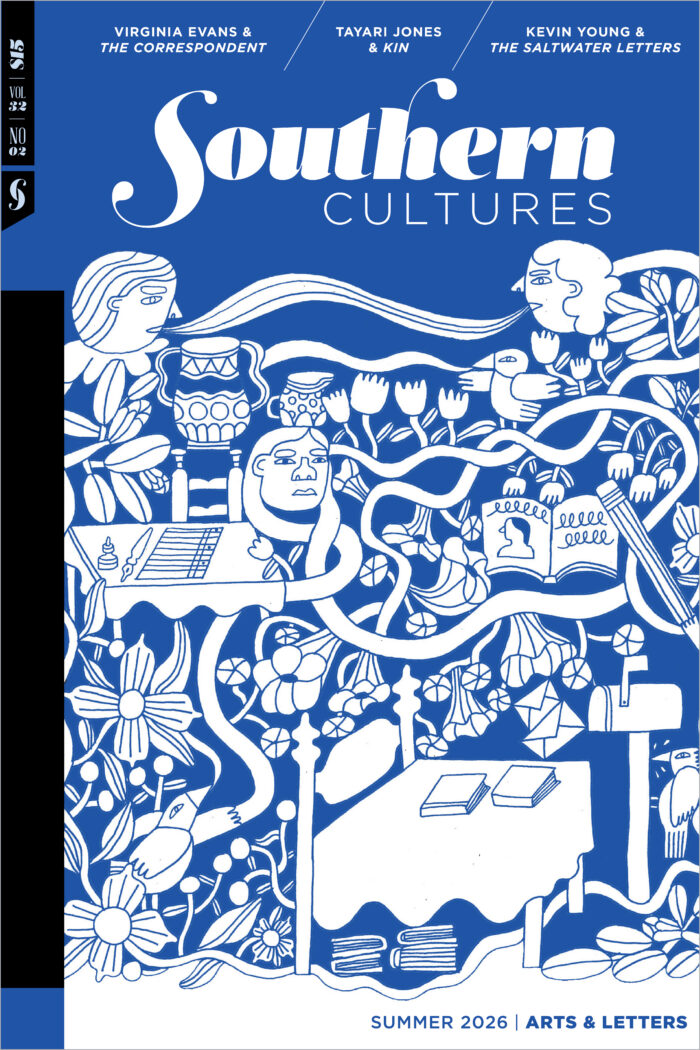
“That’s always been part of the mission of my work—to write about the sheer breadth and wonder and scope of our southern lives.”
Leoneda Inge: I understand that this book came at a critical time for you, health-wise. Was writing this novel a healing experience for you?
Tayari Jones: I feel like this novel really healed my belief in stories and what stories do. I did get sick, and that did kind of stop me from writing, but more than even my health problems was that I had kind of a creative crisis. In 2020 … the pandemic was happening, George Floyd. I was really saying, “What is it that a book can do for the world? Am I going to go to a hospital and heal somebody with a novel? Am I going to throw a book at someone that’s injuring someone else?” I didn’t see what the point was. And I think that really gave me a kind of writer’s block. I had never had writer’s block. I didn’t even really believe writer’s block was a real thing until it happened to me. And I believe that when I got diagnosed with Graves’ disease, and I was in the hospital, all of that, I feel that, in many ways, [in] writing this novel, I kind of wrote myself back to health.
LI: Well, that sounds wonderful, if one can do it. I believe in journaling.
TJ: Oh, yes, I’m a journaling maniac.
LI:Are you a letter writer?
TJ: I am a letter writer. I love to write letters. I even belong to pen pal societies. I write to people I don’t know.
LI: Oh my goodness.
TJ: I know. When I was a little girl, they would assign us a pen pal. I don’t know if they do that with children anymore.
LI: I had a pen pal in Trinidad, actually.
TJ: When I was twelve years old, my parents moved to West Africa for reasons of their own. And as a child, you know, you have to go where they go. So, I wrote to my little friends every day, and it wasn’t until I had been there three months that I received a first response. Because think about it, the letter had to get all the way back to Atlanta. Then my little friends had to say, “This is odd. What do you do when someone sends you a letter?” And their mother had to say, “Oh, you write them back.” So, they [wrote] back and then [the letters] had to get all the way back to me. But I did it for the pleasure of the writing, because I didn’t have an expectation of getting anything back because I didn’t know how it worked. And one day, the prefect came in with a shoebox full of letters for me from all my friends. They all came at once. And after that, I was hooked on my life as a letter writer.
LI: So there was no question you were going to include that in this particular book. What made you do it?
TJ: This book was so mysterious because of the way it came to me. I never had a book come to me before. I used to didn’t believe people who would say, “Oh, you know, this letter, this book just came to me. I’m just a vessel.” You know? I’m like, Are you really? You’re a vessel. I thought they were just trying to seem interesting. But it actually happened to me with this one. I felt like this story came through me in the form that it wanted to come, and it was very humbling for me to just kind of shut up and write it. I had to just allow that kind of humility. So, when [the characters] started writing letters, I was like, okay, I guess we’re writing letters!
LI: I want to talk about the letters, and your choice [of] bridging stories that way. Well, it’s not like they had a cell phone or anything else to communicate. You had to write it down and make sure you had an address and that you found a place where people could write you back and a lot had to go into getting a letter to someone. And then hoping to get a response.
TJ: Yeah. I mean, now we have this expectation of instant communication. Like, if someone doesn’t text you back in five minutes, do you or do you not have an attitude?
LI: They’re gone.
TJ: As a device in a novel, it was a lot of fun to think about. It was a lot of fun to look at the life one is living and then the way that one reports one’s life in a letter. So, when Annie is over there having to live in this sharecropping whorehouse in Mississippi, when she finally gets the stamp and everything to write her grandmother, she says, “I’ve met a very nice woman. She owns her own business. We are staying at her place.”
Also, as a novelist, don’t you think you can cover time in a different way? Without a letter, it doesn’t make sense to have a three-page synopsis of what all happens. But in a letter, it’s realistic that someone would provide a synopsis of their life.
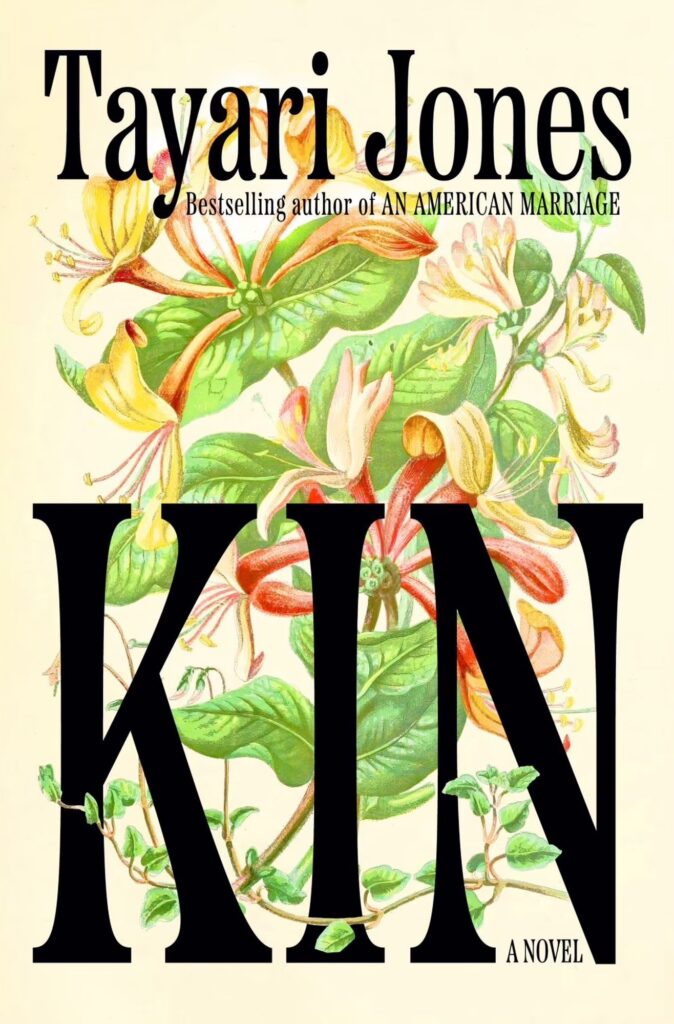
LI: Kin has been named one of the New York Times novels everyone will be talking about in 2026, and I agree. You know, this is the type of book you can’t really put down. I don’t want to spoil anything. But how much can you tell us? Can you describe it a little bit more?
TJ: It is a novel about two women who’ve been friends since they were infants and their lives go in different directions. One chooses a kind of a life of respectability and marriage, and the other goes on this wild adventure to find her long-lost mother. This story has a lot of really unique characters. We have the madam of a sharecropping whorehouse. We have a bluesman with a very elaborate vocabulary. We have a Black woman who is aspiring to peak housewifery, yet she has a little limoncello problem.
So, I think we have very lively characters interacting all against the backdrop of the Civil Rights Movement. That was important to me, too, that the characteristics of the people—the personalities, the subplots, the family drama—not be eclipsed by the gravity of the historical moment.
LI: [The] stories about southern Black women just really touched me. How much did your upbringing inspire Kin? How much of yourself did you have to put in, or not just even yourself, maybe your aunties and “your kin”?
TJ: It was important to me that I write this book at home because I used to live in New York … where publishing was. And I thought I needed to be up there to make my career. And when I was up north, I always knew that New Yorkers are, like, they’re born, not made. I never felt like a New Yorker. And I feel like the South is so misunderstood up there. They acted like I got to Brooklyn on the Underground Railroad. And so, I wanted to come home and write a true story of the South as I know it to be.
That’s always been part of the mission of my work—to write about the sheer breadth and wonder and scope of our southern lives. That said, this is the only time I’ve ever written a book where I felt like the book snuck up on me. I thought I was going to write something about the modern day … and that’s what I’ve always done quite happily. And I had a contract to write a book about “the world that I know,” and for whatever reason, I couldn’t make it happen. I felt like I had like a hammer, nails, a saw, and I was making noise when I was supposed to be making music. I was supposed to be writing a book about modern Atlanta and gentrification. You know, really up-to-the-minute themes. But these characters kind of came out of nowhere.
LI: You took us to the ’40s. You took us back.
TJ: I know! Well, you know, I was writing with paper and pencil, not even a pen. I took it all the way back to how I used to write when I was a child. And I was writing, and I met Annie and Vernice, these best friends, these motherless girls. And I noticed that they were living in the ’40s and ’50s. And I said to myself, “Huh, well, these clearly must be the mothers of my characters because these cannot be my characters.” And lo and behold, once I got about a hundred or so pages in, what I thought was backstory was the story.
LI: Good for us.
TJ: I had to just let the story come to me. I feel writing a novel is a lot like being in love. You know how when you’re in love, you’re just busy being in love. You’re just carried away by it. You can’t say why you’re doing what you’re doing, but you’ve just got to do what you’re doing. And you think it’s mysterious. It’s above you. You know, it’s motivated by your heart. This mysterious thing that you can’t understand, and you shouldn’t understand. That’s how it felt writing this book. But I feel like, just like being in love, when you are no longer in love, you can look back on your behavior and have some theories as to why. I look back on this book, and I can see why I wrote it.
I moved back home to Atlanta because I wanted to be closer to my parents. They’re in their eighties, and I wanted to be closer to them—not just to take care of them, though I do—but I wanted to get to know my mother as two grown women. Because when I lived elsewhere [and would] come home to visit, I would be sleeping in my childhood bedroom. And, you know, there’s stuffed animals in there. There’s only so much grown-woman conversation people can do when one party is sleeping in the room where there are stuffed animals.
So, I move home. I have my own house. No stuffed animals. Like, even in the book, the character, her aunt pours a drink and says, “Okay, finally, we can talk like grown women.” And I thought my mama was going to do that. And I realized that is merely my fantasy. My mama has no desire to be two grown women. She’s like, you better get in there [with the] dumb stuffed animals. And I feel like, on some level, this book, it’s me having the conversation with that generation, whether they want to or not.
LI: So I have to ask, has your mother read this book or listened to the lovely audio-book version?
TJ: Oh, my mother, she read this book, she enjoyed this book, she don’t want to talk about this book. She says she’s not mad about it. That’s just not how she is and that’s the thing I think you have to realize. You cannot make somebody have a conversation with you they don’t want to have.
LI: No.
TJ: I think I just wanted to write this book to say, “What was it like coming of age in the ’50s? What was it like coming of age against the backdrop of the Civil Rights Movement?” Because all the things we think about, they thought about. They just may not talk to us about it, but everything, you know—work, love, sexuality, all of these things, friendship. They felt these things as deeply as we do. Like, I think every generation feels like we invented humanity. Don’t you think every generation thinks they invented sex? They think everybody before them were hatched from eggs and then we came up with this novel idea. So, I’m kind of just filling in the blanks and answering my own questions.
LI: And with the story, moving from Louisiana to Atlanta, Georgia, you have Historically Black Colleges and Universities. I love that part.
TJ: Well, you know, I’m a graduate of Spelman College. But when I was doing my research, I realized the extent to which I did not know the history of Spelman. Even though when I was a freshman, I was class historian, I did not know that in the ’40s and ’50s, and even into the ’60s, so many of the young women who were studying at Spelman worked full-time as maids.
I think that people tend to look at the graduates of HBCUs and say, “Oh, these are the people whom these HBCUs attract.” But when they came to college, many of the people were dirt poor. Like, I met an older woman, who’s ninety-seven now, who came to college with every cent her family and community could put together for her in a sock. And she arrived to college with this sock full of money. The president of Spelman emptied the sock and said to her, “Do you have a place to stay?” And put her up in a dormitory. And now this woman is ninety-seven years old. She has a PhD in Shakespeare. These colleges did not merely serve the children of the middle class. These colleges created the Black middle class, and I don’t think they get enough credit for the transformation that takes place on these campuses.
LI: I was born in Mobile, Alabama, so the Tuskegee Institute, Tuskegee University, that whole story of Booker T. Washington, you know, just moving students literally out of the fields into the classroom.
TJ: And changing lives. And changing the trajectory of history. That is the work.
LI: I know you’ve been called “a bard of the modern South.” How do you feel about that title?
TJ: I used to really take such pride in that quote about the modern South because I really prided myself on being a contemporary novelist. I feel that, as a Black writer, as a southern writer, there was this understanding that my role was to fill in the blanks and tell the stories that went untold. You know, like how Morrison wrote Beloved because Margaret Garner didn’t have the opportunity to tell her own story.
I felt like I was saying, “Young people, I’m gonna tell my story so that when you come of age, you can tell whatever story you want. You do not have to fill in this gap. I got my own gap.” And that is how I thought of my mission. So then when I ended up writing about history, I had to ask myself, “What does this historical narrative have to do with my understanding of a modern South?”
LI: Well, you do it well. At its core, this book is about self-identity. It’s about how every choice you make shapes who you become. Do you feel like you’re in a moment as a writer where the choices that you are currently making are changing how you see yourself and your work?
TJ: You know, I think [about] the choices that I make as a writer, like when I’m writing about the ’50s and ’60s, particularly. [With] the Civil Rights Movement, there is this impulse to kind of romanticize the people. And I had to make a choice to depict everyone as flawed and quirky and heroic, and also sometimes not so much as real people are, because I think it’s important that as a writer, I make choices. If I’m going to talk about history, I have to tell the truth the best I can.
LI: The civil rights, it was so clever. You really introduce Vernice to something that she definitely wasn’t aware of.
TJ: We often think of the Civil Rights Movement as these grand moments of resistance. You know, like Mrs. Parks was part of a resistance organization and they decided that she would not give up her seat on the bus this particular day. But people were constantly negotiating ways to find dignity in a system that is undignified. And Vernice decides that she’s going to travel to school on a segregated bus, but she wants to sit in the front-most seat that is allowed to her. But the way that the bus seats can be toggled, she accidentally sits in the wrong part of the bus and becomes kind of an accidental activist in this.
But the question too is, even if you did not mean to make that particular statement, if you suffer the consequences of it, are you still a hero or not? Like, how much is your choice or intention as important as the result? I feel like many of us live in these kinds of gray areas. I don’t like to write about heroes necessarily. I like to write about real people trying to figure it out.
LI: Well, that was very special to me. Just this accidental activist. You know, when I was reading the book, I would kind of just put it down in a way. I didn’t want to really keep reading it.
TJ: Why?
LI: You know, I’m a Black woman and I just kept thinking like, “Oh my goodness!” Just coming face to face with the lives of many people that I know, all I could think of is, “Oh my God, I’m glad I didn’t grow up like that.” That’s all I could think for a second.
TJ: Really?
LI: Yeah. I love the book, and I definitely kept reading, but I just had to put it down and say, “Ugh!” It was hurting my heart. How hard is it for you to write some of these stories? You know, like you have to get through the bad part to get through the growing good part, right? That’s what the story is.
TJ: It is. Well, I do think so, but I mean, for me, maybe I’m crazy, but I kind of think this novel is kind of funny.
LI: It is.
TJ: Like, when they go to the sharecropping whorehouse, you cannot tell me that it’s not funny.
LI: It’s great, but I didn’t want to start weeping so early.
TJ: One of the things I really pride myself on, or I really aim for as a writer, is that I have a real broad range of emotion. Like, you know how Zora Neale Hurston said, I am not from the tragic school of Negrohood?
LI: Mm-hmm.
TJ: And I really go for that in my books. I try to let the characters have some fun. You know, yes, they grow up in the Jim Crow South, but I also feel like they have a lot of pleasure. And I think that I try to make a plot with lots of twists and turns. So, I don’t know. I did not find this book difficult to write. I think the very end kind of broke my heart a little bit. But I didn’t find this one nearly as stressful as, for example, my first novel, which was about growing up in Atlanta during the Atlanta child murders. I don’t know, if you start off writing about child murders, everything else is cake.
LI: Everything is cake. I understand that. Maybe it’s my age, and where I am in my life, and just thinking about my mother and my grandmother and my great-grandmother. It just hit something there, but I appreciate it. So don’t feel bad, of course! [laughs] Kin feels slightly reminiscent of one of your earlier novels, The Untelling. Both books are about female friendship, class differences, navigating jealousy, and finding an authentic sense of self. So, what draws you back to these things in your storytelling?
TJ: Well, I think the question of female friendship is really one of life’s fundamental questions. I don’t even see it so much as kind of a recurring theme. I think it’s just life. But I think what draws me back to the South again and again is that, after I finished college, I left home. And I lived all over the country. I would move every three or four years, and I wrote out of a longing for home. And now, I moved back home, and I had to kind of reshuffle the deck and say, “Okay, if I used to write out of a longing for home, what am I doing now?” And I feel that, now, I’m kind of taking stock of the world that I came from. How does it compare with the world that I live in? And what does it tell me about the world of the future? And I think that these themes you brought up are the questions that I have to ask as, you know, a living, breathing person, a Black woman in the South, as I chart a path forward for the rest of my life.
Editor’s Note: Journalist Leoneda Inge spoke with best-selling author Tayari Jones about her new novel, Kin (Knopf, 2026), twice in spring 2026, the first on her WUNC Radio program Due South and then in person at Flyleaf Books (Chapel Hill, NC). Kin follows the stories of best friends and motherless daughters whose lives drastically diverge after childhood. Our thanks to Stacia Brown, producer of Due South, for making these conversations possible. These conversations have been combined and edited for length and clarity.
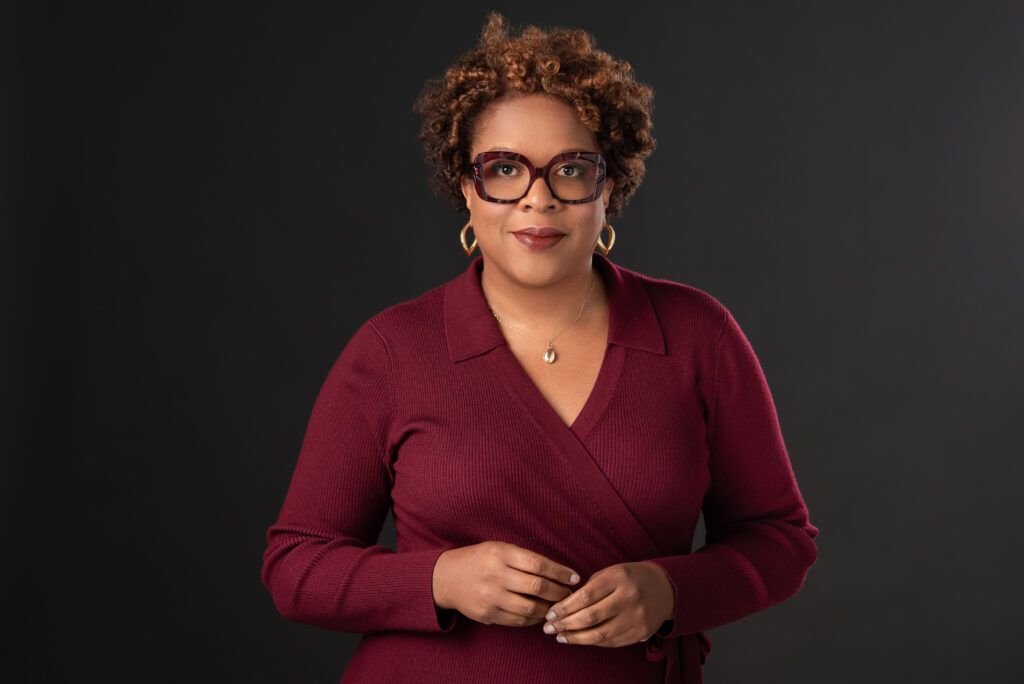
Tayari Jones is the author of four novels, most recently An American Marriage, which was awarded the Women’s Prize for Fiction, the Aspen Words Prize, and an NAACP Image Award. A 2021 Guggenheim Fellow, Jones has received the Hurston/Wright Legacy Award, a United States Artist Fellowship, an NEA Fellowship, and a Radcliffe Institute Bunting Fellowship.
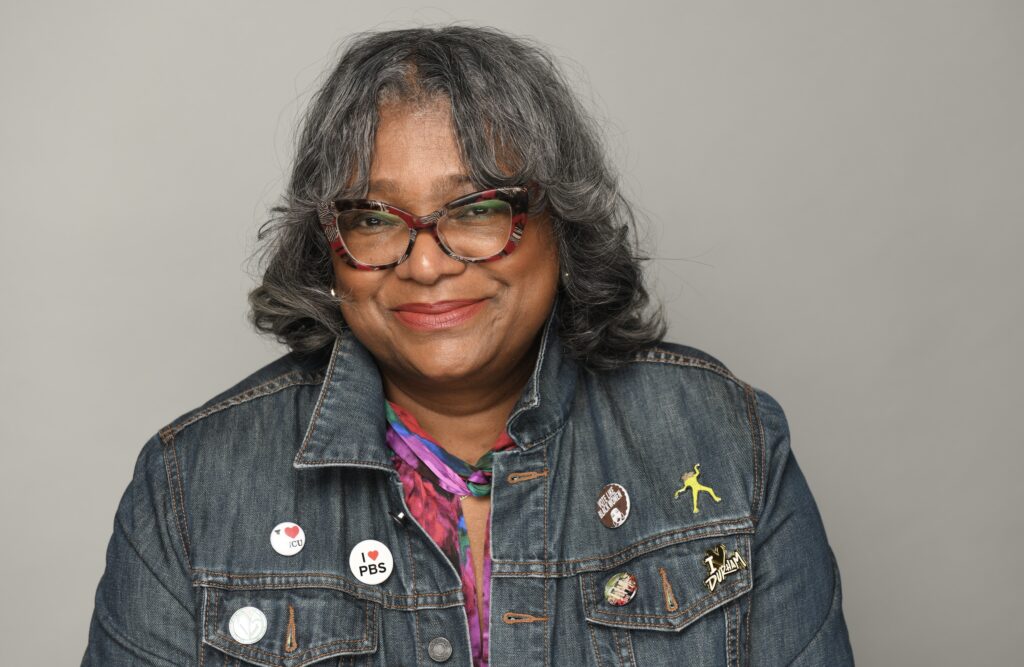
Leoneda Inge, a graduate of Florida A&M University and Columbia University, is a host of Due South, a daily public radio show on NPR member station WUNC. Inge received the Alfred I. DuPont Award for the series “North Carolina Voices: Understanding Poverty.” Her essay “Everybody Is Cheering for You” appears in HBCU Made: A Celebration of the Black College Experience.