Westernwear is having a moment that’s bringing attention to the fashion of country artists past and present. It’s not the first time that cowboy clothes have appeared far afield of their origins, and musicians are now, as ever, western style’s most visible ambassadors. Country music fashion is an embodiment of the traditions and ruptures within the genre across time, and clothes, as cultural artifacts, can be understood as a record of the industry and artists that made it. Presently, the multicolored rhinestone-encrusted suits made famous at midcentury by rodeo tailors like Nathan Turk, Nudie, Rodeo Ben, and Manuel Cuevas are seeing a resurgence in popularity, thanks to artists like Orville Peck, Post Malone, and Nikki Lane, while Beyoncé, Chappell Roan, and Leon Bridges reinterpret western style with differing degrees of glamour and camp.
But it wasn’t always so sparkly. Consider a different stylistic choice from an earlier time, one that has not received the same attention but speaks strongly to conceptions of class and the mythologizing of rural life and country music: overalls. Specifically, musicians from the 1920s and 1930s who wore overalls as signifiers of rustic life and humble origins premised on the hillbilly stereotype. Country or hillbilly music and overalls are part of a modern vernacular; the music and garments evoke nostalgia for a “simpler” past, while being the products of commercial enterprise and industrial modernity. Scholars such as Richard Peterson, Patrick Huber, and Bill Malone have detailed how country music has always fabricated authenticity, how it appealed to folkways and tradition but was nevertheless a commercial genre that developed in step with mass media and the music business. In this context, it is useful to explore how overalls functioned as a rusticated costume that provided a unifying visual identity for performers and the emergent genre, but moreover, how overalls themselves—through materiality, fabrication, and function—were the sartorial equivalent of country music at this time. Overalls were central to the visual and material landscape of the nascent genre and shaped perceptions of musicians, rural life, and country’s complicated relationship to modernity.1
Overalls in Context
Overalls are a bifurcated garment with an attached upper body covering, typically in the form of a square or rectangular bib with pockets. Like most proletarian garments, there is no single discrete origin story for overalls. Dress historians Susan Strawn, Jane Farrell-Beck, and Ann Hemken documented the earliest mentions of overalls in the United States in trade catalogs from the late 1840s and 1850s, and photographic evidence of bib overalls appears in the historical record in the 1850s and 1860s. Overalls were accessible through commercial retailers and could also be made in the home, with sew-at-home patterns circulating simultaneously. While different brands and makers added or adjusted details, it is a recognizable design that has stayed remarkably consistent. Patent records and extant garments show modifications that include higher or lower bib placement, straps attached with either buttons or buckles, different strap widths, high, low, or vest backs, variations in the width of the pant legs, different pocket shapes and placement, and a range of textiles, including denims, canvas, corduroy, or twills, to rubberized and waterproofed materials, along with different colors or motifs, like solids or stripes. They were initially offered for men and children, though women could and would wear them for practical reasons, usually in rural settings involving agricultural labor.2
Overalls fall into the category of workwear, which is both intuitively understandable and not always clearly defined. It is worth clarifying, because many garments that originated as workwear like jeans, overalls, and chore jackets have become part of everyday casual dress since the later twentieth century and are still worn for manual labor on jobsites worldwide. Broadly defined, workwear includes industrially manufactured garments designed for function, protection, and durability. While there is significant uniformity and standardization across garment types, workwear garments are not the same as uniforms, in that they are not necessarily issued by an employer but can be purchased by the wearer themselves. Ready-to-wear workwear garments of the type under consideration here have been on the market in the United States since the late 1800s and have developed alongside the industries whose workers they clothed: railroad, agriculture, mining, construction, and factories where laborers needed to shield the body from dirt, heat, and all manner of environmental pollutants or physical hazards. We can therefore classify overalls as occupational dress, as serviceable garments that allowed a worker to best perform their duties. But their function is not limited to any one particular job; the same pair of overalls could, for instance, be worn by a farmer or a railroad brakeman, and this versatility is why these simple, hardwearing garments secured a lasting foothold in the marketplace. Work clothes were among the first ready-to-wear clothing designs to claim such extensive reach, but as they were made by and for working-class people, their histories have largely been ignored.3
Practicality might be the main feature of overalls, but they still carried significant symbolic weight because of their association with the American worker. Protests like “The Overalls Movement” of 1920 saw Americans resisting the high prices of new clothes by donning overalls in protest until conditions improved. In the 1930s, artists and photographers from the Works Progress Administration and Farm Security Administration documented everyone from displaced sharecroppers to New York City construction workers on the high steel, characterized as simultaneously heroic and downtrodden, in this unofficial uniform of American labor. Overalls were worn by working people nationwide, but the association with rural life was forged early on. The simplicity of the garment, with its protective features and durable denim, made overalls perfectly suited to farmers, miners, and agricultural workers, or those from small rural communities who might not have felt the social pressure or had the means to change clothes when the workday was through. All of this is to say that overalls’ place in visual and material culture in the early twentieth century went beyond mere function, and country artists (who were not yet called country artists then) embraced and enhanced this constellation of signifiers when they adopted overalls.4
Brakemen, Possum Hunters, and Hillbillies
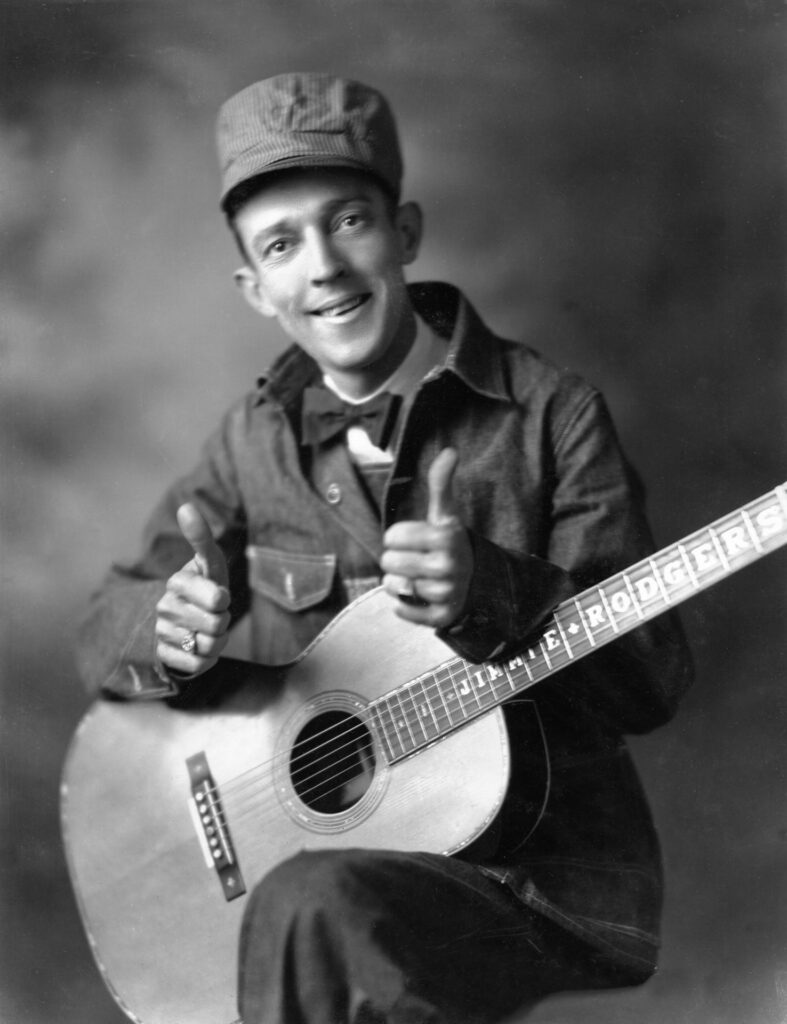
It’s fitting that Jimmie Rodgers, considered to be the father of country music, wore overalls. Rodgers, who was first recorded for Okeh records in Bristol, Tennessee, by the recording, publishing, and management entrepreneur Ralph Peer in 1927, rose to prominence with the success of his famous “Blue Yodel (T for Texas)” and subsequent recordings, radio appearances, and live shows that cemented his national fame. The Mississippi-born Rodgers had set his sights on being an entertainer since childhood and spent his younger years working itinerant jobs and touring with medicine shows and carnival outfits. As “the singing brakeman,” he wore apparel that was directly linked to a job, or at least his briefly held former job with the railroad, before tuberculosis and musical ambitions took him out of the train yards. A publicity photo from 1930 shows Jimmie pairing overalls, chore jacket, and peaked cap with a crisp white shirt and black bow tie. While here he clearly used clothing to solidify his working roots, Rodgers didn’t always present this way. The photographic record includes him looking significantly more dapper in boater hats, bow ties, and fashionable tailored suiting. Upon moving to Texas in 1929, we see Rodgers, like a Hollywood cowboy, adopting stylish westernwear. A born entertainer, he was aware of clothing’s ability to both impress and relate to audiences, and when he began making money as a musician, a variety of fine clothes was in reach. Rodgers’s adoption of workwear is a nod to his past but no less of a costume than the ornate batwing chaps and leather gauntlets of other performers. His fans would have no doubt recognized this—no one paired a white dress shirt and bow tie to go to work in overalls—but the theatrical elements of his self-fashioning were part of his dynamic character as an artist and enriched the performance.5
Beyond personal taste and ambition, Rodgers’s shifting stylistic choices are worth considering because they parallel the emergence of the genre and industry he was a part of. While he is known as “the father of country music,” the term “country” was not used at the time, and Rodgers’s sound was a creative blending of folk ballads, jazz, African American blues, Tin Pan Alley pop, and gospel, with some covers, new arrangements of traditional songs, and original compositions. If the music defied easy categorization, the artists’ dress was likewise inconsistent and varied in terms of their tastes, means, and location. The Carter Family, who also recorded for Peer and were dubbed “the first family of country music,” dressed in respectable “Sunday best” attire, looks that were not expressive but current, and the musicians would not have appeared out of place in any city in the mid-1920s. However, when Peer describes his first impression of the group, he signals something different: “They wander in, he’s dressed in overalls, the women are country women from way back there, they look like hillbillies.” This doesn’t align with any representations of the Carters, particularly those of A. P. Carter, who was almost always neatly buttoned into a three-piece suit. Tidy, up-to-date clothing was typical among performers, with westernwear being another option, particularly for artists from the Midwest and Southwest. Texas-based fiddler Alexander “Eck” Robertson, who recorded as early as 1922, wore western cowboy styles, and by the 1930s, a majority of the performers on WLS’s National Barn Dance, including Gene Autry and Patsy Montana, dressed in westernwear.6
Through the later 1920s and into the 1930s, recordings and broadcast radio helped the genre grow in popularity, but it was far from having the respect of the established music industry. While there was an evident fan base, many broadcasters and industry players still harbored class and aesthetic judgments that treated this music with skepticism or outright distaste. Even Ralph Peer, who took significant credit in launching the success of the genre, was dismissive of the music and its makers. In one case, he directed criticism at Fiddlin’ John Carson, one of the first country fiddle players ever recorded in Atlanta. In 1923, Peer memorably described Carson’s singing as “plu-perfect awful” and released only the instrumental songs, unlabeled and without advertising, to the local Atlanta market. In later years, Peer claimed that he wished he could forget about the hillbilly artists he recorded at the start of his career, saying that he “was always trying to get away from hillbilly and into the legitimate publishing fields.” It was not an unfamiliar sentiment. In an oft-quoted 1926 feature published in Variety, a leading entertainment industry weekly, the author characterized hillbilly musicians and audiences as illiterate, “poor white trash” with “the intelligence of morons.” Nevertheless, the records were selling.7
Similar biases existed among many radio broadcasters, according to sociologist and music historian Richard Peterson. Station management and urbane city residents loathed the music, but “country musicians were programmed because they did not require complex or expensive studio arrangements, because they could be called upon to play at a moment’s notice, as well as because they were capable of playing for as long (or short) a time as required.” However, country radio, featuring “old-time” or hillbilly string bands as part of variety shows, proliferated. The WLS National Barn Dance, based out of Chicago, Illinois, debuted in 1924 and set an example for others to follow, from locales as disparate as Fort Worth, Texas, and Nashville, Tennessee. The string bands may have been “old-time,” but radio’s ability to deliver entertainment and advertising directly to the masses was a modern phenomenon. The style of music and tone of the programs ranged from sober offerings of old folk songs to the more raucous and playful vaudeville-style variety shows that both produced and parodied stereotypes about rural life. Barn Dance shows were initially broadcast by independent stations, some of which could be quite far-reaching, but all of which relied on advertising and sponsorship to stay afloat. Country music and commerce were interconnected from the start. Chicago’s WLS station was established by the Sears-Roebuck Agricultural Foundation, a part of the Sears-Roebuck company’s education and outreach effort for farming communities. The fact that it was based out of a metropolis like Chicago speaks to the rural-to-urban migration that accounted for much of the performer and listener population. The letters W-L-S stood for “world’s largest store,” and Sears-Roebuck catalogs were effectively mail-order department stores, where consumers could buy all manner of dry goods, including overalls and fiddles.8
Despite the music’s outsider status, or more likely because of it, performers and promoters embodied their difference by adopting and exaggerating the more rusticated aspects of country life, which meant wearing overalls. Groups like the Binkley Brothers’ Dixie Clodhoppers, Dr. Humphrey Bate and His Possum Hunters, the Fruit Jar Drinkers, Paul Warmack and the Gully Jumpers, the Bogtrotters, and the Hill Billies, hailed from different states and different backgrounds, but were united in coordinating the aesthetic of at least some of their members in overalls. The Hill Billies, whose name is entangled with both the genre and the look, stand out as an early example. The group, originally known as the decidedly less catchy Hopkins-Alderman-Rector Band (after guitarist Al Hopkins, fiddler Elvis “Tony” Alderman, and banjoist John Rector), first recorded for New York City’s Okeh Records in 1925. Ralph Peer apparently named the group “The Hill Billies” after Al Hopkins quipped, “Call the band anything you want. We’re nothing but a bunch of hillbillies from North Carolina and Virginia anyway.” Hopkins’s casual humor made an impression on Peer, who took credit for labelling the music “hillbilly.”9
The term “hillbilly” was already in the public consciousness and understood as a pejorative, a joke, and an identity prior to the 1920s. The etymology, use, and abuse of the term has been covered extensively by folklorists, music historians, and pop culture critics. Hillbilly is essentially a stereotype of a rural person, from the southeastern mountains or not, who is simple, uneducated, ill-mannered, and otherwise unsophisticated. Anthony Harkins, author of Hillbilly: A Cultural History of an American Icon, argues that the term has remained malleable over generations, but is “consistently used by middle-class economic interests to denigrate working-class southern whites and to define the benefits of advanced civilization through negative counterexample … [T]he term and idea have also been used to challenge the generally unquestioned acceptance and legitimacy of ‘modernity’ and ‘progress.'” In terms of early twentieth-century hillbilly music, its makers, and audiences, the first antimodern conceptualization is most fitting. Some identified with the stereotype, some rejected it. Tony Alderman, whose bandmate initially suggested the name to Peer, worried about how the term would resonate with people back home, claiming, “Hillbilly was not only a funny word; it was a fighting word.” When “hillbilly” was attached to the music of early string bands, it did, for better or worse, give the sound a name, and in today’s parlance, a brand.10
The Hillbilly Look
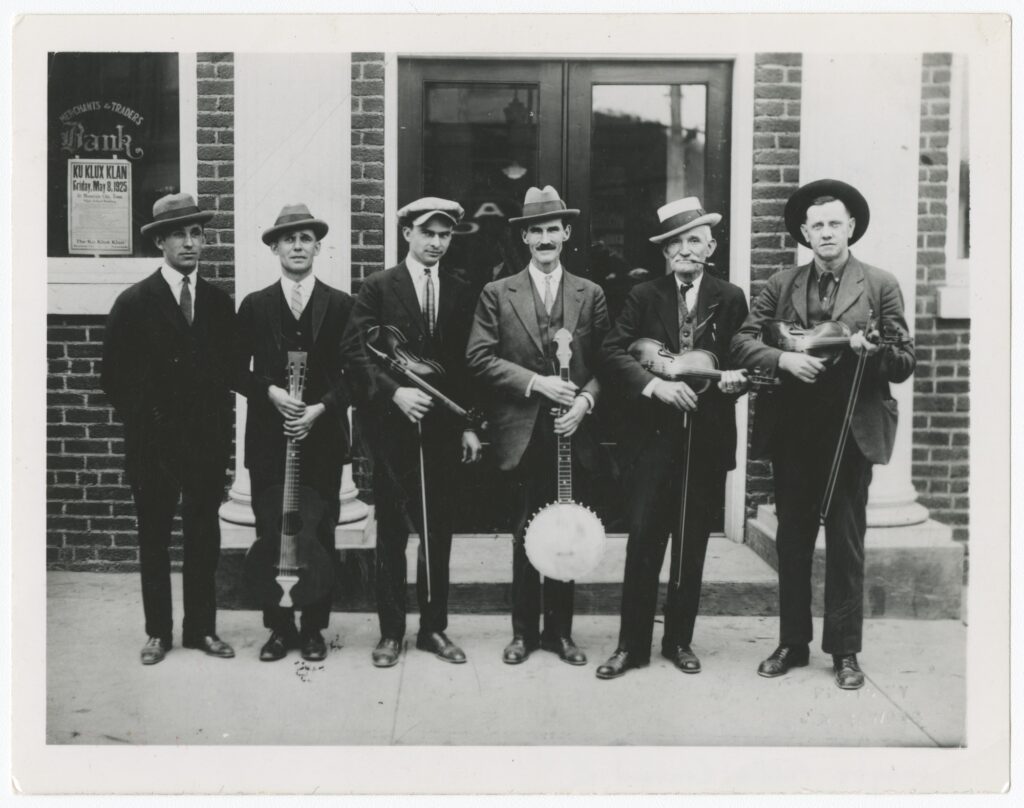
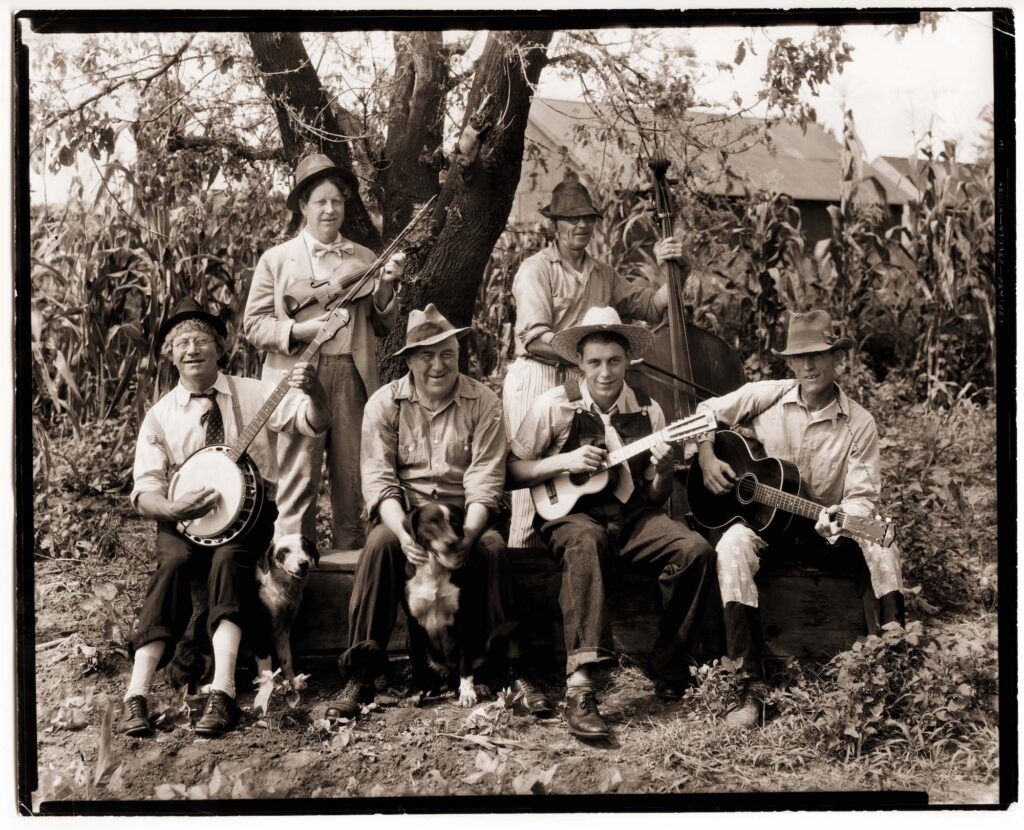
Hillbilly music attempted to develop a visual identity in parallel with its musical identity. The hillbilly image was overalls and anything ill-fitting or unfashionable, often with markers of poverty made obvious through dirt or crude repairs. Overalls are work clothes, but they were also worn by children, adding to the primitivism of the look. That they can be worn oversized and floppy sets them in comic contrast to tailored menswear as well. Publicity photos of the Hill Billies, ca. 1928, show the group outdoors, wearing baggy overalls, bandanas, and hats that are distorted in one way or another—brims bent, turned backwards, crowns unevenly creased, or otherwise worn askew. The impression is one of grown men who either did not know how to dress themselves or didn’t care to. It’s a sharp contrast to the Okeh Records catalog illustration for the Hill Billies’ release of Cripple Creek/Sally Ann (1925) that featured the group looking notably more staid in a parlor-type setting. Still, it was paired with a colorful description that celebrated the “rollicking melodies” of “these here mountaineers.” A contemporaneous photo taken at a 1925 fiddler’s convention in Mountain City, Tennessee, shows Al and Joe Hopkins and Elvis “Tony” Alderman looking refined in fashionable suits, ties, and hats. It appears musicians and record companies vacillated in how best to present to audiences. However these artists may have embraced and exaggerated their regional origins, they could also afford to dress in a manner befitting any urban capital. It is unclear how much the Hill Billies’ costuming and exaggerated promotional styling was Ralph Peer’s influence and how much was the band’s own inspiration. Hopkins’s statement about being “just a bunch of hillbillies” implies that he did, on some level, identify with the stereotype, or understood how New Yorkers at Okeh might have perceived them, and chose to have a sense of humor about it.11
A particularly theatrical photo of the Bogtrotters, a Renfro Valley, Kentucky, group, features seven members wearing overalls that, upon closer inspection, appear to be brand new, as if they had just been purchased for the occasion. The dark blue raw denim is unfaded and unsoiled, and the turned-up cuffs and bibs look rigid. Later images of band members see them looking much more relaxed, if not so coordinated. The overalls contribute to an enactment of rural life, but the artificiality, being as obvious as the fake facial hair, is honest about its own constructedness. This parallels what was happening with the music more broadly. Historian Diane Pecknold explained that while Barn Dance listeners embraced the nostalgic images of rural community that hillbilly radio offered, they were well aware that the image was manufactured for their entertainment. This engagement was heightened by magazines that included features on popular barn dance performers and gave listeners the chance to write in and share comments. In these fan magazines, such as WLS’s Stand By!, many of the performers are depicted at home, dressed conventionally, and presenting as respectably middle class. These publications also offer insight into fans’ reactions to their favorite performers. Historian Kristine McCusker recounts a particularly telling exchange in 1931 between Emma Riley Akeman, a migrant Kentuckian then residing in Hamilton, Ohio, and National Barn Dance star Bradley Kincaid. She was disappointed that the singer appeared in rustic costume at a recent show in Hamilton and insisted that the image he perpetuated made Hamiltonians “hate Kentuckians the worse.” It’s an allegation that suggests southern migrants like Akeman were already facing prejudice in their new midwestern home, and hillbilly stereotypes only made things more divisive. In his apology, Kincaid noted that “the theater people everywhere demand that you wear the costume in keeping with the type of program you give. The costume I wore is their conception of what the average mountain boy would look like. Personally, I would have liked to come out in a nice new suit, but they would not let me.” Clearly, the hillbilly image signified different things to producers, performers, and audiences, and it was communicated through an increasingly sophisticated network of live performance, radio, records, and magazines that intersected to foster a multimedia participatory fan culture.12
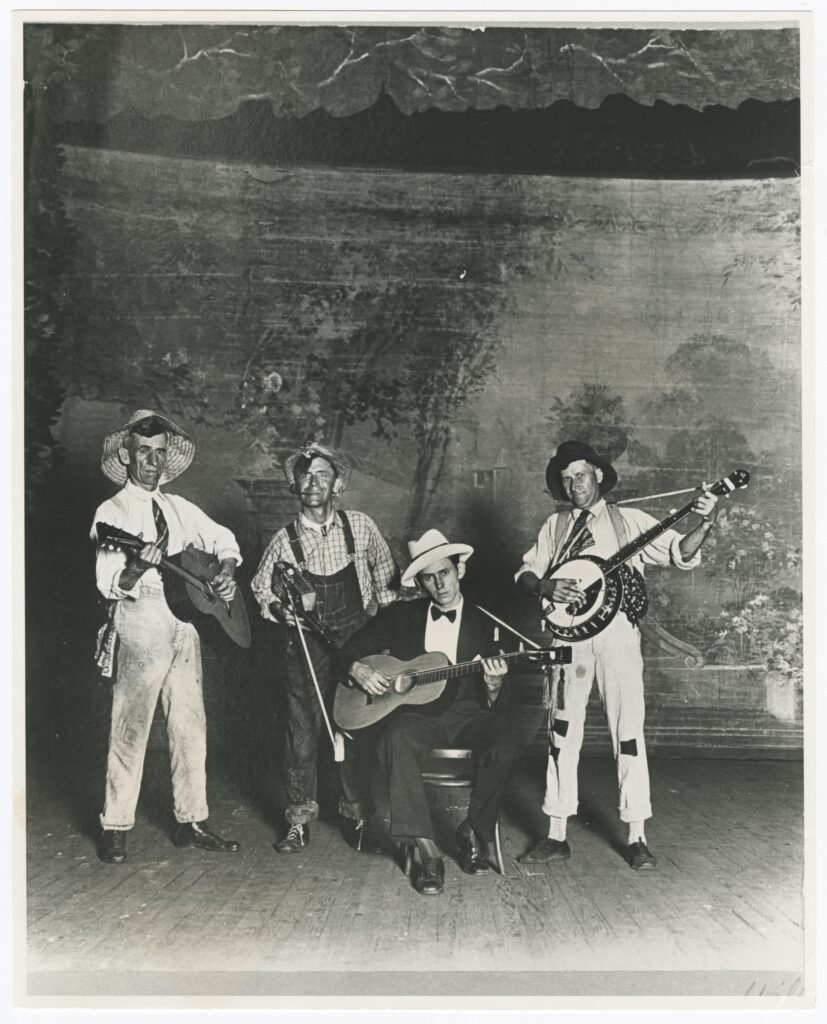
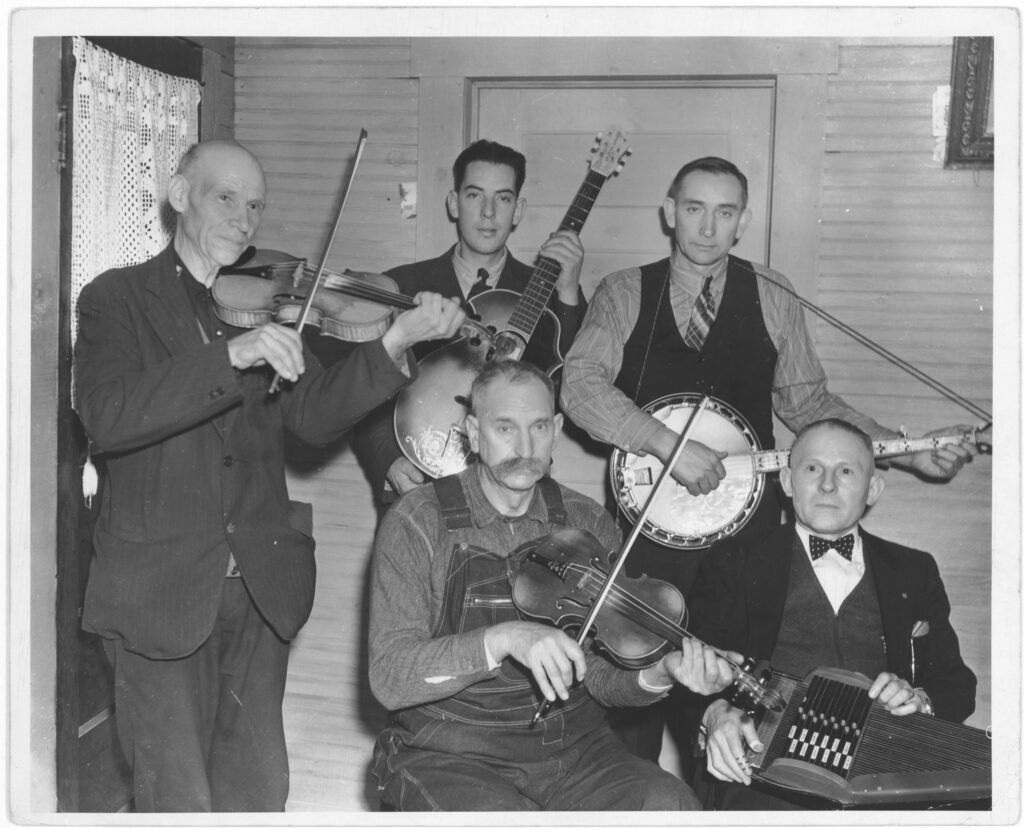
George Hay, who worked on the National Barn Dance from 1924, was hired two years later by Nashville’s WSM, where he would go on to create the Grand Ole Opry. Hay was instrumental in styling the names and image of performers to match a hillbilly aesthetic, even as he personally shied away from the term and preferred “old-time music.” Opry broadcasts presented as informal and spontaneous and leaned in to the romantic idea of amateur players and local characters, but programs were booked and scheduled in advance, and an established roster soon emerged. Under Hay’s guidance, artists like Dr. Humphrey Bate and His Augmented String Band became Dr. Humphrey Bate and His Possum Hunters, a name change that accompanied a transition from more refined “Sunday best”–type fashioning to overalls, ill-fitting short pants, and sloppy headwear. In this case, the bandleader was decidedly not a hillbilly. Bate hailed from a comfortable middle-class family and was a physician who had studied medicine at Vanderbilt University. The Possum Hunters were regulars at the Opry until 1936. Hay also christened the Binkley Brothers’ Dixie Clodhoppers, a Tennessee-based group who first recorded in Nashville in 1926 and became Opry regulars. Photos depict the band in denim overalls, patched and dirty work pants, and floppy straw hats. The outlier was guitar player Jack Jackson, who stands out from the group in a trim black suit and bowtie.13
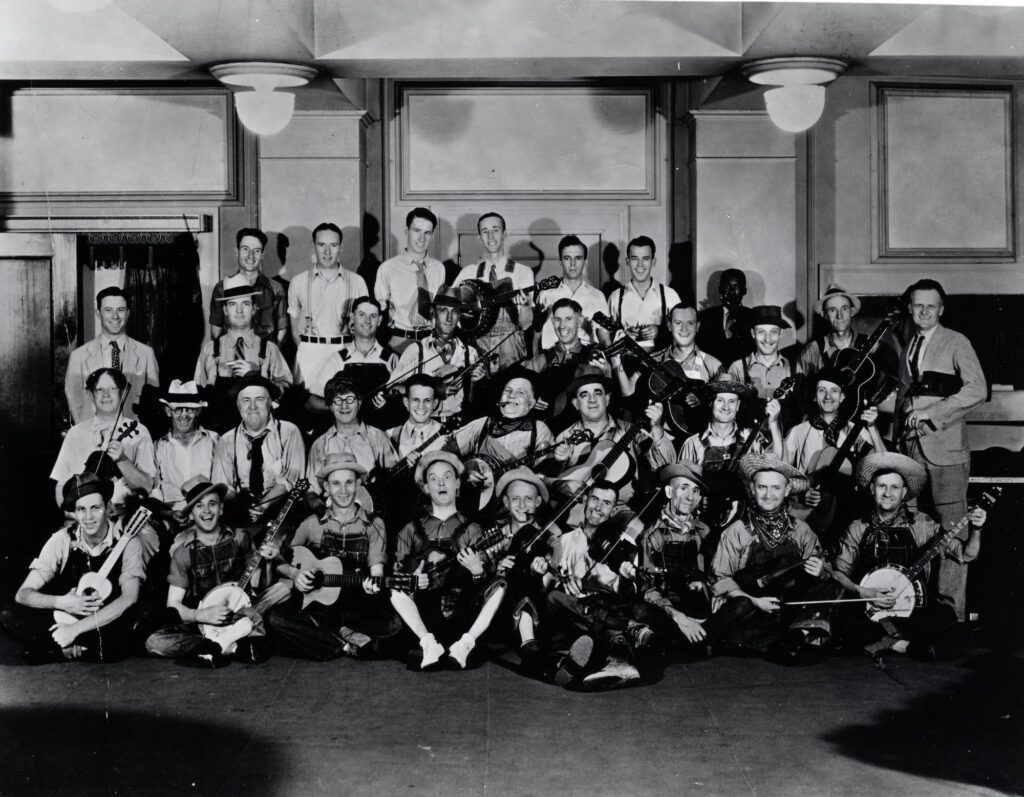
It was around 1928, when the show was recorded in front of a live studio audience, that Hay was most interested in artists dressing like hillbillies. According to Alcyone Bate Beasley, who played with her father’s group, the Possum Hunters, as a girl, “The only time I saw a performer dress up in overalls and kerchief was when it was a costume. They always dressed in their best clothes to come to the station.” Hay was not alone in this project. The Crazy Barn Dance, a similar radio program sponsored by the Texas laxative company Crazy Water Crystals, which recorded live from a studio in Charlotte, North Carolina, also encouraged performers to style themselves as “hayseeds.” Crazy Water Crystals Company manager J. W. Fincher insisted that the players, most of whom hailed from urban, industrial backgrounds, perform in overalls, straw hats, plaid or gingham work shirts, and neckerchiefs. Women performers didn’t appear in overalls at this time, although their clothing—sunbonnets and simple gingham or calico dresses—veered towards the rustic and antiquated. Jean Meunich, who was a popular Chicago nightclub singer, adopted this look when she was rechristened Linda Parker, “the sunbonnet girl,” once she joined the Cumberland Ridge Runners for the WLS Barn Dance.14
It’s tempting to see the influence of industry operators like Fincher, Peer, or Hay as exploitive, and that they pressured musicians into becoming caricatures of themselves, but the mixed reactions of the musicians suggest that it wasn’t so simple. Few of these performers regularly dressed in overalls, and it’s likely they were hamming it up in a lot of the publicity images. While some ambivalence is evident, there’s also no reason to assume the artists lacked an understanding of the entertainment business, how wardrobe was part of the performance, and how a constructed image could also be a unifying image. Artists may not have agreed over the “hillbilly” label, but they embraced the populism and commercial potential of the genre. Reflecting on his career, Clayton “Pappy” McMichen of the Skillet Lickers summed it up thusly: “I’ve noticed in my 35 years of show business that there’s 500 pairs of overalls sold to every one tuxedo suit. That’s why I stick to the swamp opera.” McMichen, incidentally, hated the term hillbilly but remained committed to the music.15
Hillbilly as Industrial Worker
Textile and clothing production was also a big part of the lived experience of many of the musicians and the communities they came from. Hillbilly music looked nostalgically to the past but was firmly rooted in the social, commercial, and media realities of the twentieth-century South. Huber has shown this to be particularly true of music from the Piedmont, where many of the earliest field recordings were taped, and asserts that “Hillbilly music actually emerged in a rapidly modernizing society of cities and towns, railroads, two-lane highways, hydroelectric plants, and textile mills.” It was the textile mills that shaped the economy of the Southeast and brought people, one or two generations removed from country life, together.16
Bib overalls are the product of what was an accelerating national ready-made clothing industry. Southern cotton was supplied by rail to factories in the eastern and southeastern states that fabricated textiles and garments. Larger workwear clothing manufacturers that still exist, such as Lee (Merriam, Kansas), which has made apparel since 1913, and Carhartt (Detroit, Michigan) since 1889, supplied retailers across the country, and there were smaller regional workwear manufacturers whose customer base was more localized. Catalog shopping was also an option, and businesses like Sears-Roebuck and Montgomery Ward, as well as dry goods stores with multiple retail locations, like J. C. Penney, founded in 1902, offered their own brands of workwear by the 1920s. Standardized styles and sizing, along with the branding and advertising used to distinguish the maker of one virtually identical pair of overalls from another, are all emphatically modern.17
Overalls were cheap and accessible, but they were also the product of a highly developed multifaceted industry. The ability to produce a huge quantity of standardized garments was the direct result of industrial modernity—synthetic indigo dye, large scale rope-dying and ring-spinning, power looms, cutting and sewing machines in a factory system, all technological advancements that came to fruition at different moments throughout the age of industry, that by the early twentieth century had coalesced to support clothing manufacture at a scale theretofore unknown. Nowhere was this more apparent than in the southern Piedmont, which had experienced rapid expansion of the textile industries since the 1880s. In 1927, the region officially surpassed long-dominant New England to become the world’s center of textile manufacturing and produced approximately two-thirds of the cotton cloth manufactured in the United States. By 1929, the Piedmont states of Virginia, North Carolina, South Carolina, and Alabama contained almost fourteen hundred textile mills. North Carolina, and Greensboro in particular, boasted the vast Cone Mills network that included the Revolution, Proximity, and White Oak Mills, with White Oak being the nation’s leading denim producer. Greensboro was also home to the Blue Bell Overall Company, established in 1919, that grew to be one of the largest workwear manufacturers in the world by 1936.18
The manufacture of textiles and clothing was foundational to working-class life and culture in the area. Mills and their supporting industries brought people together into vibrant urban communities that served as crucibles for creative reimagining and blending of old fiddle tunes, vaudeville, jazz, blues, and Tin Pan Alley into what came to be hillbilly music. Many of the hillbilly musicians were, or had been, textile workers—Huber has traced one hundred twenty-eight hillbilly recording artists who had, at some point, worked in southern textile mills.
Many “traditional” country songs were written by mill workers, including Fred J. Lewey and Charles W. Noell’s “The Wreck of the Old 97,” which became one of the most widely recorded songs in country music. Vernon Dalhart’s 1924 recording of it for the Victor Talking Machine Company was the first hillbilly record to sell more than a million copies. Huber asserts that “no other group of southern industrial workers did more to create this commercial music than Piedmont textile millhands.” While the New York–based talking-machine companies traveled nationwide to conduct field recordings, the relative proximity by rail and dense population made the Southeast particularly appealing to visit, and proved to be wellspring of musical talent. The connection between overalls and the region, and its workers and musicians, ran deep and was materially embedded beyond everyday dress or stereotype. Many hillbilly musicians were connected to the industries that made these garments and to communities that shared folk songs as much as they inspired new ones about the changing world they were a part of.19
Constructed Authenticity
Overalls are an effective material correlate for the music at this moment of transition and contradiction. They helped performers embody the antimodern hillbilly stereotype, even as they were the product of a modern industry. Likewise, hillbilly music was characterized as “old-time” and traditional but was made by artists who drew directly from the dynamic environment and media culture they and their audiences were a part of. The fact that they served as a costume doesn’t make the link between overalls and country life any less legitimate. People in rural communities did live and work in overalls, as they are practical and unpretentious. The connections that hillbilly musicians trafficked on, and often heightened, were relatable for a reason.
Understandings of hillbilly music as an “authentic” folk tradition and a commercial enterprise were contested from the start. The comedy and theatrics of the barn dance shows offended the tastes of some preservationists, and the advertising sponsorship needed to keep the broadcasts on the radio bound the music to commercialism. Yet, it was enjoyed by listeners who found familiarity in the songs and a cultural connection to the musicians. So much so, that the genre only grew in popularity, evidenced through national radio shows, touring performances, and the eventual consolidation of the country music business in Nashville by the 1950s.20
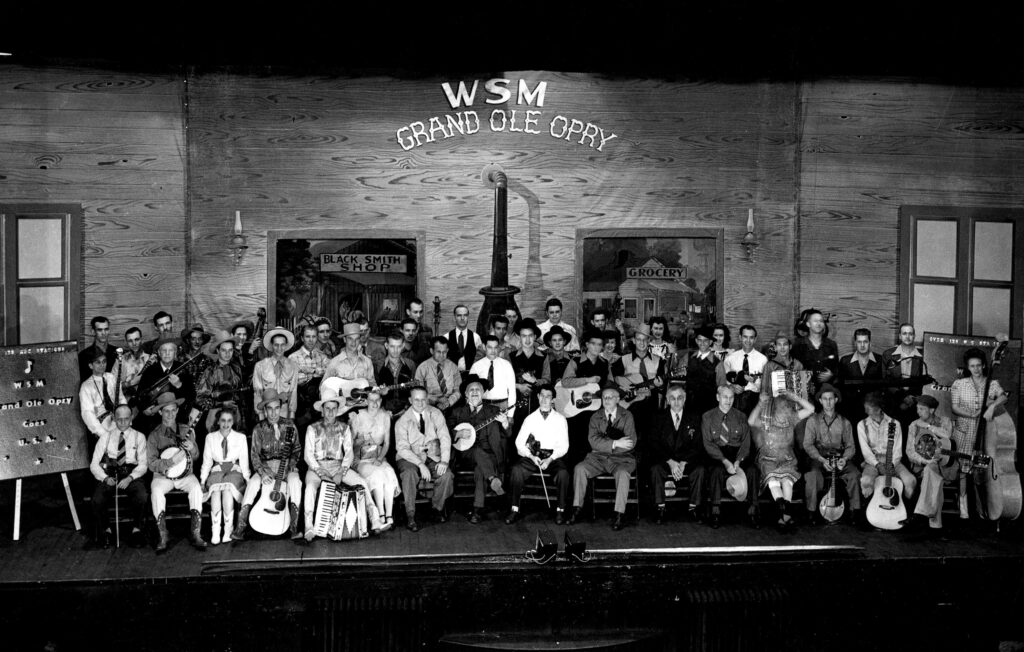
In an ensemble photo (ca. 1930) of the cast of the Grand Ole Opry, the first two rows are occupied by musicians in overalls. In 1943, the year that the Opry moved to the Ryman auditorium, overalls are barely present. The aesthetic is decidedly more western, and there are significantly more cowboy hats, more variety in men’s shirts and suits, and more women altogether. The shift in styles reflects the shift in the music and instrumentation too: fewer fiddles, more guitars, even an accordion. Country always merged musical traditions of different cultures and communities, but the West and Southwest, and the accompanying cowboy image, persisted through the rest of the century and into the present. While westernwear had always been visible, the cowboy aesthetic became dominant by the later 1930s, with artists like Gene Autry and Hollywood Westerns constructing a cowboy image that was more aspirational and heroic than the hillbilly could ever be. In this era, as the artists and industry embraced greater professionalism, the name “country” eclipsed “hillbilly” for good.21
In the later twentieth century, hillbilly types still appeared here and there, usually as comic relief, and usually personified by the bass player. Speck Rhodes started his musical career with the Original Rhodes Show, in a very theatrical ensemble of ripped and patched overalls, bare feet, and blacked-out front teeth. He abandoned this inflated caricature in favor of loud plaid suits in clashing colors and bowler hats when he later accompanied Porter Wagoner’s band on the Porter Wagoner Show in the 1960s and 1970s. Speck was still clowning, but in a different outfit. The hillbilly stereotype persisted as country music developed and changed, but the two were no longer bound to one another. The Beverly Hillbillies was a successful ensemble comedy that ran on television for nearly ten years, starting in 1962, while the variety show Hee Haw lasted even longer, from 1969 to 1992. Hee Haw aligned more closely with the vaudeville roots of the Opry and paired musical guests with sketch comedy. These late 1960s hillbillies feel even further removed in time and place than their 1920s forbearers, but the styling of overalls, gingham or plaid shirts, and straw hats stayed remarkably consistent.
An embroidered suit glittering with rhinestones is the kind of high artifice that can feel like a jarring contrast to notions of “authentic” cowboy or rural lifestyles. But a constructed image was always part of the genre, whether dressed up or dressed down. Despite being a product of a technologically advanced modern industry, the ability to communicate “working class” and “rustic” made overalls immediately legible and useful for a brief window of time in the history of country music, when old-time songs merged with commercial broadcasting and artists adapted to create new forms from old. Overalls offered consistency, a connection to rural roots that was not without its contradictions and detractors but was nevertheless effective for roughly two decades as artists, audiences, and industry carved out a niche and a stylistic home.
Sonya Abrego is a historian of twentieth-century American fashion who uses object-based methods to bridge design history with American cultural history. She is the author of Westernwear: Postwar American Fashion and Culture, and she teaches at Parsons School of Design and the Fashion Institute of Technology in New York City.
Header image: The Hill Billies (includes Elvis “Tony” Alderman, Charlie Bowman, Al Hopkins, John Hopkins) performing outside, 1928. Courtesy of the John Edwards Memorial Foundation Records (20001), Southern Folklife Collection at Wilson Special Collections Library, UNC-Chapel Hill.
NOTES
- Richard A. Peterson, Creating Country Music: Fabricating Authenticity (University of Chicago Press, 1997), 5; Bill C. Malone, Singing Cowboys and Musical Mountaineers: Southern Culture and the Roots of Country Music (University of Georgia Press, 2003), 70. Patrick Huber has noted that not only is the mythology around the genre’s southern rural origins largely constructed, many of the recordings during the period in question here were made in New York City with the help of professionally trained musicians. “The New York Sound: Citybilly Recording Artists and the Creation of Hillbilly Music, 1924–1932,” Journal of American Folklore 127, no. 504 (2014): 140–158.
- Susan Strawn, Jane Farrell-Beck, and Ann R. Hemken, “Bib Overalls: Function and Fashion,” Dress 32, no. 1 (January 1, 2005): 46.
- Diana De Marly, Working Dress: A History of Occupational Clothing (Batsford, 1986).
- Dave Tabler, “The Overalls Club Movement of 1920,” Appalachian History.net, December 13, 2017, https://www.appalachianhistory.net/2017/12/overalls-club-movement-of-1920.html; Rose C. Feld, “Overall and Old Clothes, Omens of Lower Prices,” New York Times, April 25, 1920.
- “Jimmie Rodgers,” Country Music Hall of Fame, accessed August 26, 2025, https://www.countrymusichalloffame.org/hall-of-fame/jimmie-rodgers; Peterson, Creating Country Music, 45, 43.
- Peterson, Creating Country Music, 47, and “Jimmie Rodgers,” Country Music Hall of Fame; Peterson, Creating Country Music, 41. Peterson notes that it is very unlikely that A. P. wore overalls; Jill S. Seeber, “Eck Robertson: The Pioneer of Commercial Country Music,” Texas State Historical Association, October 1, 1995, updated September 27, 2015, https://www.tshaonline.org/handbook/entries/robertson-alexander-eck; Holly George-Warren and Michelle Freedman, How the West Was Worn (Harry N. Abrams and the Autry Museum of the American West, 2001), 105.
- Diane Pecknold, The Selling Sound: The Rise of the Country Music Industry, Refiguring American Music (Duke University Press, 2007), 5. Bill Malone has also addressed the cynical and often exploitive attitudes of the larger industry toward hillbilly artists. Malone, Singing Cowboys and Musical Mountaineers, 72; Anthony Harkins, Hillbilly: A Cultural History of an American Icon (Oxford University Press, 2004), 83; Peer’s quotation comes from a 1959 interview with Lillian Borgeson, quoted in Peterson, Creating Country Music, 47; Peterson, Creating Country Music, 8.
- Peterson, Creating Country Music, 27; Paul Tyler and other scholars have noted that the WLS broadcast was not the first radio broadcast to feature old-time fiddlers. Notably, WBAP out of Fort Worth, Texas, broadcast fiddle music semiregularly several times a month prior to the National Barn Dance‘s April 1924 debut. Yet, it’s generally accepted that Chicago’s WLS was a trailblazer of this format and remained consistent from 1924 through 1960. Paul L. Tyler, “The Rise of Rural Rhythm,” in The Hayloft Gang: The Story of the National Barn Dance, ed. Chad Berry (University of Illinois Press, 2008), reproduced at DrDosido’s Fiddlers Reunion website, accessed June 16, 2025, https://drdosido.net/ddcd/book-rural_rhythm-1.html; Michael Ann Williams, Staging Tradition: John Lair and Sarah Gertrude Knott, Music in American Life (University of Illinois, 2006), 8.
- Archie Green, “Hillbilly Music: Source and Symbol,” Journal of American Folklore 78, no. 309 (1965): 213.
- For more on the origins and use of hillbilly, see Pecknold, The Selling Sound; Green, “Hillbilly Music”; Jeffrey J. Lange, Smile When You Call Me a Hillbilly: Country Music’s Struggle for Respectability, 1939–1954 (University of Georgia Press, 2004); and Nancy Isenberg, White Trash: The 400-Year Untold History of Class in America (Viking, 2016); Harkins, Hillbilly, 15; Green, “Hillbilly Music,” 213.
- Green, “Hillbilly Music,” 211.
- Pecknold, The Selling Sound, 42; Kristine M. McCusker, “‘Dear Radio Friend’: Listener Mail and the National Barn Dance, 1931–1941,” American Studies 39, no. 2 (1998): 173–195; Stand By! was first published as Prairie Farmer’s WLS Weekly. Tyler, “The Rise of Rural Rhythm”; McCusker, “‘Dear Radio Friend,'” 188.
- Peterson, Creating Country Music, 71, 73.
- Peterson, Creating Country Music, 76; Patrick Huber, Linthead Stomp: The Creation of Country Music in the Piedmont South (University of North Carolina Press, 2008), 251; Harkins, Hillbilly, 91.
- Robert Shelton, The Country Music Story: A Picture History of Country and Western Music (Arlington House, 1966), 25.
- Huber, Linthead Stomp, 4.
- Michael Harris, Jeans of the Old West: A History (Schiffer Publishing, 2010), 28.
- Sonya Abrego, Westernwear: Postwar American Fashion and Culture (Bloomsbury Visual Arts, 2022), 39–40, 63; Huber, Linthead Stomp, 6, 7; Sonya Abrego, “Cone Mills Denim: An Investigation into Fabrication, Tradition, and Quality,” Fashion Theory 23, nos. 4–5 (2019): 515–530.
- Huber, Linthead Stomp, 24, 22.
- Williams, Staging Tradition, 12.
- Ernest Tubb was particularly influential in promoting the shift from “hillbilly” to “country” or “country and western,” which his label, Decca, adopted in 1948. Tubb’s involvement reveals that musicians did have a significant degree of influence. Harkins, Hillbilly, 108.