
In 1982, my cousin David “Hoss” Johnson was the last recruit Bear Bryant signed to the University of Alabama. He got his nickname at birth when he arrived on this earthly playing field at a whopping thirteen pounds, played in forty-eight games for Alabama, started in twenty-eight, and made the All-Decade ’80s Team.1
For five years, my cousin Kelsey worked for the Tuscaloosa dentist who made the Alabama football team’s mouthguards. At the start of the season, they would make about seventy-five to cover everyone, replacing about twenty weekly. All in all, Kelsey helped protect, conservatively, more than seven hundred sets of teeth for the Crimson Tide.
A good friend remembers spending an entire Sunday afternoon in the early aughts trying to work up the courage to apologize to a man at church who was offended by her saying “War Eagle.” When I texted to confirm this story, she remembered another detail—the church-going Alabama fan went missing for twenty-four hours after another Bama loss. “That’s when I realized he needed Roll Tide rehab,” she said.
My mother’s people hail from Northwest Alabama—mostly Winfield, Hamilton, and what used to be called Possum Flat. Our family’s football allegiance belongs to the Alabama Crimson Tide (except for one wayward pharmacist who went to Auburn). But growing up in Norfolk, Virginia, where basketball is king, being an Alabama fan mostly meant that the game would be on TV on Saturdays and mom might make chili. Still, Bama fandom had been modeled since birth, and our biannual trips to visit our Alabama family reinforced my knowledge of and participation in these traditions. Bama fandom was part of our family identity. No matter how different our daily lives were, we pulled for the same team.
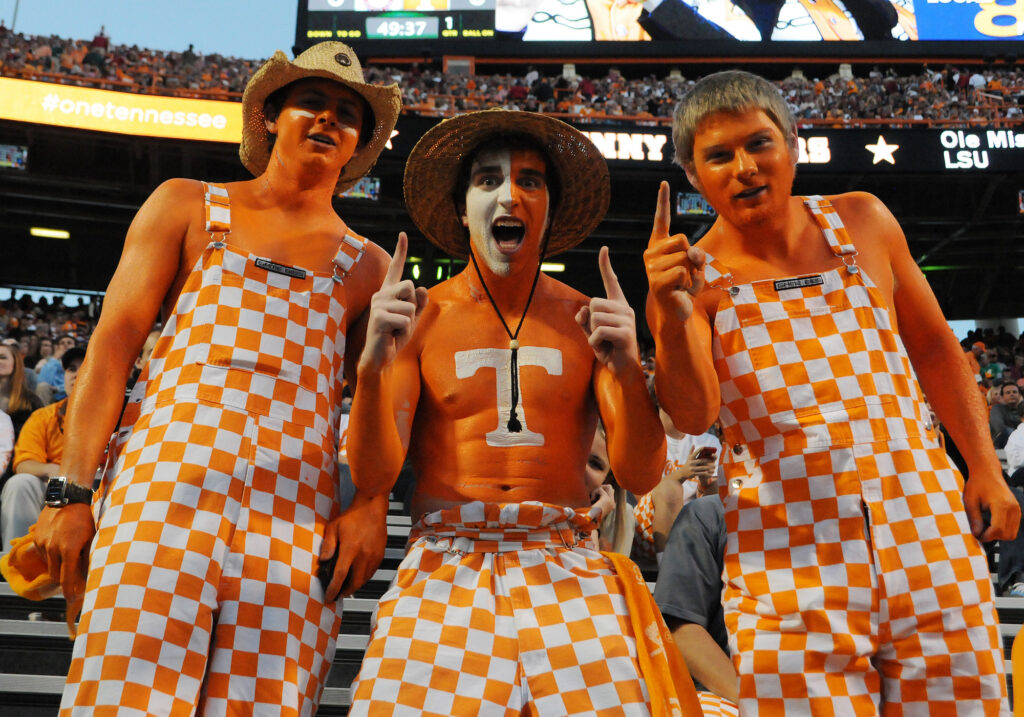
When I moved to Nashville in 2010, I was introduced to a different fandom that surpassed my greatest imagination. Baby girls were named after brigadier generals (read: Robert Neyland, three-time Tennessee Volunteers coach). A few of my high school English students owned zero polo shirts that were not Tennessee Orange. Growing up in parts of the South without encountering extreme allegiance to an SEC football team—for the somehow uninitiated, I’m referring to the Southeastern Conference (SEC), a sixteen-team American collegiate athletic association—is like trying to visit Nashville while avoiding country music. It plays on the streets, piped through speakers or pouring out of honky-tonks. It’s plastered on billboards that advertise new shows, new albums. And it’s worn, signaled in all manner of western wear. I think about the outward expression of these identities a lot because I work in downtown Nashville, where tourists from all over the world arrive in varying degrees of southern cosplay. My everyday landscape includes bachelorettes of the greater Midwest walking down Broadway with blistered feet in brand-new boots they bought for their trip to Music City. In the same way SEC fans wear school colors, country music fans want to look the part of a sound that moves them, either because of regional identity or perceived authenticity.
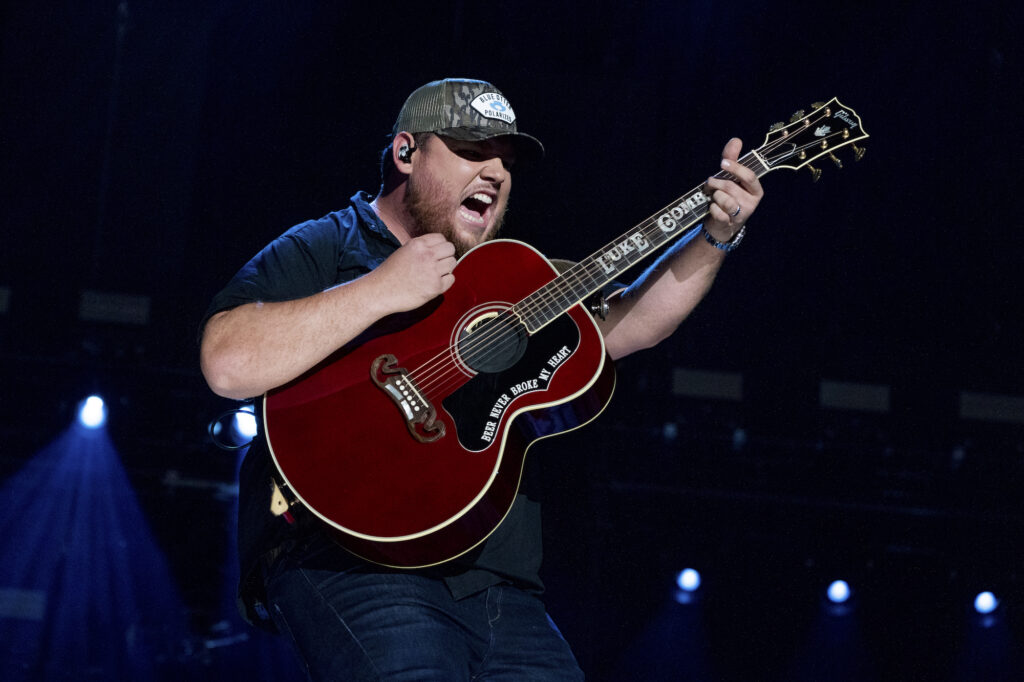
Country music and football have long overlapped. Take Hank Williams Jr.’s rollicking “All My Rowdy Friends Are Here on Monday Night” (1989) for ABC and the NFL, an adaptation of his 1984 Top Ten single, “All My Rowdy Friends Are Coming Over Tonight.” “Our Special Forces are in full flight,” he sings. “We’re coming by air and on the ground / Monday night football’s takin’ over the town.” Or turn up Brad Paisley’s blue-collar work anthem, “Country Nation” (2015), in which he namechecks two SEC schools:
We work in the factories and the fields
assembly lines, the coal mines and the steel mills . . .
We’re Mountaineers, Volunteers,
We’re the Tide that rolls, we’re Seminoles . . .
But as a Bama Fan in Vols country—and I mean country, as I live in Nashville—my interest was piqued when I began to hear a growing number of country songs featuring SEC schools. For instance, Ray Fulcher’s “Love You Son, Go Dawgs” (2020) mixes familial love and team spirit, and Old Crow Medicine Show’s “Big Orange T” (2022) nods to the unity of Tennessee fandom. Then, within the span of two years, several Romeo and Juliet–style tales about lovers from rival teams were released: Conner Smith’s “I Hate Alabama” (2021) and its follow-up, “Orange and White” (2022); Megan Moroney’s “Tennessee Orange” (2022); and Morgan Wallen’s “Tennessee Fan” (2023). These songs don’t just reference football—they’re SEC soap operas set against collegiate backdrops. “In the stands in Tuscaloosa / Might’ve lost by 22,” Conner Smith sings, “But I hate Alabama / ‘Cause that’s where I lost you.”2
Even after factoring in that I’m much older than the college-age demographic that these songs center, the sheer drama and self-conscious gravitas they express had me rolling my eyes—but not looking away. I had to know more about the melding of fandoms and the identities and commercialism that drive these now-global phenomena.
South on Ya
The first American football game is reported to have been played between Rutgers and Princeton in 1869. And from there, interest in the sport quickly grew, especially among southerners. “In the years after the Civil War, [the South] didn’t merely embrace football,” Auburn historian Wayne Flynt argues, “they needed it.” In the ESPN docuseries Saturdays in the South: A History of SEC Football, he observed:
After the Civil War, the South undergoes a huge economic collapse, but it also has a huge psychic collapse. One out of every five males between the ages of eighteen and forty-five is killed. If you fail economically, if you fail in war, where do you take pride? Where do you find a place of saying, “Hey, we’re proud to be southerners”?
One answer was football. According to historian John McCardell in Saturdays in the South, “During the 1890s, we begin to see the erection of monuments and memorials to the Civil War dead, and football, it is as close to replicating the combat experience as you are likely to find.” In the same segment, Vince Dooley, Georgia’s head coach from 1964 to 1988, says, “It was pretty brutal, football at the turn of the century. One year, there were eighteen deaths in football.” In fact, the sport was so violent during this time that playing football was almost made a felony “punishable by a year on a state chain gang.”3
What kept the sport from becoming a felony? A mother’s love and fear that the law would make southerners look backward. The backlash occurred after a young University of Georgia student named Richard “Von” Gammon died from a subdural hematoma following a hit he took in a football game against Virginia. Community leaders throughout the state quickly rallied to protect college students from the dangers of football. The legislation lacked only the signature of Governor W. Y. Atkinson, a progressive, when Von Gammon’s mother stepped in to plead for the sport, saying, “It would be inexpressibly sad to have the cause [Von] held so dear injured by his sacrifice.” In the end, Governor Atkinson vetoed the legislation, citing not the boy’s death as the main concern but the South’s image. “What will the Yankees think of us?” asked Atkinson, “They’ll think we’re a bunch of backwoods rubes.”4
Football was one way to level the postwar playing field, and southern schools imported countless Yankee coaches to help their athletes learn the game. And over time, football really did help the South’s antebellum rebrand. When Alabama unexpectedly won the 1926 Rose Bowl, the victory wasn’t just an athletic win—it demonstrated that southerners weren’t just defeated secessionists whose land and prospects had been destroyed. The region and its people, again, had something to offer, and politicians used the publicity around the team’s travel to the Rose Bowl and subsequent win in their ongoing efforts to attract capital to the state of Alabama. The Alabama governor told his victorious 1926 team: “I read in a western paper at the time you left … that the south was full of malaria. This team has demonstrated to the world that there is no hookworm in Alabama.”5
Southern politicians were not the only ones who saw how the South could benefit from the victories of southern football teams. The Southeastern Conference itself has been profit-minded since before its inception in 1932. Carrie Tipton writes:
Despite durable fan belief that college football pageantry represents spontaneous expressions of tradition insulated from market forces, SEC schools have historically led the charge to commercialize multiple aspects of college football, starting in the early 1920s when the Southern Conference schools that later formed the SEC were already vexing the NCAA through their openness to ‘commercializing’ football via means such as athletic scholarships.
In 1939, the conference was ranked in the “most extreme” category in a grouping of college football programs with “profit motives,” and it was this commercial focus that led Sewanee to exit the conference in 1940. But this emphasis has paid off. Today, the SEC conference is a massive, well-oiled machine. In the 2023–2024 fiscal year, the SEC distributed $808.4 million to its sixteen universities, and leaning into its southern identity is still good for business. During its most recent realignment, which brought the Texas Longhorns and Oklahoma Sooners into the conference, some thought the SEC had jeopardized its southernness. In response, the SEC chose country artist Luke Combs and his song “South on Ya” as their 2021 hype song.6
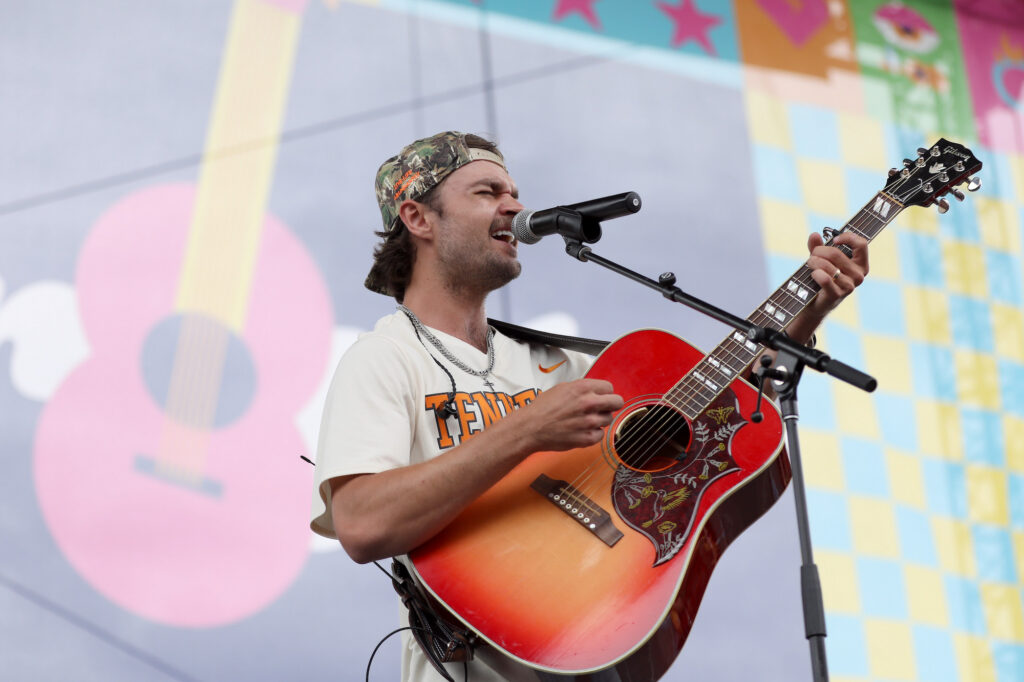
The one-minute music video for “South on Ya” starts with sweeping crowd shots of fans in SEC football stadiums. But in just a few measures, footage transports the viewer out of the stands and into the swamps, backroads, and hollers from which so many SEC teams crafted their team’s identity. The land itself is a character. The video includes footage of a real-life alligator snapping its jaws shut, followed by a young Florida Gators fan clapping his hands together in the team’s trademark Gator Chomp. By the time Combs gets to the chorus, he has called out five of the SEC’s most prominent teams, and though their histories represent some of the fiercest rivalries in sports history, they all, presumably, have this in common:
We got a little dirt road dust runnin’ through our blood
From a never heard of it hometown
I got a can’t quit heart and some take it too far
And a whole lot of never back down
If you come around here, better bring it ’cause we’re no doubt
Gonna put a little South on ya.
Though each team defines itself by its regional differences, Combs’s lyrics communicate the real or imagined growing-up experience of southern players as the thing that gives them the edge over other conferences.7
I Hate Alabama / ‘Cause That’s Where I Lost You
Born into a Tennessee Vols family, Conner Smith got his first guitar when he was four. By age nine, he had signed with BMI, and when he was in high school at Franklin Academy in Williamson County, Tennessee, he was allowed to leave school early to cowrite with big-name Nashville songwriters. But his big break came in 2021 when his friend Hunter Phelps shared the song “I Hate Alabama,” cowritten by Nick Columbia, Drew Green, Phelps, and Lee Starr. Smith recorded it and posted it on Instagram just for fun. When he woke up the next day, the post had more than one million views.8
“I Hate Alabama” tells the story of a romance between a Tennessee fan and a “girl with houndstooth on.” On the almost five-hour one-way drive from Knoxville to Tuscaloosa, the speaker imagines the life that he and his girlfriend might have “ten years down the road.” But the fantasy abruptly ends when she “had to go and break my heart / In a beer can-covered frat house yard,” prompting the speaker to sing:
I hate Alabama
I hate crimson red
And I hate how they yell “Roll Tide”
When I’ve got a Braves hat on my head
And I love Lynyrd Skynyrd
But, Lord, I hate “Sweet Home,”
‘Cause when I hear it all I see
Is a girl with houndstooth on
In the stands in Tuscaloosa
Might’ve lost by 22
But I hate Alabama
‘Cause that’s where I lost you.
Smith shared the urgency he felt to record the song with his label in a 2022 interview with Billboard‘s Jessica Nicholson:
After I heard this song, I knew we needed to get on it quickly to capture the football season … I grabbed my band and producer, and we recorded the song … [Big Machine Label Group president/CEO/founder] Scott Borchetta called me that night and said, “This song is coming out next Friday.” So we had all hands on deck to make that timeline … We put out this song on a Friday and the very next day, Alabama lost in football for the first time in two years. That is what made the song explode. So now anytime Alabama is playing, the song gets some love. After the National Championship Game, I think the streams doubled.”9
Smith rode the wave of his viral debut’s popularity, producing another song of the same formula, “Orange And White,” late in 2022. In this song, a male Tennessee fan and a female Georgia fan hit it off:
I got a Georgia girl singing
Rocky Top
Lining up another Tennessee
whiskey shot
Stealing my heart, and my
Bill Dance hat
Now I’m telling her Athens
ain’t getting her back
“We wrote the song looking at football season and kind of riding towards it,” Smith told The Daily Beacon, the University of Tennessee’s student newspaper, in a 2022 interview. “Every show I play, there’s been someone in Tennessee Vols gear. My music has become synonymous with it, and that’s been really cool to see.” In the same article, Tennessee sophomore Claire Martin admitted how Smith’s formula worked for her, saying, “I like his music because I relate to it a lot. I think because it has a lot of Vols references in it, it makes me more likely to listen to it.”10
I’m Wearing Tennessee Orange for Him
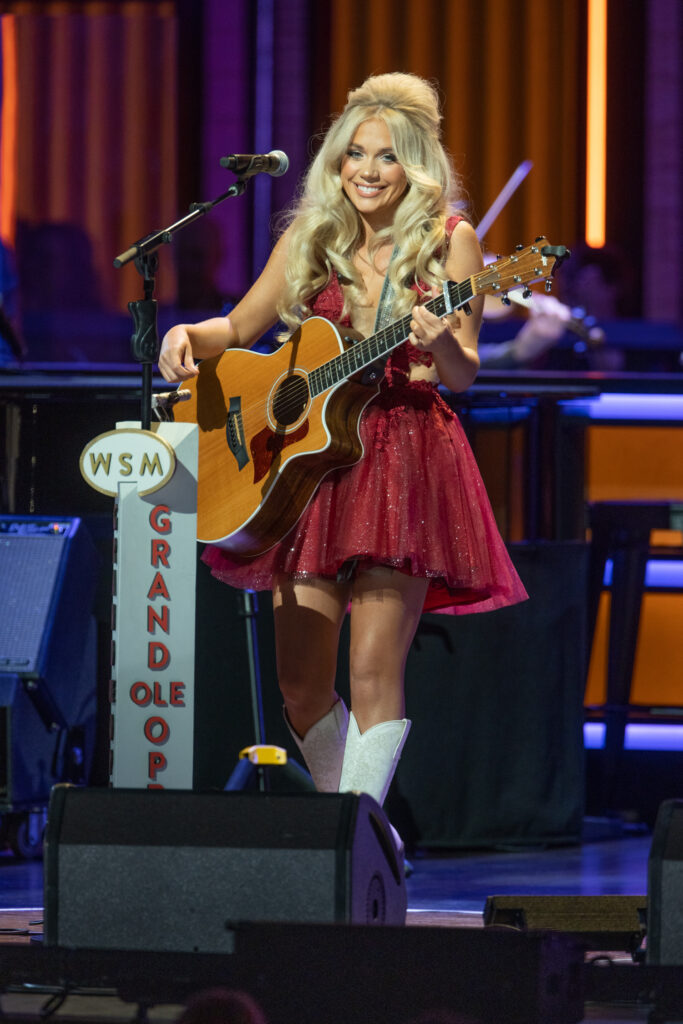
The SEC Romeo and Juliet narrative found continued success with fellow country artist Megan Moroney. Her video for “Tennessee Orange” opens with VHS footage of her younger self clad in a red and white Bulldogs cheerleading uniform, jumping in front of a football game that plays on a grainy TV screen. It’s this kind of lifelong team loyalty that makes the message she wrote in “Tennessee Orange” so hard to deliver to her family:
Mama, I’m callin’, I’ve got some news
Don’t ya tell daddy, he’ll blow a fuse
Don’t worry, I’m doin’ okay
I know you raised me to know right from wrong
It ain’t what you think and I’m still writin’ songs
Just never thought I’d see the day
I’ve never felt this way
I met somebody and he’s got blue eyes
He opens the door and he don’t make me cry
He ain’t from where we’re from
But he feels like home, yeah
He’s got me doin’ things I’ve never done
In Georgia, they call it a sin
I’m wearing Tennessee Orange for him11
The song was self-released in September 2022 as a collaboration with Spotify. Moroney was surprised at the success of the song she cowrote with David Fanning, Paul Jenkins, and Ben Williams. She told American Songwriter, “The only reason we released it was because Spotify gave us an opportunity where I needed to release an original song and the timing happened to be football season … In the first five days, I had a million streams, and my numbers weren’t like that on any of my other stuff.” By the time Moroney’s debut album, Lucky (featuring “Tennessee Orange”), was released on Sony Music Nashville/Columbia Records in May 2023, it was certified platinum. And by late June, “Tennessee Orange” went all the way to number one on the Country Aircheck/Mediabase Country Airplay chart.12
One factor that didn’t hurt the song’s popularity was the rumor that Moroney herself was dating a Tennessee fan, the country singer Morgan Wallen, when the song came out. Though neither confirmed the status of their relationship, Wallen released the Vols-centric track, “Tennessee Fan,” another house-divided love story, just two months later, on his seven-time platinum RIAA-certified album One Thing at a Time.
Guess the jokes on Alabama ’cause they lost big this time
I got the number one pick, blonde hair, red lips
Brought her over to the other side
A little deep south Delta Gamma
Done found a Smoky Mountain man
Yeah, she was raised Roll Tide ’til the day she died
But ever since that night she’s been a Tennessee fan… And all them girls back home say, “How could you love him?”
All them boys probably hate me for takin’ her from ’em
Lord knows her mom and daddy’s jaw would drop
If they heard her singing every word of “Rocky Top“
Another contributing factor to the success of Moroney’s song was her TikTok presence. Just a month after its release in September 2022, she had more than 380,000 followers on the platform, and “Tennessee Orange” had already been used in 32,000 clips, mostly couples sharing their relationship story. In the fall of 2025, Moroney’s TikTok following has grown to nearly 3 million.13
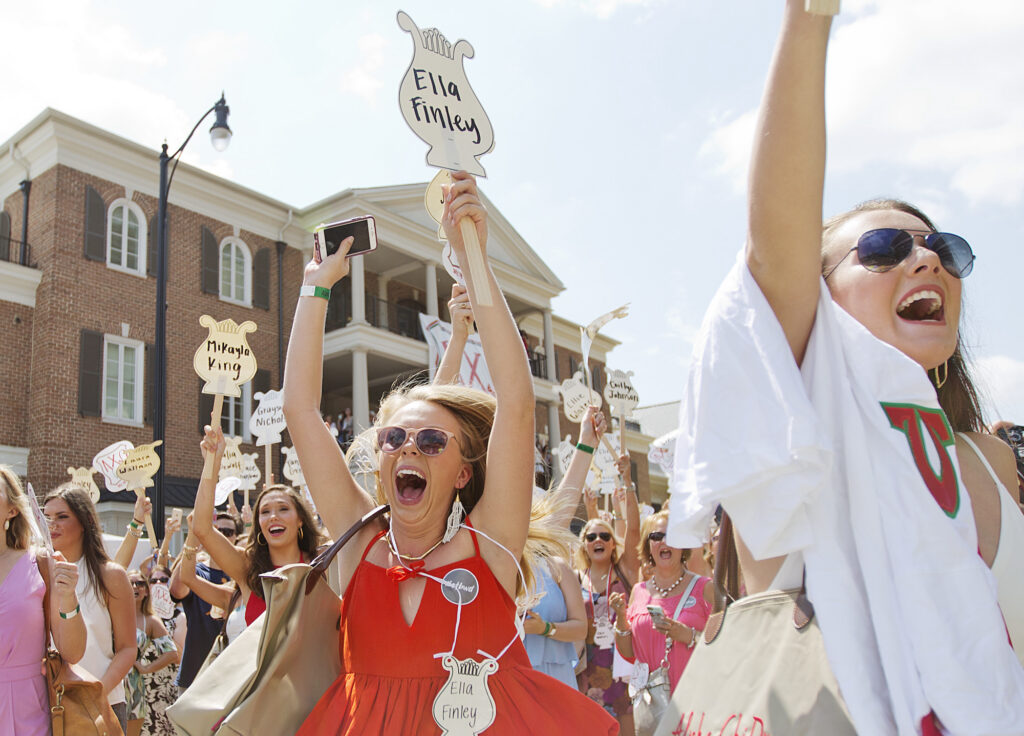
The influence of TikTok in popularizing SEC identity can’t be understated. Journalist Anne Helen Peterson calls RushTok, the term used to describe TikTok videos posted by women throughout the rush process at the University of Alabama, the “best recruiting tool outside of a national championship football team.” Fall 2025 marks RushTok’s fifth “season,” meaning that over the last five years, potential new members have been giving insider insight to viewers both in and outside of the South—from item-by-item outfits of the day to the social nuances of the rush process. RushTok’s audience has grown so much that many of its young “stars” are so bombarded with product from big-name brands that they have to insist on contracts to keep their sponsorship commitments straight.14
And though the Greek system at Alabama continues to grow, the actual number of students from the state continues to drop. As of 2023, a whopping 67.63 percent of Alabama students came from out of state, many recruited on merit scholarships. As Petersen writes, this is because Alabama, like many public schools, “finds itself with less public funding than ever and an implicit mandate to recruit out-of-state tuition dollars.” Stephen Burd, senior policy analyst at the think tank New America, quoted in a 2016 article for the New York Times, confirmed this trend: “Everybody wants the kids from the Northeast and California,” he wrote. “They are wealthy and they tend to be good students.” But this trend has put lower-income students and in-state residents in a challenging position of finding a college they can access and afford. In Burd’s words, “There is less aid for low-income students and there are fewer seats,” which further advantages those who already have one.15
This also means that sororities and fraternities at Alabama and schools like it are filled with growing numbers of students not from the South. Petersen suggests COVID as a reason that many students outside the South are drawn to schools with big football teams “where sororities and fraternities are still cool (not ‘problematic’) and where they can engage in a sort of white southern cosplay, complete with accent, politics, and remove from the pressures of progressivism” of the places where many of these students grew up. Understanding that students lost traditional high school experiences, such as prom, to social distancing, it’s easier to see the draw of real or imagined college experiences as described in songs like those by Smith and Moroney.16
And while I believe the SEC house-divided love song is still the first of its kind in country music, it is not the first SEC love song in popular music. Another songwriter inspired by an imagined college experience was Louisiana governor Huey Long. Although he himself never completed college, he wrote many songs about college life, which he viewed as “a glamourous land of make-believe.” He and composer Castro Carazo published “Sweetheart of Vandy” and “Darling of LSU,” two saccharine-sweet pop songs, in 1935. With lyrics like “My dear so true, darling of LSU / I want you near forever, dear / My heart beats true,” it’s perhaps not surprising that these tunes fell to obscurity in the shuffle of history. But the tunes are still precedent for SEC romance in popular music, with the added benefit of free publicity for the school.17
The Wildness That Defines Saturdays
“Music is the spark that turns college football from a game into a spectacle,” said Curtis Friends, ESPN vice president of sports marketing, in a press release announcing several SEC anthems for 2025. “Every artist we collaborate with brings a sound that matches the adrenaline, unpredictability, and wildness that define Saturdays.” This year, the wildness that defines Saturdays includes mostly country artists. Luke Combs was invited back to do a duet with Bailey Zimmerman on this year’s SEC on ABC anthem “Backup Plan,” and country artist Jelly Roll is featured on breakout singer-songwriter Alex Warren’s “Bloodline.” “Backup Plan” reminds listeners to:
Keep your head down, keep on the blinders
Tune out the doubters and all the closed minders
If it’s in your blood, fallin’ down ain’t enough
To change who you were born to be
Gettin’ back up, that’s the only backup plan you need
The song nods to what football offered postwar southerners, as well as those unlucky in love—a chance to get “back up” and try again.18
Sarah Carter is a writer, musician, and content creator living in Nashville, Tennessee. She works at the Country Music Hall of Fame and Museum, and her work has been published in Burnaway, Alabama Folklife’s Tributaries, Atlanta magazine, Engaging Collections, and Nashville Lifestyles. You can follow her ethnographic adventures at @DailyFieldwork.
Header image: Alabama fans cheer for the Crimson Tide before the game against the Georgia Bulldogs at Bryant-Denny Stadium on September 28, 2024, in Tuscaloosa, Alabama. Photo by Todd Kirkland/Getty Images.
- David ‘Hoss’ Johnson,” Score International, October 1, 2024, https://scoreintl.org/profile/david-hoss-johnson/.
- Conner Smith, Hunter Phelps, Nick Columbia, Drew Green, and Lee Starr, “I Hate Alabama,” Smoky Mountains, Big Machine Label Group, LLC, 2021.
- Fritz Mitchell, director, Saturdays in the South: A History of SEC Football, ESPN, 2019, https://www.espn.com/watch/player/_/id/3607674.
- “The Tragedy of Von Gammon,” Covered with Glory: Football at UGA, 1892–1917, accessed October 16, 2025, https://digilab.libs.uga.edu/scl/exhibits/show/covered_with_glory/von_gammon; Mitchell, Saturdays in the South, Episode 1, 16:30.
- Michael Oriard quoted in Carrie Tipton, From Dixie to Rocky Top: Music and Meaning in Southeastern Conference Football (Vanderbilt University Press, 2023), 75.
- Tipton, From Dixie to Rocky Top, 84, 85; SEC Sports, “SEC Announces 2023–2024 Revenue Distribution,” February 6, 2025, https://www.secsports.com/news/2025/02/sec-announces-2023-2024-revenue-distribution.
- Luke Combs, “South on Ya,” single, River House Artists LLC, under exclusive license to Sony Music Entertainment, 2021.
- Jessica Nicholson, “January Country Rookie of the Month: Conner Smith,” Billboard, January 21, 2022, https://www.billboard.com/music/country/country-rookie-conner-smith-1235020613/; Shelby Hansen, “Conner Smith, ‘I Hate Alabama’ Singer, Releases New Single Inspired by UT Football,” The Daily Beacon, October 12, 2022, https://www.utdailybeacon.com/arts_and_culture/music/conner-smith-i-hate-alabama-singer-releases-new-single-inspired-by-ut-football/article_d5830f4a-4a3c-11ed-8bf6-b31300fac17b.html.
- Conner Smith, Hunter Phelps, Nick Columbia, Drew Green, and Lee Starr, “I Hate Alabama,” Smoky Mountains, Big Machine Label Group, LLC, 2021; Nicholson, “January Country Rookie of the Month: Conner Smith.”
- Conner Smith, Zach Crowell, Ben Hayslip, and Jessi Alexander, “Orange And White,” Big Machine Label Group, LLC, 2022.
- Megan Moroney, Ben Williams, David Fanning, and Paul Jenkins, “Tennessee Orange,” Lucky, Sony Music Nashville/Columbia Records, 2023.
- Jacob Uitti, “Who Is Megan Moroney,” American Songwriter, November 9, 2023, https://americansongwriter.com/who-is-megan-moroney/; “Megan Moroney’s Smash Single ‘Tennessee Orange’ Hits No. 1 on Country Radio,” June 20, 2023, Sony Music Nashville, https://www.sonymusicnashville.com/megan-moroneys-smash-single-tennessee-orange-hits-no-1-on-country-radio/; Lorie Hollabaugh, “Megan Moroney Hits No. 1 With ‘Tennessee Orange,'” June 20, 2023, Music Row, https://musicrow.com/2023/06/megan-moroney-hits-no-1-with-tennessee-orange/.
- Morgan Wallen, Ashley Gorley, Michael Hardy, and Mark Holman, “Tennessee Fan,” One Thing at a Time, Big Loud Records, under exclusive license to Mercury Records/Republic Records, a division of UMG Recordings Inc., 2022; Xander Zellner, “Hot 100 First-Timers: Megan Moroney Arrives With Country Love Song ‘Tennessee Orange,'” October 11, 2022, https://www.billboard.com/music/chart-beat/megan-moroney-debuts-hot-100-tennessee-orange-1235154011/.
- Anne Helen Petersen, “Culture Study Meets Bama RushTok,” Culture Study, August 20, 2023, https://annehelen.substack.com/p/culture-study-meets-bama-rushtok.
- Petersen, “Culture Study Meets Bama RushTok”; Laura Pappano, “Plight of the Public U: How the University of Alabama Became a National Player,” November 3, 2016, https://www.nytimes.com/2016/11/06/education/edlife/survival-strategies-for-public-universities.html.
- Petersen, “Culture Study Meets Bama RushTok.”
- Michael Lanford quoted in Tipton, From Dixie to Rocky Top, 75, 125.
- John R. Manzo, “ESPN Announces ACC Network, SEC Network & SEC on ABC Anthems Ahead of 2025–26 College Football Season,” August 18, 2025, https://espnpressroom.com/us/press-releases/2025/08/espn-announces-acc-network-sec-network-sec-on-abc-anthems-ahead-of-2025-26-college-football-season/; Tucker Beathard, Jimi Bell, and Jon Sherwood, “Backup Plan,” Atlantic Records/Warner Music Nashville, 2025.
