Any one viewing the Pasquotank from its wharf . . .
is apt to think that he is overlooking some bay having
immediate connection with an ocean instead of standing
on the banks of a river.
—George I. Nowitzky, Norfolk and the Sound and River Cities of North Carolina (1888)
One summer day some years ago, my son Hunter and I sat out on the broad deck of a Pasquotank River restaurant at Elizabeth City’s Narrows, upon a wide wooden planking stretched out over the dark waters from a brick warehouse where old-time produce agent R. C. Abbott once brokered potatoes and peas. A few slips, there to serve Betsy Town’s transient boating trade, lay mostly empty nearby. As the August evening deepened and the red-lit summer clouds faded to ash and it grew dusky dark, across the black river that snakes down out of the Great Dismal Swamp lights in the apartments and the topdecked marina restaurant twinkled on and shone through the far shoreline’s cypress trees.
I couldn’t take my eyes off any of it, must have gone adrift in time and wandered off into a trance.
“What are you looking at?” Hunter finally asked.
“Oh, just that island over there on the other side of the bridge—it’s one of the most familiar sights in the world to me—I can’t remember a time when I didn’t know it.”
“What’s it called?”
“Machelhe,” I said.
“Mushelly?” he said after me, with just a hint of apprehension. “What do you see?”
The first of North Carolina’s inner isles that I ever laid eyes upon and knew it was this one, Machelhe Island in the Pasquotank, lying inside a severe bend in the river long called The Narrows, where a ferry-flat once tied Elizabeth City to its eastern neighbors and where a bascule drawbridge like the one at London’s Tower now did the honors, flowering open to the heavens to let through tugs, trawlers, the double-decked passenger yacht Bonny Blue. A mile or so long, very low, and in plain view straight out from the foot of Elizabeth City’s East Main Street, Machelhe Island was, like the river itself, an inescapable daily sight in this old town, a swampy elongation stretching from Camden way toward us in town, pinching the river at The Narrows and then letting it—maybe making it—spread out to the southeast and quickly widen and become a bay.
Here, for me, the past was everywhere, and everywhere I could see it as clearly as if it stood alive before us, for Hunter in asking me about it might just as well have handed me a strange and wondrous telescope—for suddenly I was staring on down the long shaft of time. Machelhe Island once claimed local fame for its magnificent oyster shuckings, 100,000 gallons a year, and though the commercial oyster houses were long gone when I was a boy, their pilings along Machelhe’s shore near several oil tanks in the river betrayed them and gave them away. Even as late as the 1940s a big three-masted wooden-hulled schooner lay dead in the water and a quarter submerged hard by the island just upriver of the bridge, the bowsprit of this ship aimed proudly downriver as if she were still anchors aweigh, full of lumber, and to the Indies outward bound.
Machelhe Island once claimed local fame for its magnificent oyster shuckings, 100,000 gallons a year.
I wish I could have shown Hunter those Texaco tanks, three big silver steel cakes set out there by Miles Clark, the millionaire oilman, among the short cypress on Machelhe’s townward point. This was what I saw as a boy, walking down East Main toward the water and looking downriver toward the Albemarle Sound: the tanks, and the small black-hulled tankers—among them the Valencia, built by the Elizabeth City Shipyard in 1927, and the Carolinian, crafted in Charleston as the first-ever all-welded ship in 1929—that brought oil to those tanks and then tied up in their lee.
Now the tanks and tankers, too, are long gone from the western tip of Machelhe Island, and oilman Clark, whose bounty fueled the Elizabeth City High School band with buses and yellowjacket uniforms and instruments, has long since joined the minority. His tankers, as many as seven of them in his fleet, plied the Dismal Swamp Canal long after most commercial traffic had given it up, and his yacht Doris lay moored in a cut off the Pasquotank along Riverside Avenue all the while I was growing up there.
Machelhe Island was the backdrop for the International Cup Regatta, a set of astonishingly high-speed hydroplane races held out on the river each fall. The furious high whining and motorific keening we heard all day while we were in school a few blocks away, and then heard up close when class let out and we raced to the riverside to see what daring men in boats almost two-dimensionally flat could do on our river as they cut its surface at speeds in excess of a hundred miles an hour and threw rooster-tail plumes of water into the sky. We saw and marveled at all the derring-do before our eyes—till one day we also saw where the vivid edge really was, as Speed herself intervened and dissolved one contestant. Boat and man were rent in a moment’s explosion of water and wood, blood and lacquer all admixed, a young racer’s instant death and burial in the dark waters of the Pasquotank, leaving all of us spectators on the brick-rubbled mainland shore stunned and agape, Machelhe Island beyond simply a mute witness, a stoic wilderness, its ranked cypress bemused and waiting patiently in the shallows for whatever might happen next, and if next took a thousand years they could wait that long, too, and they would.
So thin a landform was Machelhe Island that one could see clear through it to the looming, tawny-brick shell of Dare Lumber that for decades lay out on the river’s edge across the Pasquotank north of Machelhe. Once this plant covered nearly forty acres, its saws and hundreds of sawyers roaring and singing over the lowlands as they turned pine and cedar and gum logs, barged up across the Albemarle Sound from deepest Dare County, into floorboards, wainscoting, and trim for the North. For half a century the shell of a plant stood after Dare Lumber’s demise, and this relic gave mute testimony of the long-gone timber years when men labored in outlier colonies like Buffalo City back on Milltail Creek in the Alligator River swamps of the Dare mainland way to the south. And if the Mill-spirit could have found a voice within its flooded ruin and told what all it had seen with its vacant windowed eyes, it would have had to speak of the true ingenuity of all those Buffalonians who, after cutting the logwoods supported them no more, turned to the business of refining shelled cracked corn that they then shipped north in glass canisters through Elizabeth City, though to different mills and these in a larger port town (Norfolk) and at much greater risk, danger and profit than sawdust and timber ever gave them.
Who and what else has journeyed and taken their turns around this little island?
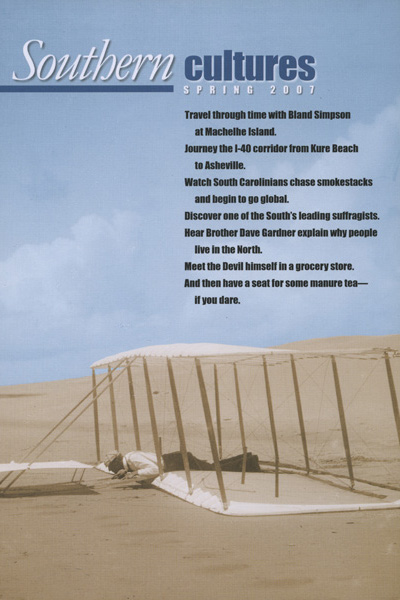
The natives, the Algonkians in their cypress dugouts, who skirted Machelhe for a thousand years or more before they ever glimpsed a European, before the island ever had a name in English. Moses Grandy, the slave freightboat captain who bought his freedom once, twice, thrice before it took and he could claim himself as his own and go off to England and tell and publish his story and try thereby to purchase the rest of his family, his own people. Wilbur Wright in 1900 alone and, later, with his brother Orville as well making their way in the bugeye Hattie Creef around the head of Machelhe Island bound for the Outer Banks and bound, too, for an astonishing glory that would surely change the world. Mothboat men and women racing the small sailboat first crafted by Cap’n Joel Van Sant and put before the wind right here. Farming lads and their daddies in little one- and two-masted schooners full of May peas, or watermelons maybe, bound for the wharfside trainyard of the late 1800s and early 1900s where forwarding agents like R. C. Abbott would get their truck crops vaulted north in boxcars on rails. Thespians from the lumber-barge playhouse, the James Adams Floating Theater, which lay up winters at the foot of Water Street and stormed both the Carolina Sound Country and the Chesapeake Bay by summer. And my father and I, setting out in 1956 or ’57 from Machelhe Island’s modest Causeway Marina in a dark gray or green rented skiff and hugging the island’s south shoreline, our 1-horse engine chugging lightly and pushing us agreeably upstream, my right hand behind me holding the throttle and setting our course. If the thrilling times of being out on big water and having a nautical command could never be any more vivid than this in a man’s life, they would still often match its joy and intensity, simply because of this one first moment: a man and a boy, looking for nothing more than the next stob to point her toward as we stood upriver for the great grain elevator that would one day blow up, its soybeans gone mad in a dusty combustion.
Back then in the 1950s I rarely thought, as summer or fall we drove east on our way to some spot on the barrier islands, to the Outer Banks villages of Kitty Hawk or Nags Head, that the first place over the Pasquotank River bridge along our lane to the beach was our town’s own island. Incredible that we were driving upon it at all. What a task it had been in the early 1920s for engineer McNutt and his men to take a long island bog like Machelhe and try to succeed at putting a concrete road overtop of a floating corduroy of logs—”McNutt’s Floating Road sank more than it floated,” my aunt once told me. Another woman, who had been but a girl during World War II, remembered picnicking on the Pasquotank before crossing the bridge and enduring, though frightfully and queasily, the rippling unsteadiness and the underwater portions of the Floating Road. When, late in World War II, the state of North Carolina in the form of Engineer Ham Overman gave up on all that and brought in the big pumps and dredges, he and his men blew in a long mat of sand and laid atop it a tarmac road that worked.
Here men and women had long turned their stock out free-range, and for a hundred years the isle was called Goat Island. Then Charles Hall Robinson, a man come down all the way from Jefferson County in upstate New York first to be a lumberman before building the giant cotton mill west of town, bought it and named it for his children, pulling the first two letters off each of their names—Mary, Charles, Eloise, Helen—and putting them together: Machelhe, spoken not in a brisk hard Scottish mode like Mack-Hell-he but rather in a softer coastal way, Mushelly. Not Macheel, nor, as the 1908 Sanborn map termed it, Marchella. Since Robinson’s renaming a century ago, the appellation Goat had moved upstream and lodged on a small cut-off island, a mile above which was Shipyard Landing and, above that, a Pasquotank ever more serpentine and in late summer slathered shore to shore with bright green duckweed as the river headed for its source, its upper reaches and bends bearing the name “Moccasin Track.”
With Ham Overman’s highway coup, Machelhe Island became popularly known, then and now, as the Camden Causeway.
Nowhere do ghosts come forth and consort any better than they do over water, and so, there on the riverfront with Hunter, I watched a line of boys—fathers and sons decades apart—joining me in looking out at their island in the stream.
Machelhe, spoken not in a brisk hard Scottish mode like Mack-Hell-he but rather in a softer coastal way, Mushelly.
In 1929 my father at seven stood in a crowd at the Water Street wharf watching a Taft airboat, a biplane named Kingfisher that lumbermen Foreman and Blades had teamed up to build. In their homegrown Taft Airplane Corporation across the Pasquotank over on Machelhe Island, planks that might have floored riverport homes or coastal cottages lay together tacked and glued into a form not at all dissimilar from the one the Wright Brothers had made legendary only twenty-six years before. Propelled by a roaring rotary motor, now Kingfisher went lumbering along the river’s surface, spreading a fan of foam behind it ’til it lifted slowly, the undersides of its fuselage and wings mirrored in the river as it throttled up and soared and went aloft. The boy who would one day fly shielded his eyes as he looked up into the bright Sound Country skies, and, though he could see the waving airmen and sunglints off their goggles, he could not see what they were taking in as they circled and buzzed the waterfront in their cypress aircraft, their flying boat: how small was the town, how large was the river, how enormous the great sound to the south!
In 1905 my father’s father, just twelve, stood in this same spot scouting a pair of tugs plying the river, pulling a log raft 150 yards long and turning round the bend of The Narrows between Machelhe Island and the town, towing the raft to the mill. Four years earlier, just after Christmas 1901, two fishermen working the river straight out from Machelhe downriver of town came upon a dead woman in the water. They had found Beautiful Nell Cropsey, whose disappearance from the front porch of her riverside home just before Thanksgiving had engendered a national search, and woe to the man who was the last to see her alive. As she was being autopsied in a barn with a throng of men 2,000 strong outside looking on, boys ran through the streets of town, down to the waterfront, astonished by the wildness of their elders, my grandfather at age eight among them. Later, on the night before Nell Cropsey’s funeral, as her body lay in a casket in the Methodist Church, Granddaddy Simpson would drift off to sleep in his home just across Church Street from that sanctuary, though his older sister would be too frightened by the ghostliness of it all to surrender, and rest.
And what kinsman made his way down to the riverside in February 1862? I wondered.
Roanoke Island had fallen, and Federal gunboats now moved inexorably across the sound from Roanoke Island and upriver to take Elizabeth City, pouring fire onto the Confederacy’s mainland battery and then sinking several Southern ships within sight of the port town’s wharves. One of them—the two-gun schooner Black Warrior—went down off Machelhe Island, disabled by Federal shelling and then torched by her fleeing crew.
Before this Civil War, before Captain Grandy and his canalboats made this transit many a day and night, working the Pasquotank and the Dismal Swamp Canal up and down, fifty years before him, little man-made was here to stare at. There was no north and south riverine commerce because no Dismal Swamp Canal yet existed—no communication yet connected Albemarle and Chesapeake, making it possible for bacon, brandy and tobacco to move through the great morass. Nothing here yet at this backwater way far up the Pasquotank but Betsy Tooley’s tavern, though the town-to-be would soon take her spot and her name.
I could see every bit of this from the riverside deck, all of it vivified, and I felt hypnotized seeing small lights across dark water and hearing once again the memory-sound, the echoed drone of our skiff’s little engine as Daddy and I coursed so long ago beneath the drawbridge tying Betsy Town and Machelhe Island together. The bridge, the boat-motor, the sound of the one reflecting upon the other, these ties and many another were cords around my heart, binding it here forever.
“What’re you staring at, Dad?” Hunter asked again.
No one had ever told me how to explain to my son what I was regarding just then, how to let him know, and have him also see, that each small waterside lamp cast a light on some portion of the past and set it shimmering in full view before us—giving us some glimpse of men who bore his name, too, along with whom once worked mules and dredges scraping at the absolute mud to ditch it and dry it and run water off it so that a roadway on an island or through a swamp might be, that a farm or a hamlet might exist, and subsist; some glimpse of women and other men in over-the-river, islandside warehouses twisting knives with stout blades and rounded points into the muscle end of oysters and shucking them out, a fortune of them every year; and some glimpse of men aboard schooners and skiffs, bugeyes and tankers, ferryboats and flying boats, all enterprising, all moving life’s flotsam, jetsam and real stuff around this old riverbend between swamp island and swamp town, all of which Neptune, leaning east, gave us long ago and will spare for a spell yet before claiming it all for his own once again and then washing on to the west over Pasquotank, then Perquimans, and then Chowan.
“Just Machelhe,” I said.
“Mushelly,” Hunter repeated. “People around here sure come up with some strange names.”
“Yes,” I said, “we sure do.”
Bland Simpson is Kenan Distinguished Professor Emeritus of English & Creative Writing at the University of North Carolina at Chapel Hill, and he has also been The Red Clay Ramblers’ piano player since 1986. His books include The Great Dismal, Ghost Ship of Diamond Shoals, The Coasts of Carolina, and North Carolina: Land of Water, Land of Sky, and his theatrical collaborations include Hot Grog, Life on the Mississippi, King Mackerel & The Blues Are Running, and Fool Moon. Simpson’s awards include the North Carolina Award for Fine Arts (2005), the N.C. Humanities Council’s John Tyler Caldwell Award in the Humanities (2017), the UNC Chapel Hill Edward Kidder Graham Faculty Service Award (2018), and induction into the North Carolina Literary Hall of Fame (2020).