
Reflecting on a century of country music, I could think of no one better to talk to than Frankie Staton, Rissi Palmer, and Holly G to get a finger on the pulse of the country music industry. Although the history of the country music business is a story of impressive commercial success, its growth has also come at the cost of the exclusion of artists and fans of color. Staton, Palmer, and Holly G are three generations of Black women in country music whom I deeply admire as artists and creatives, and for their commitment to building and sustaining pathways for marginalized artists, fans, and industry professionals in the genre. Staton first arrived in Nashville in the early 1980s, and when Rissi Palmer came to town in the 2000s, Staton provided community and guidance for her. When Holly G moved to the city after establishing the Black Opry in 2021, she also built camaraderie with Palmer and Staton. I spoke to them about their journeys in country music as both artists and fans and to see where they believe future hope lies for Black country artists.
Join us on the porch of the Center for the Study of the American South on April 9, 2026 for a live conversation and performance featuring Rissi Palmer and Frankie Staton to celebrate the special Country Music’s Mythology issue of Southern Cultures. See details here.
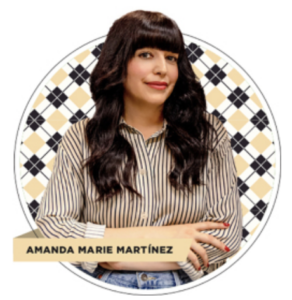
Amanda Marie Martínez: When did you first start to love country music? Was it an artist, a song, an era?
Frankie Staton: For me, I was listening to the layers of the music. On television shows like The Beverly Hillbillies, Flat & Scruggs, shows like The Porter Wagoner Show with Dolly Parton. On the radio, I was listening to everything. I was totally influenced by pickers like Roy Clark and Chet Atkins, really great, unbelievable musicians, as well as the stories and the lyrics of the songs and the relevance that those very country songs had to my own life, as a child, as a teenager, and as a young adult. It was just the sounds of it and the level of talent of the pickers that were playing it. I was blown away by that.
Rissi Palmer: For me, as a musician, I remember life through songs. There are three songs that led me into this ridiculous career path. The first one was Patsy Cline’s “Leavin’ on Your Mind.” That was my mom’s favorite, one of my mom’s favorite singers. When we would clean on Saturdays and Sundays, she would play records, and it would end up in the mix with all the ’80s and Tina Turner and Chaka Khan and all that. Patsy was right in there. I remember being struck by that song but still not thinking that that was country, per se. She just feels like an amazing singer, like Sarah Vaughan, or Ella Fitzgerald. The second epiphany for me was “Rhythm of the Rain” by The Judds. And I was like, this is country? I was shocked that they were white. I remember when I saw the record, I was like, “Really?” Like, this sounds like church. And then Trisha Yearwood, “On a Bus to St. Cloud.” It’s a Gretchen Peters song. I was like, I want to be a writer like that. In those three songs I realized what I wanted to do. I want to be soulful like the Judds, I want to be a great vocalist like Patsy Cline, and I want to be an incredible writer, like this particular song.
Holly G: When I was discovering music, it was back when all you had was the radio. I remember being drawn to the Top 40 hits that were Country crossovers. “This Kiss” and “Breathe” by Faith Hill, “Amazed” by Lonestar. Then I found myself slowly going over to the country station instead of the Top 40 station. Then, when I was in high school, I had a choir teacher. She had us sing a lot of country music. We sang “Crazy” by Patsy Cline, and that’s how I got introduced to older country music.
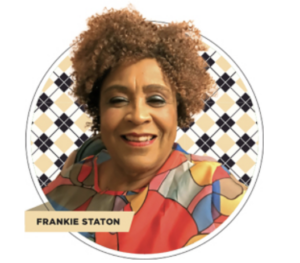
AMM: Let’s shift to thinking about what drove you to turn that love into moving to Nashville, turning it into a career.
FS: As I became a teenager, I started to write songs. I knew in my hometown, in High Point, North Carolina, there was zero music industry. I was so southern and country, I was a little afraid of New York. And I knew Los Angeles would just waffle my brain, but I knew that all kinds of music was coming out of Nashville. I said, I’m going to go out and stay a week and see if I like it. Oh, my God, I walked up and down Music Row, which then was houses, and it felt like home, it didn’t feel like I was in a big impersonal place with these huge skyscraper buildings and everything. At that time, you could walk in offices. They did look at me kind of like I was crazy when I walked in. The first person I met that I had a real conversation with was Maggie Cavender, who was the lady behind Alabama. She said, “Honey, if you come to Nashville, and you fight,” she said, “you got to hang in there, you got to go through the good times and the bad. But you can get a break. You can make it. I believe in you.” I thought, I’m gonna give it a shot. And I moved back home and worked six months to save my money to come back out. And that was it. I’ve been here forty-four years. I’m never going back. I love Nashville. I don’t like the way diverse people have been treated here, but I love Nashville. I love being around the music industry.
Oh, my God, I walked up and down Music Row, which then was houses, and it felt like home.
RP: My road to Nashville is thanks, in part, to my first managers, and it’s one of the few nice things that I can say. When I was seventeen, I started working with two Black women from St. Louis, a company called Us Girls Entertainment. The summer after I graduated, the summer of ’99, I went to New York, we started working on a demo, and it just didn’t feel right. This was at the same time that Destiny’s Child was a big deal, the same time that Lauryn Hill had just won all those Grammys. Black women doing pop music was a really big thing back then. So, I’m working with these producers, writing this stuff, and I’m constantly writing, and they’re like, what are you writing all the time? So I sang them one of the songs. And they were just like, “This sounds like a country song. Are you writing country songs?” And I was like, “Yeah,” and I was so afraid that they were going to make fun of me because outside of Charley Pride, I had never seen another Black person in country music, ever. So I thought he was an anomaly. And definitely young Black women didn’t do it.
I was skeptical for a really long time, even though I loved it, even though I loved the Chicks, I loved Reba McEntire. I just didn’t think that was a pathway for me. And so, really, had they not encouraged me, we’d be having a completely different conversation right now. They were the ones that linked me with Deborah Allen, the country singer, and she produced my very first demo. From there, Deborah’s connections got me in the door with pretty much all the major labels. I had meetings with everybody. I was just shy of my eighteenth birthday, and I met with all these people, and went back to college and then was flying back and forth to have meetings. Once we had the first meeting and the executive, a very famous heralded executive, says to me, “I like you, because you look all-American.” I was like, “What does that mean?” He’s like, “You’re just like a clean-faced teenager. You don’t have all the sequins on and all the trappings of what usually comes in as Black country music.” And then proceeded to tell me that we needed to work on my accent, and work on all these things. I was offered a demo deal, which is basically artist witness protection. I don’t know anybody who’s made it out of the demo deal. And then he said, “Come back when you have more songs.” I realized that this wasn’t going to be an easy thing, that I wasn’t going to be an overnight success. I fell in love with the songwriting process. I got my first publishing deal and just fell in love with the crafting of the song and the thinking about the song.
HG: When I started Black Opry, I got introduced to a whole different friend group. So many of those people I consider my family now. It was the first time in my life I had friends that I had things in common with. I developed really meaningful friendships really fast, and then all those people were here in Nashville, and I was spending so much of my time coming here to spend time with them, to go to meetings, and all that kind of stuff. It felt like the logical thing to be here. I have such a complicated relationship with it. I love it here, but I also love it because I love the people that I’m around here. But I also understand that my experience is not the typical experience for a Black person that comes to this city. But that’s also why I feel like it’s important to be here, because the things that are bad here are so bad, if all the good people leave, there’s not going to be a voice for the people that don’t have a choice but to stay. So I feel stuck too.
RP: I want to add a Frankie connection. I found that article in the New York Times. We read it and we were like, We’ve got to find her. This was before social media. It wasn’t an easy prospect to find you. But seeing that there was a Black Country Music Association was like, “Oh, okay, so many people do do this.” You were a light, a beacon. You were like a lighthouse. Just knowing that you existed, and everything that you did existed.
[Frankie, y]ou were a light, a beacon. You were like a lighthouse. Just knowing that you existed, and everything that you did existed.
FS: I was definitely trying because I was excited about the music and before I moved here, I thought talent will override everything. That was not the situation. The sad part for me was that I had no camaraderie with anybody. I had nowhere to go, I had no one to cowrite with. I was in all these organizations, and I’d be the only Black person in the room, and they stared at me like I was crazy. There were no other artists to talk to. There were no Music Row people to talk to, but there were a lot of people that wanted to rip you off. I challenged that [New York Times “Has Country Music Become the Soundtrack for White Flight?”] story. They said [Black country artists] did not exist and we didn’t have the talent. That’s what really upset me. I said, “If you don’t believe we exist, come down here.” And they sent the music critic down here, he didn’t believe it. Fortunately, the first person he met was Valerie [Hawkins]. I had all these pure country, I mean, real country singers. People would call my house, and Dwight [Quick] was upstairs, and Dwight is one of the best country singers I ever heard, man. He’s like a diverse George Strait. Dwight picked up the phone: “Hello?” And they’d say, “Who’s that white man in your house?” I said, “That’s a brother!” So, for me to see Rissi and Holly and Rhiannon [Giddens] throw her own festival, to see Chapel Hart pulling out in a tour bus, to see what is happening for Julie Williams—you know, we may not be where we want to be, but from where I started, oh my God, it has come such a long way.
RP: I can’t even imagine.
FS: Holly G’s foresight is just totally amazing. And so I say, we’re marching. We might be marching slow, but we are still going forward.
hg:
HG: But, Frankie, I’m not doing anything different than what you were doing. I just have different tools at my disposal. I have social media, so I can connect to people and things a little bit easier.
FS: I had a telephone. That’s all I had. I had a telephone. I didn’t even have a computer.
HG: We’re still going, repeating that exact same pattern, right now.
RP: The same fights. Same fights, different players.
AMM: How does that warp all of your perceptions of progress? Is Nashville getting more open? Are you more hopeful or less hopeful than when you got here?
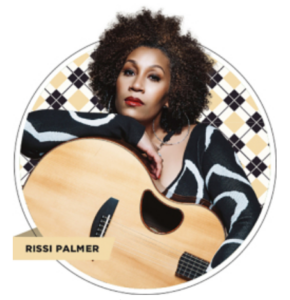
RP: Am I more hopeful? This is coming from someone who is a natural optimist. What I think about Nashville now, I think the exchange Holly and Frankie just had is exemplary of the entire fight. We’re fighting the same stuff they were fighting in the ’90s, and the ’80s, and the ’70s, and the ’60s, and the ’50s. It’s just maybe a little less blatant. Sometimes. And then we have the power of streaming now, the power of the Internet. There are ways to build and foster opportunities without having to engage the larger machine. In that way, I feel very positive, because there’s no way that you’re going to shut Holly G down. An executive can’t come from on high and shut down what Holly’s doing. Same thing with me. Unless Apple decided to cancel [the Color Me Country podcast], there’s no way to stop the information that I’m trying to put out there, because if my platform is gone tomorrow, I still have social media. They should have never gave me a microphone. I can produce on my own and put it out and let anybody hear that wants to hear and wants to know. In that way, I think things are better. Technology has made this different, made the work different. It has given us a different edge. In terms of Nashville, though, I feel like Cowboy Carter was an experiment.
FS: Oh God.
RP: 2020 to 2025 was an experiment for Nashville. It started with George Floyd and those little black squares, and everybody suddenly being like, “Wait a minute. There are no Black people around. Why is there only Mickey [Guyton] and Jimmie [Allen] and Darius [Rucker]? Where’s everybody else?” For a second, everybody became self-aware and realized the emperor had on no clothes. They were more apt to listen and to give opportunity, and to try it out. But as you’ve seen over the last few years, Cowboy Carter was the peak of the mountain, and we all got a bump for a second. It was great, and Holly and I, in particular, we got to do Beyoncé’s press tour for her, and that was interesting. But I kept telling Holly, Nashville is very quiet. I think it was because they were watching. Had it become the ginormous crossover hit that everybody was maybe expecting or thinking, that it wowed and wooed country fans, had she made a big splash at the [Country Music Association Awards] and the [Academy of Country Music Awards] and all that sort of thing, then I think Nashville would have done different things than what they ended up doing, which was dropping most of the Black artists that they had, and moving on to more traditional country. I always know what that means.
And, Amanda, you’re a big part of that because of the essay that you wrote about when country music took a political pivot towards conservative values and that sort of thing. It completely changed the way that country music was marketed. So, I think everybody was like, okay, we tried the woke thing. It’s not working. And the political climate is changing in this country, so we need to pivot and go into a more traditional way. I think that’s where Nashville is right now, and I wouldn’t recommend, just for people’s mental health, for them to try to be signed in Nashville. Go to Nashville, write your songs, learn how to craft songs, Nashville is the best place for that. I still believe that. Find community, find opportunities to perform. There are so many organizations now that exist, that give people opportunity, depending on what level you are. But in terms of waiting for the industry to do something, oh, no, we’re done. That’s it. That grand opening, grand closing.
FS: I agree one hundred percent. This is what I want to say, directly to Holly, to Rissi, and even to Rhiannon. Berry Gordy sold his mother’s living room furniture to start Motown. None of the artists that were on Motown had access to a record deal. None of them. Motown was born out of the fact that they were shut out of the music industry. Look at Motown’s legacy. They are part of the fabric of America. What would America be without “My Girl”? What would America be without the memory of the Supremes, Diana Ross, Michael Jackson? The Jackson Five, Stevie Wonder, Marvin Gaye. That’s what you’re sitting on. Do not turn back, and don’t get frustrated.
RP: Mm hmm.
FS: And when it blows up, own it! When they come knocking at your door, own it! They didn’t want to have nothing to do with it. Own it! That’s all I’m gonna say. Keep marching and own the puppy.
HG: Thank you so much for that, Frankie, I love you. I’m kind of like the opposite of Rissi. I’m not an optimist, at all. I remember when I was first starting all this, I would tell the artists, “Look, you better enjoy this like it’s the last time anybody’s ever going to see you, because it might be.”
RP: Yes.
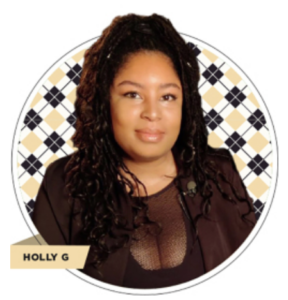
HG: We went into every opportunity as if it was our final celebration. And I’m glad I did. For one, because it made us appreciate and enjoy everything so much more, but also because I was right, unfortunately. And now white people don’t feel as good about helping Black people. That guilt has washed away. There’s no incentive for them now. It’s so hard to get people to do the right thing in country music because we can’t offer any incentive outside of their moral compass or them wanting to do the right thing. They’re going to keep making the money. The industry will go on perfectly fine without our presence, so it’s literally a matter of, do they feel bad enough to change it? And that’s not something you can really convince somebody of. I feel like we should be in spaces where people want us. But I’m also not an artist, so I don’t ever feel like it’s my place or my right to tell an artist what they should want. I felt like it was my responsibility to still knock on those doors, even though I could see that they were going to crack them open and shut them back. I know that people have been doing the work before me, but I needed to be able to say for myself, I tried. It’s not going to work.
RP: Yeah.
HG: Now that is out of the way, we’ve done it. We’ve seen people who have moved as far as they’re going to move. I think the idea of progress is not necessarily going to come from change in the industry. It’s going to come from the things we build outside of it and around it.
RP: Yes.
HG: Making our own ecosystem.
FS: Exactly.
RP: One hundred percent. That’s why Biscuits and Banjos was so important.
FS: Mm hmm. Yes. Tell us about it.
RP: Frankie, the only thing that I can tell you is that it was like a dream.
FS: See?
RP: It was like a dream. First of all, I love where I live. I love Durham [North Carolina] so much. And, you know, Durham is a traditionally, historically Black city. It was a Black Wall Street.
FS: Yes.
I think the idea of progress is not necessarily going to come from change in the industry. It’s going to come from the things we build outside of it and around it. Making our own ecosystem.
RP: We have an extremely educated population, extremely creative, but also activist-driven community, and for it to be here was perfection. To walk up and down the street with Holly and Miko [Marks] and see Jake Blount, or see Adia Victoria, and all these people that I’m a fan of, people that I am inspired by, people that I’ve interviewed on my show and never actually met in person. To see them all walking around, Black people with banjos, Black people with locks and banjos and fiddles, and just fist bumping each other, hugging each other. I hugged so much, and I am not typically a hugger, but it was just so much love, and it was beautiful, and the only negative thing that I have to say is that I wish that there were more people in the community, because the NPRs came and swept them tickets up in two seconds. And so I wish that more people in the community, specifically Black people, could have experienced it firsthand, and I hope that in two years when they do it, that there will be more tickets available so that more young people and more Black people specifically in the community could experience it, because it was beautiful. I live in a world now where my daughter, all the banjo players she knows are Black.
FS: Wow. I want to interject something here that is related. I was at one of the museum openings at the [Country Music Hall of Fame], and I talked to [Broadcast Music Inc. executive] Shannon Sanders about the Beyoncé controversy. He had the same perspective that I had in the late ’90s. I said, “They keep saying Beyoncé’s not country, and I’ve never seen such hate thrown towards a human being as they’re throwing towards Beyoncé.” And he said, “Frankie, this is what needs to happen. We need a diverse chart on Billboard for country music or Americana music that specifically is related to us and to other diverse people.” I think that would give us a whole lot more respect. You have to look at things in terms of numbers and blocks and shapes and triangles and circles. I think it is so important for there to be an urban country presence at any Black event in the country.
RP: I agree.
FS: Any festival that’s happening, there needs to be some Black country singers there. Any fair that’s going on, there needs to be Black country singers there, because our neighborhood needs to see it. We need to understand that those people on that stage are singing about me.
RP: Yeah.
FS: I said to Holly G a couple of years ago, go after Black college radio, see if you can carve out a time for a Black country [segment]. If they start out and say, “Well, we’ll give you twenty minutes a day,” that’s a beginning. They have to see us there, and once they see it and hear it and appreciate it, they’ll start to show up for it. Even the Black church will support the urban country sounds. We’ve got to directly market to Black people through media, television, any way we can, through live presentations. The audience is there, and it’s not the audience that people think it is. They’re a very educated audience.
HG: One of the things people kept saying when Cowboy Carter came out was, “Aren’t you excited? We’re finally gonna have Black people listening to country music.” But that wasn’t what was ever gonna happen. What we had was Black people that listened to Beyoncé music. She brought all these people over to the genre, specifically for that one project, but none of them stayed. I think that’s one of the bigger problems, how to find the Black people that actually appreciate the sound and the style of country music, because we can’t really market to them through any channels that exist. If we go through the country music channels, they don’t pay attention to that, because culturally and historically it’s never spoken to them. If we go through the urban and Black media outlets that currently exist, the people that would like country music probably aren’t paying attention to those either because that’s catered towards hip-hop and R&B. So it’s hard to figure out how to put the pieces together to find this demographic of people that we all know is there, because every time any of us do anything, there’s at least one person that shows up that’s like, “Oh my God, I’ve been looking for this and waiting for this.” So, how do we overcome the cultural implications of country music, to find the Black people that like country music but don’t like the industry of it?
RP: Yeah. Yeah.
FS: I had that same problem. What I found out when I was doing [Black country music] showcases, my audience was half and half. Half of my audience was Black. The very first showcase that we had, I would say 75 percent were Black, because nobody believed it. [laughter] They said, “There’s no way you—in the Bluebird? There’s no way there’s going to be some Black country singer.” I said, “Well, come over there.” And I mean [there were] people standing outside and sitting in their cars and waiting on tables, bringing a drink to the car, because nobody else could get in. It was a zoo. They’re interested. They want to support it, they’ll buy product, they’ll buy merch, but they got to know about it.
RP: They have to know.
FS: The only thing we did was radio, television, and newspapers to announce. Wherever we went, we hung this big sign that said, “The Black Country Music Showcase.” They knew we were going to have it, but they may have never been in that club before. The people would come, they would pack the parking lot, they would clap, they’d give you standing ovations. They got to know, “Okay, well, this is where it’s at. I’m welcome there, I’m going in there.”
RP: I think feeling welcome there is the operative word. People don’t necessarily always feel welcome. I only do one curated show a year. Holly and Frankie have the patience of saints. I do not. I can only handle one show. We do the show over in Europe, it was just supposed to be a takeover for one day, and it’s turned into a big thing. We end up drawing people away from the main stage to come and see the show. And people stay all day. It starts at four o’clock, it ends at nine o’clock, and people haven’t moved the entire time.
FS: Wonderful.
RP: The safety aspect is a really big part that I don’t think a lot of people have thought about. There are places that I still tell my agent to this day—I have a white agent and she’s amazing, but there are times she’ll send me something, and I’m like, “Girl, I can’t do this.” And she’s like, “Why?” And I was like, “Well, look at where this is.” I know for sure it’s still a sundown town and all this kind of stuff. This isn’t like a southern thing. We’ve been in the car in rural Maine, and the amount of Confederate flags and things that make you go, “Um, yeah, I think I’m going to skip this house,” were astounding to me. So, as a Black artist, those are things you have to consider still, in the year of our Lord 2025.
HG: It’s difficult to get even very well-meaning people to understand what we are talking about. I remember the first conversation I had about feeling safe at one of the big country music festivals. Someone said, “What if we just hand out some backpacks and they have, like, flashlights and things in them?” And I’m like, no, I don’t think that’s going to help if I get called the n-word. And then we were doing another festival last year and it was through Live Nation. I’m talking to the Live Nation team about what safety looks like for us. And they’re like, “We got Homeland Security monitoring online threads.” And I’m like, “That’s great. Definitely don’t stop that process.” But they fundamentally don’t understand the idea of psychological safety.
FS: Definitely.
HG: Am I afraid that somebody’s going to swoop in and, like, snipe me out? No, not necessarily. This is America, so I guess it’s possible, but it’s more so having to stay in a space where you’re surrounded by people that don’t want you there and the mental and emotional toll that takes on you. Unless you’ve experienced it, it sounds like, “Oh, well, you’re just not brave enough.” But the truth is, we’ve gotten to a point, I don’t feel like we should have to be brave in that way.
RP: I don’t want to be brave. Yeah.
HG: No. Either we can build our own spaces, or you can figure it out, but we don’t need to be there unless you’re willing to do that.
FS: I agree. And it’s really degrading that, historically, people have just felt they had the right to say anything to us. I would look at them and think, I can’t believe you just said that to me. “What are you people doing here?” And I’m like, “If you don’t know the history of country music, I’m sure not going to explain it to you. You can’t imagine what we went through.”
RP: Listen, I’ll tell you guys a very quick story, and this changed my perspective on safety. I was asked to do the Peach Drop in Atlanta a long time ago. This is right after “Country Girl,” so I was on the charts, and I had a little notoriety, whatever. I’m cohosting, and so far the evening is going well, but we did a shot where we were right in the middle of the crowd. This is downtown Atlanta. I don’t think they do it there anymore, but there were thousands of people around me. I’m standing, I have a microphone in my hand, so there’s no mistaking who I am. I’m standing next to the anchor person. There’s a camera in front of me. Someone walks by me, kicks me as hard as they possibly can on my leg, and says, “Move, n—-r.”
‘If you don’t know the history of country music, I’m sure not going to explain it to you. You can’t imagine what we went through.’
FS: Oh my God!
RP: Nobody saw it, nobody heard it, ’cause we were on a break. We were setting the shot. The camera wasn’t on, and my cohost was looking at his cue cards and all this kind of stuff, and I’m trying to be professional, and I’m trying to hold it together. Inside, I’m sobbing. I’m just like, “Holy shit, what just happened?” But I know that I’m about to be on camera, and my grandma is at home watching this, and my whole family is at home watching this. I need to pull it together. I can’t be in tears on television. So I swallowed it, I smiled, and I did the show. If you’re not safe in front of a damn camera with a microphone in your hand and a purpose to be there, you’re not safe.
FS: Preach, girl. You know Valerie’s [Hawkins] story, right? We were in the booth at Fan Fair before it became CMA Fest, which was held at the fairgrounds, and she was standing at the front of the booth, and a man came up to her and said, “What are you n—–s doing here?”
RP: Oof!
FS: It freaked her out, and he walked off. Across from us, in another booth, was Merle Haggard. And he came over and said, “You are welcome here.” And kind of glared at the way the man went. He turned around and walked back to his booth, and Valerie was crying, and she said, “Thank you, sir.” So there will be people that will stand up for you, but most of them probably won’t.
AMM: I don’t know where to start, these are stories that you all have. I’ve heard industry people say, “Why would we reach out to Black listeners? I go to a concert, they’re not there.” Well, yeah, why aren’t they there? It’s speaking to this recurring theme of the number of reasons why you can’t put stock into Nashville, the industry, to listen to your concerns or understand them. It’s pushing back to the need to build your own communities, right? Where you can feel safe and move from there.
So let’s move to the question of, is there anything you’re excited about for the future?
FS: I’m excited about the fact that my mantra for 2025 is “full circle,” and I am excited that I am looking for management, and I want to do some touring. I’ve never toured before in my life. I’ve always just been the girl on the grand piano, but here, I have a library of my own music. It’s been a long time in coming, but they’re finally putting the fiddle on [my song] “Forever Loretta.”
RP: Hey!
FS: I’m so proud that I have an EP coming out. It’s taking me forever to get it done. I paid different people to produce songs, and it just dragged forever. I’m excited about having an album release, an EP release concert, and promoting it and just getting out there, even at my age, to inspire and motivate other people. I’m finally back to what I originally left North Carolina to do forty-four years ago, and that’s singing my own music. I’m very excited about that.
RP: I’m excited for you. That’s awesome. What am I excited about? Like Frankie, I’m about to put out a record. The record that I have been threatening to put out for five years. I’m going to put it out in the fall. And it’s not a country record by any stretch of the imagination, but it’s a “me” record. It’s the record that I needed to make.
HG: It’s not a country record, it’s a Rissi record.
RP: It’s a Rissi record. I’m excited about it. I’m excited about this trip to London that we’re doing in August. This is with the Color Me Country takeover at Long Road Festival. It’s all expenses paid for all the artists, through my nonprofit, the Color Me Country Foundation. I’m excited about the opportunities to create more opportunities. I think there are people that are still very invested in seeing others’ potential grow. I’m someone who very much believes in potential. I would not be here if it weren’t for people that believed in my potential. I’m excited about these seen and unseen prospects that I could show to other artists so that they can build their own fate, as opposed to putting it in someone else’s hands. I’m excited to see what’s coming because I believe something is coming.
HG: I’m excited that both of y’all are releasing albums finally. I get frustrated sometimes because I’m not an artist, so I don’t really have anything else to do but watch. Watching y’all have to create space just for you to exist in is frustrating because you shouldn’t have to do that, and we get cheated out of so much music by virtue of Black women having to fight to be there, and then still having to find mental and emotional capacity to create something after that.
So, I’m excited that we’ve gotten to a point where both of y’all are going to be able to be the artists that y’all are meant to be. Rissi and I talked about this at the beginning of this year, just moving out of that place of frustration, even though it’s very tempting to stay there, because there’s something new every day that pisses me off. [laughter] Just being intentional about moving forward. Now that I’ve done my due diligence as far as what doors in the industry are and are not going to open, I’m excited to move on from that, and I’m excited to find Black people specifically in the industry to build with and figure out what the path to a sustainable ecosystem outside of the machine looks like. To learn from people. I was on a Zoom the other day with this songwriter, his name is Harold Lilly Jr., and he wrote the soundtrack to the 2000s, essentially. I was able to tell him about what we’re doing here. Hearing him get excited about the Black country music scene, that’s really cool to me. I think there’s a lot of potential in Black people being made aware of what we’re doing and figuring out how they can support this space, because that’s where it’s going to come from. Maybe not from a mega celebrity, but people that are interested in investing in and developing artists. I’m excited to find more of those people and build with them.
Amanda Marie Martínez is an assistant professor of American Studies at the University of North Carolina at Chapel Hill. Her forthcoming book is a history of the country music industry between the late 1960s and 9/11. She has also published essays on country music with NPR, the Los Angeles Times, and the Washington Post.
Frankie Staton is a musician from High Point, North Carolina, who arrived in Nashville in 1981. After facing discriminations and dismissals on Music Row, she cofounded the Black Country Music Association with Cleve Francis in 1995. She has been a source of support for Black artists in Nashville ever since.
Rissi Palmer, a musician based in Durham, North Carolina, became the first Black woman to earn a hit on the Billboard country charts in decades. In 2020 she founded the Color Me Country artist fund for artists of color in country music and started a podcast on Apple Music to highlight Black, Latinx, and Indigenous country artists.
Holly G is a self-proclaimed “country music disrupter” who founded the Black Opry in 2021 as a source of community for Black country artists and fans. Shortly after that she moved to Nashville and since then has worked to create opportunities for Black country artists in country music.
Header image by Phil Blank
