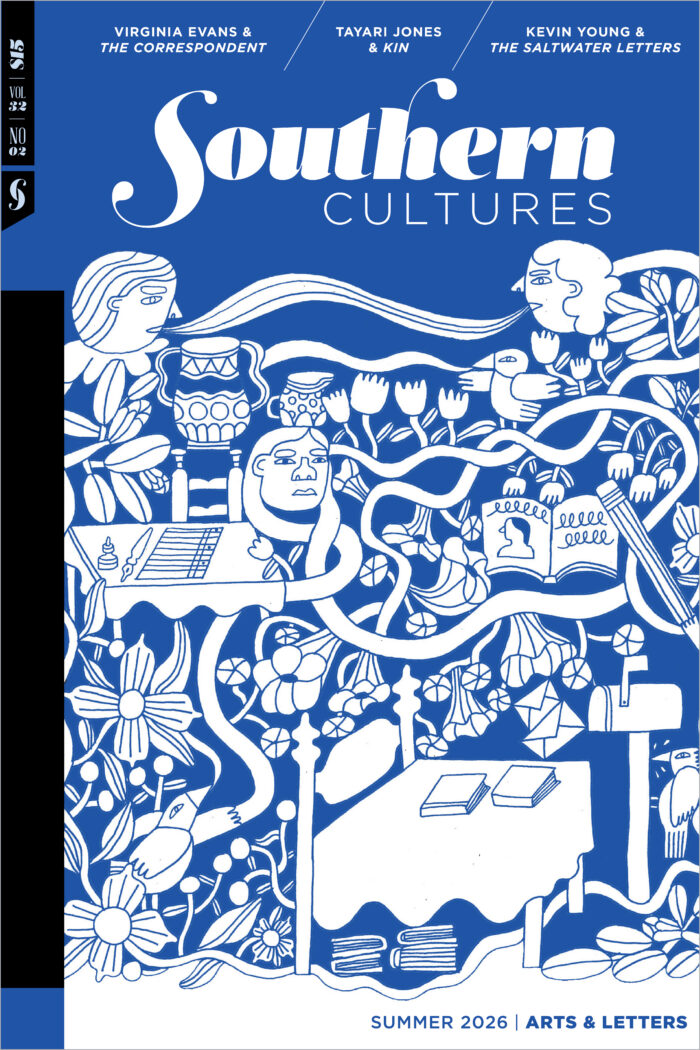
“I never feel so smart as I do when I’m drawing, because I have complete control and I can subvert all else that I’ve just made possible.”
A “sketch diary” drawing pad Allan Gurganus bought at the Stanford University Art Center, while on a Stegner Fellowship, displays the name “The Globetrotter” and is personally marked by Allan’s unmistakable penmanship: “Allan Gurganus, Palo Alto 76—Chapel Hill, Aug 77.” A visual artist from his earliest days, Allan talks of drawing while on his fellowship “after hours or on weekends,” in those in-between times when not writing or taking classes. Paper to draw on was plentiful in the Gurganus house when Allan was growing up in Rocky Mount, North Carolina, and he impressed audiences—his family, first and foremost—with his carefully rendered visual representations of birds, flowers, and familiar animals. He would go on to study painting at the University of Pennsylvania and the Pennsylvania Academy of Fine Arts. All of this was before publishing his stellar and impressive stack of novels, stories, and essays, among them his Oldest Living Confederate Widow Tells All, which spent eight months on the New York Times bestseller list, and his most recent book, The Practical Heart: Four Novellas. He’s never not been drawing or painting, his visual voice always a partner with the powerful eloquence of his writing.