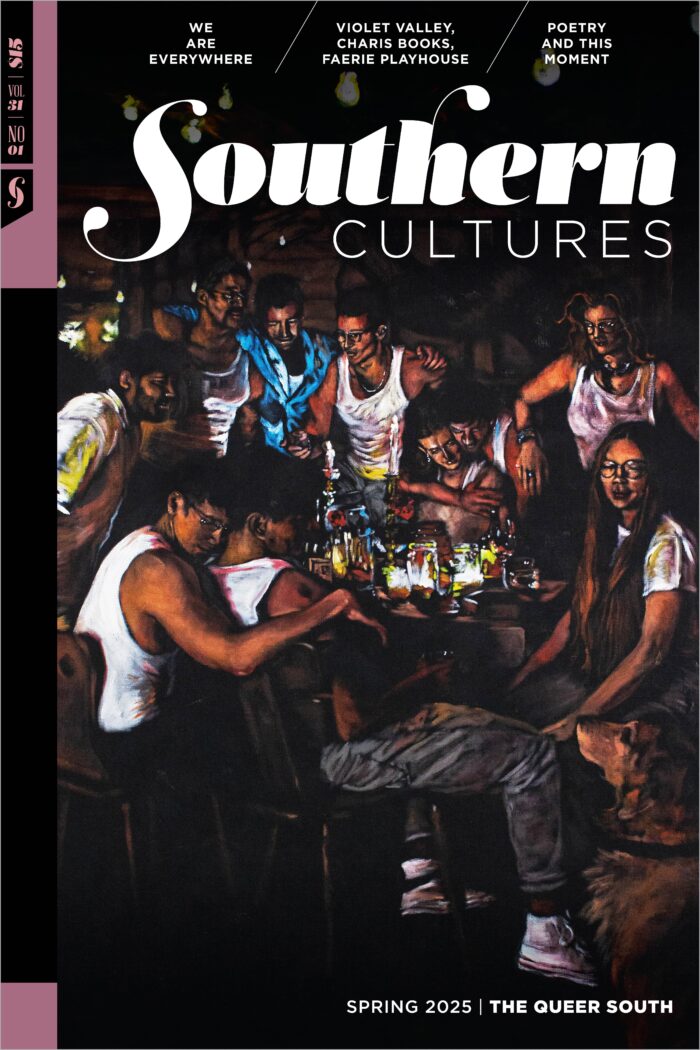
Yesterday, Sunday, February 7, I was working at a coworking spot here in Durham. My wonderful friends and colleagues at my teaching job got me a subscription to this place for my fiftieth because my amazing mother-in-law lost her housing to a developer and has moved in with us, and my former office (where I would normally write this from) is now her bedroom. Of course, I’m in a coworking space that also is a development. Layer upon layer. I can hear the train going by as I write this. Here in my queer body that has come to this place through the gauntlet of deep communal care and ruinous corporate appetite that we are living in today.
Anyway. I took my queer nonbinary sometimes trans (who am I is a question I ask myself and my vessel) transplanted to the South from the North and West body to the Bottling Company office space to get ideas for this intro written. It was mainly empty except for S., who owns a company with her sister that helps elderly folks get from place to place with some kind of ease, and T., who’s a dj and recording studio owner. I worked for a bit and then got up to make tea in the big open back room. You can see the train tracks from there and also the canyons of new luxury buildings, the kinds that pushed my mother-in-law out of her home in California.
T. was in back. He had his headphones on and his decks on the table. He was jumping around and singing and also focusing so deeply on the knobs and the . . . I don’t even know what. He waved, but he was busy. I stood and watched him: fluid and joyful and focused and building his stamina. I thought how I’d never thought how much stamina it must take to keep the club going all night. To help people move through the fatigue and the joy and the sadness (you know that feeling as you’re dancing sometimes) and the ____________.
I thought: this is the queer South to me. Not that T. is queer. I don’t know if he is or not. Maybe I’ll ask him what that word means to him sometime soon. That’s some part of queerness, isn’t it? Reaching out and reaching out and wondering about and learning from each other. Preparing for the long nights ahead. Joyful / Sorrowful/Focused and moving that energy.
My extraordinary coeditor, teacher, and friend Destiny Hemphill and I were asked to find a space for poets on the Back Porch of the Queer South issue. We decided it would be great to ask a number of former contributors (including this issue’s poet, Honora Ankong) to say what the Queer South means to them in this moment.
It is an honor to hear these voices, and we invite you to go into the archive and find their poems! We are a community as much as a journal. “We are everywhere,” as Marlanda Dekine says.
We’re here.
My queer South is Black. is dei. is righteous. unwavering. knows no passive love— knows time is meant to divide us from us—my queer South lives—right now, tomorrow, and yesterday—in the past we carry like a shadow, moving into the shape of Self, but never wholly us—and my queer South builds a home, which means we know the work that safety needs—and when I say that my Grandmomma was queer, I mean she taught me rupture—how to break walls without breaking—a gift she gives to all of us. —Diamond Forde
Given the current political chaos, with the violent erasure of diversity, I return to the radical modes of resistance that have been essential to survival in the South. These enduring methods, deeply rooted in Black and queer communities, thrive in their crossovers, liminalities, and solidarities in between and across various identities. Foremost among these is transgressive joy—a rebellious tool to reclaim collective pleasure against annihilation. Even as we keep fighting, we also never stop dancing, laughing, making art, and sharing slices of sweet potato pie, while deeply caring for each other—all y’all—especially now, when it feels like the end of the world. —Tiana Clark
to be black and kin
to this violated southern dirt
is to queer the notion of survival.
to love inside
this queer notion
ripens one’s heart.
a ripe heart may bruise easily
but its sweetness is unmatched.
Culling my love practice out of this harvest means finding community in what is felt even if not announced. The Black South teaches me that there is a difference between a closet and a hush harbor.
In this now, I wonder: how do we embrace the ever-present queerness of Black southern life that has never been protected by the State? How do we re-member queer practices of Black survival that rely on embodied trickster technologies and borrowed cups of sugar? —Ra Malika Imhotep
Queer South is day drinking during Decadence, bodies coated in sweat and glitter. It’s Friday nights and Monday mornings. It’s meal trains and mutual aid. It’s an all day gumbo simmering on the stove. —Tiana Nobile
I saw a comedian joke about an “Underground Railroad” to get LGBTQIA2S+ teens out of the US South. I love stand-up—if it has a humane responsibility to the shadows it casts. This comedian didn’t honor the dissimilarity of the enslavement of Black people and the legislative violence and cultural adversity LGBTQIA2S+ people face in the US South, however. As fascism seizes the country, lawyer, organizer, and writer Dean Spade advocates that “People are going to need to break a lot of rules and laws . . . We are going to need to get each other medicines and procedures that have become illegal.” Indigenous scholar Dr. Kim TallBear has quoted Dr. Angela Willey saying, “To be queer is to be against the state.” Radical queer resistance, mutual aid, and community is what we need in the South. To be Queer here right now is to have a responsibility to act.1 —Emilia Phillips
As a queer, nonbinary, immigrant poet living in the South, I once believed that my Brown body would never again find community—that living in diaspora rendered me trapped in liminal existence, preventing me from tethering my creative energies to others on this earth. But the American South, even with its pronounced inequities, teems with community—because it is in the South, where injustices are often most apparent, that activists and organizers have long magnified and disrupted the imperialist history of this country. Here, my hands can cradle and offer art towards a kinetic collective, one that constantly carves out a future in which the othered body alchemizes a necessary existence: revolutionary and rampant, defiant and wild. —Ina Cariño
The queer South: all sentient life forms who imagine. It includes all flora, fauna, people, and animals who live in, are from, or have descended from the southern part of the USA imperial project.
We are soft, tender, and fragile. We are feral, terrified, and migrant.
The USA would not exist without our labor.
We would not exist without our imaginations.
Imagine: seeds in the wind that land in anyone’s yard and propagate without permission.
We are everywhere.—Marlanda Dekine
Gaby Calvocoressi is the author of The Last Time I Saw Amelia Earhart, Apocalyptic Swing (a finalist for the Los Angeles Times Book Prize), and Rocket Fantastic (winner of the Audre Lorde Award for Lesbian Poetry). Calvocoressi is poetry editor at Southern Cultures, an editor-at-large at Los Angeles Review of Books, and associate professor of English and comparative literature at the University of North Carolina at Chapel Hill.
Destiny Hemphill (she/her) is a ritual worker and poet based in Durham, North Carolina. A recipient of fellowships from Naropa University’s Summer Writing Program, Callaloo, Tin House, and Kenyon’s Writers Workshop, she is the author of the poetry chapbook Oracle: A Cosmology (Honeysuckle Press, 2018).
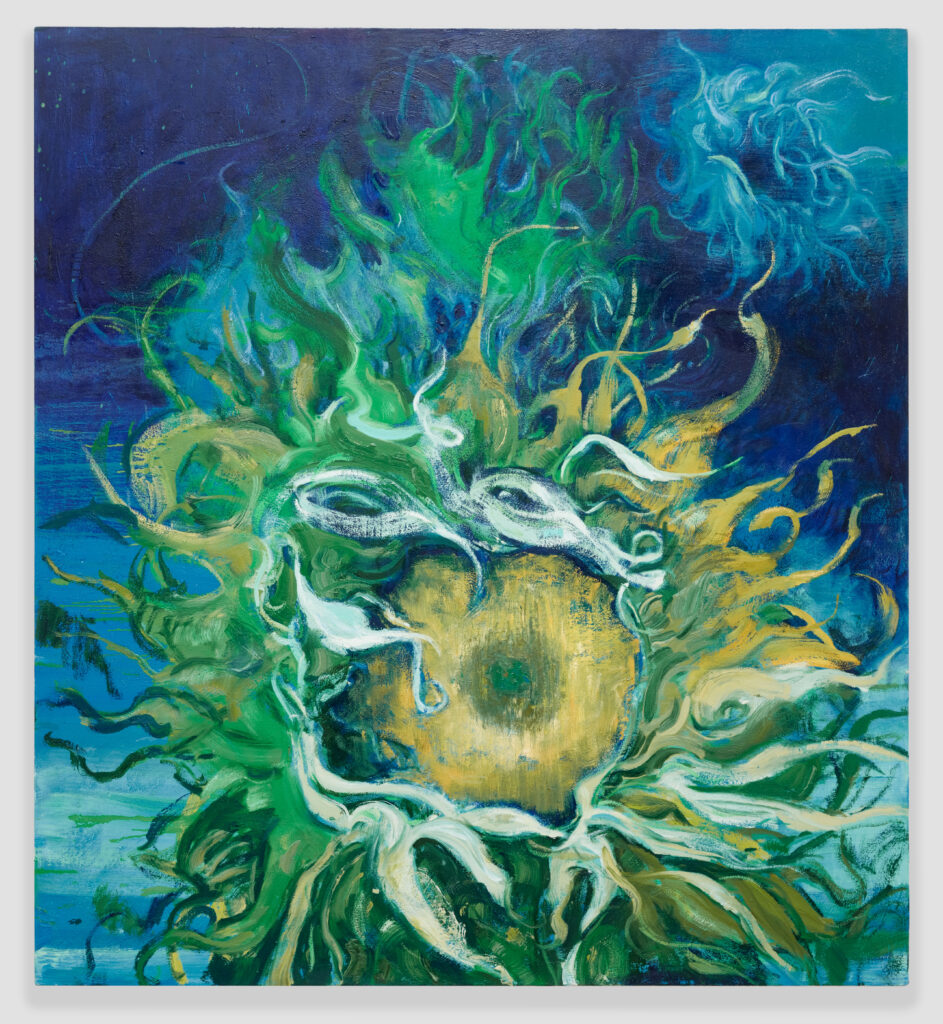
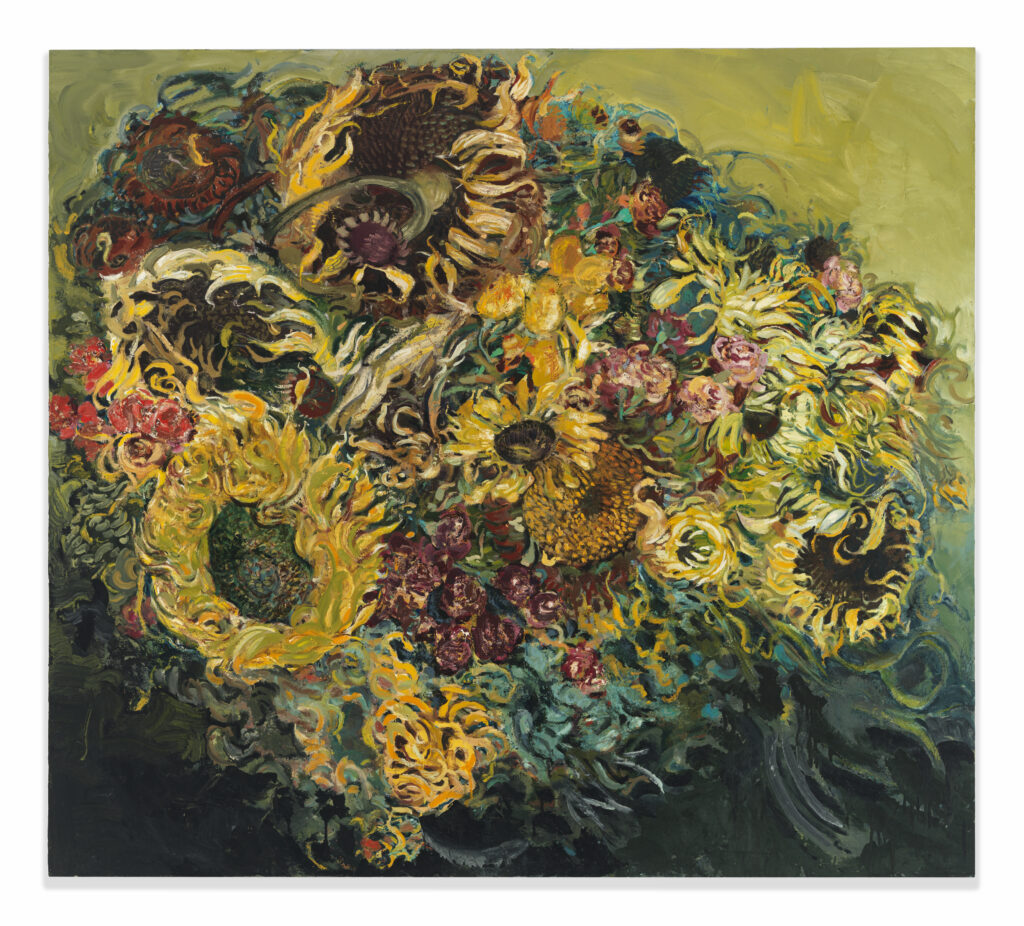
Header image: Open Sunflower, by Jimmy Wright, 1998. Pastel on paper, 23 x 30 in. All images courtesy of the artist and Corbett vs. Dempsey gallery
NOTES
1. “‘Love in a F*cked-Up World’: Dean Spade’s Self-Help Book for Movements,” Laura Flanders & Friends, January 22, 2025, https://lauraflanders.org/2025/01/dean-spade-how-to-build-relationships/; “Settler Sexuality (with Dr. Kim Tallbear),” Multiamory, episode 181, March 3, 2019, https://www.multiamory.com/podcast/181-kim-tallbear.