
In the aftermath of Hurricane Katrina in New Orleans, Michael Mizell-Nelson (1965–2014) did what good public historians do: he looked for ways to help the city tell its own story. Mizell-Nelson, on the history faculty at the University of New Orleans, teamed up with colleagues at the Center for History and New Media at George Mason University to develop an online archive—the Hurricane Digital Memory Bank (HDMB). Taking the Center’s earlier project, the September 11 Digital Archive, as a model, they designed the HDMB to capture the stories of survivors and witnesses to the disaster and its aftermath.
Like most residents, Mizell-Nelson and his family had been touched by the flooding of the city. They lived near the massive levee breach along the London Avenue Canal and returned home to a ruined first floor but a largely untouched second story. Upstairs, they found his daughter’s Brownie uniform and all his research materials preserved, despite the mold creeping up the wall. Mizell-Nelson’s own experience of loss and survival became part of the project’s identity. So, too, did the red X-code that the National Guard spray-painted on his house in his family’s absence. He repurposed this symbol as the logo for the HDMB on posters and postcards placed across New Orleans, asking his community to contribute to this digital archive.
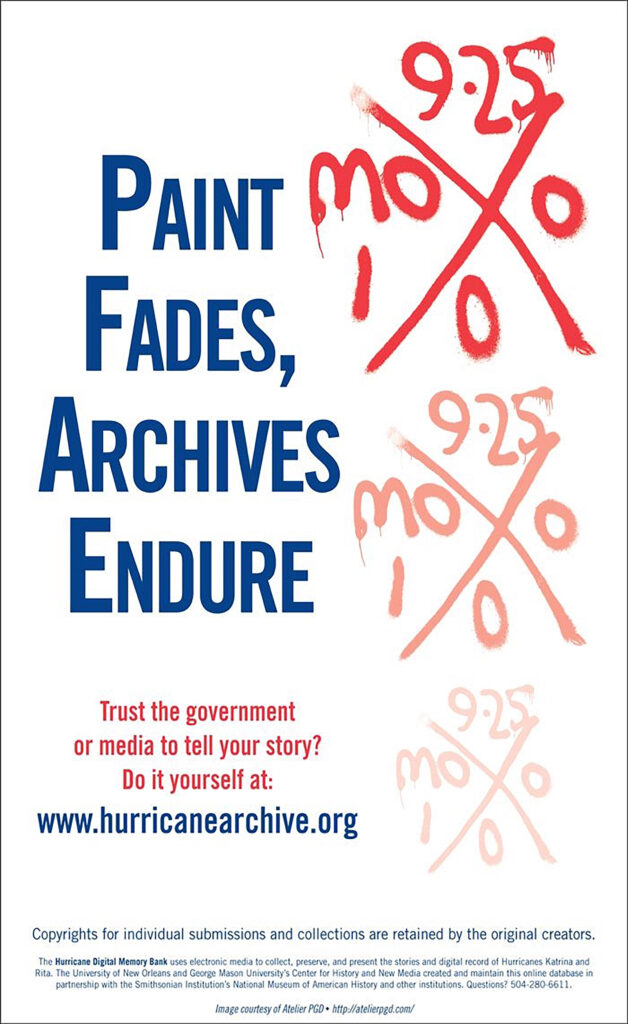
New Orleans is a city with histories, cultures, and patterns of daily life easily misinterpreted by people who do not live there. Mizell-Nelson understood this. Even before Katrina, he had impressed upon his students the need to document their own histories. His perspective, as a native New Orleanian, also inspired the creation of the HDMB poster’s tagline: “Trust the government or media to tell your story? Do it yourself at: www.hurricanearchive.org.” Launched in November 2005, the HDMB grew to become a model for the digital collection of community histories across the nation, especially in the aftermath of disasters.2
At the outset, the HDMB team decided to accept anonymous entries to the database. The result is a collection of raw, honest, and often darkly funny stories. As with any archive, HDMB is not comprehensive. That was the idea: for people to remember, collect, and save what they could in the face of overwhelming loss. But unlike most archives, it is filled with the voices of people from all walks of life who were touched by the disaster: children, members of the Coast Guard, college students, poets, local artists, and even concerned citizens from Cleveland, Ohio. Growing to contain tens of thousands of items (some available publicly and others archived privately for use by researchers), the HDMB exists as a mildly chaotic and incomplete, yet vital, record of a city and its recovery. Now, twenty years after Katrina, the slogan on posters advertising the HDMB makes Mizell-Nelson’s point all over again: “Paint fades. Archives endure.”3
Building the Database
The HDMB platform invited people to upload their stories directly to the online archive. To maximize contributions—given the challenges of daily life in post-Katrina New Orleans— Mizell-Nelson placed postcards in coffee shops with prepaid postage, tabled at bars and festivals, and handed out “go” cups encouraging people to contribute by embedding the HDMB into the city’s social calendar and material culture. Displaced residents could also call a number with a New Orleans area code and leave a message on a virtual mailbox. The outgoing message was recorded by local musician Delfeayo Marsalis, his familiar voice offering a sense of home no matter where they were calling from. Allowing anonymous contributions conveyed that it was a people’s archive. There was no vetting, no real barrier to entry. No online contribution was too short or too long; every story was valuable.4
Organizations like the US Coast Guard and Smithsonian National Museum of American History submitted multiple entries that make up a large portion of the archive, but it is the stories from individual New Orleanians that give the collection texture and immediacy. Submissions document the “disgusting, terrible, and irritating” conditions of post-Katrina New Orleans, express frustration about racism in the city and in the media, and report on rescue and recovery efforts by first responders. By contributing, residents found a way to counter or correct stories circulating in the media.

The Storm
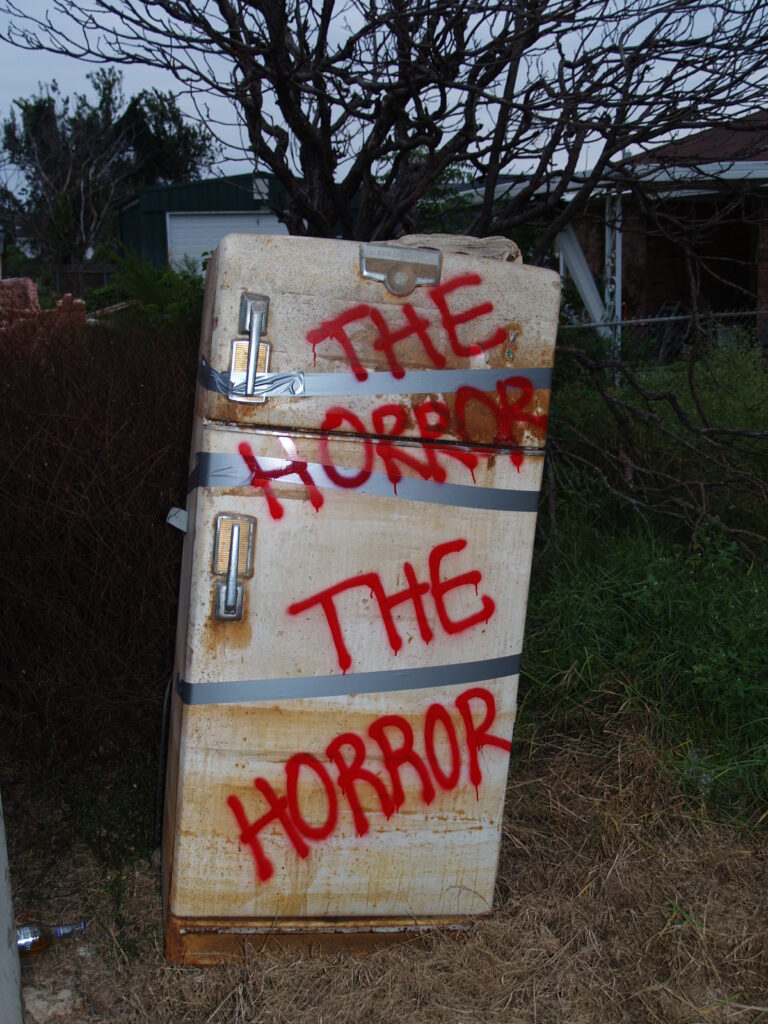
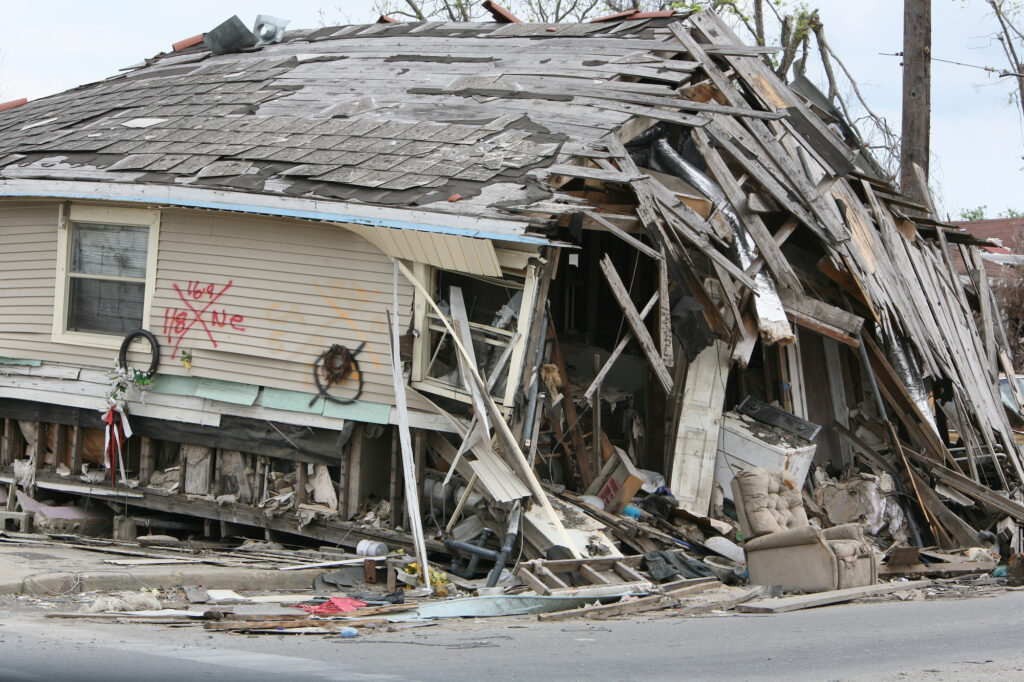
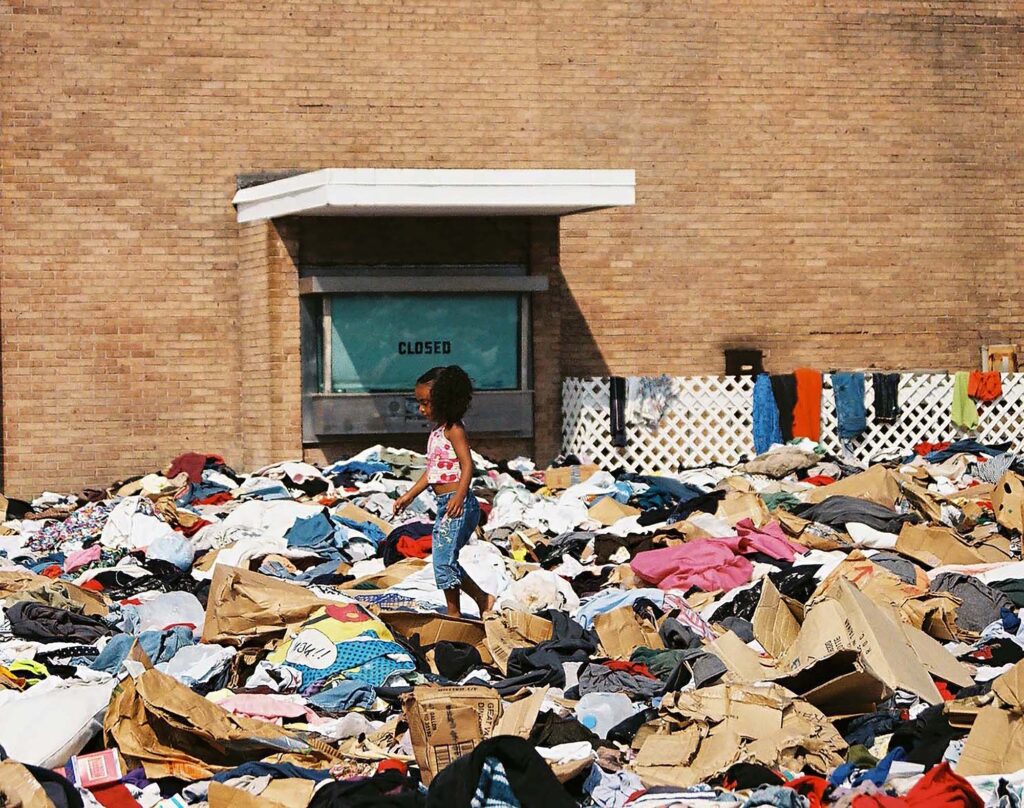
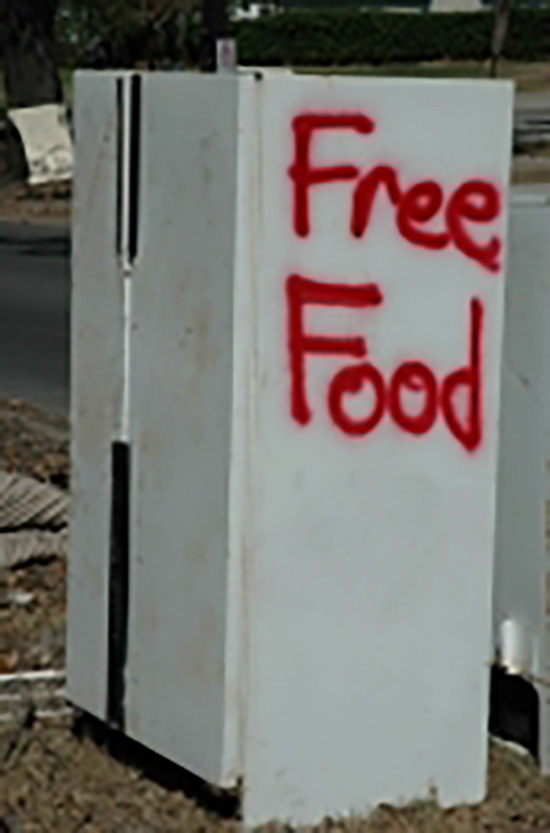
Contributions feature images of debris and destruction across the region from businesses like Zimmer’s Seafood in Gentilly, an anonymous contribution of a child playing in storm debris in Slidell, Louisiana, and a home in the Lower Ninth Ward with memorial wreaths for the deceased. Residents often employed dark humor, including a nod to the “horrors” contained in unplugged refrigerators.
The first entry, uploaded on November 11, 2005, was an anonymous story from a mother who evacuated her two children to Atlanta. She was exhausted, frustrated, and anxious about being away from home, and hoping to hear news of her “estranged but loved” husband who had stayed in New Orleans. She wrote about searching internet message boards and news websites for information about family still in the city, drinking red wine to help her cope, and staying glued to television coverage. She wondered why the disaster happened and why she was spared when so many others weren’t. “I’m still waiting for the answers to these questions,” she wrote. After locating her husband, she remained in Atlanta and tried to carry out a normal life: “In the meantime, I get my kids to school each day, cook dinner, clean the apartment, make groceries, talk to my husband and help him run his business as best I can from 500 miles away. My family is living life while taking the small steps to try to get back to New Orleans and back to ourselves. What else can we do?”

Community Message Board
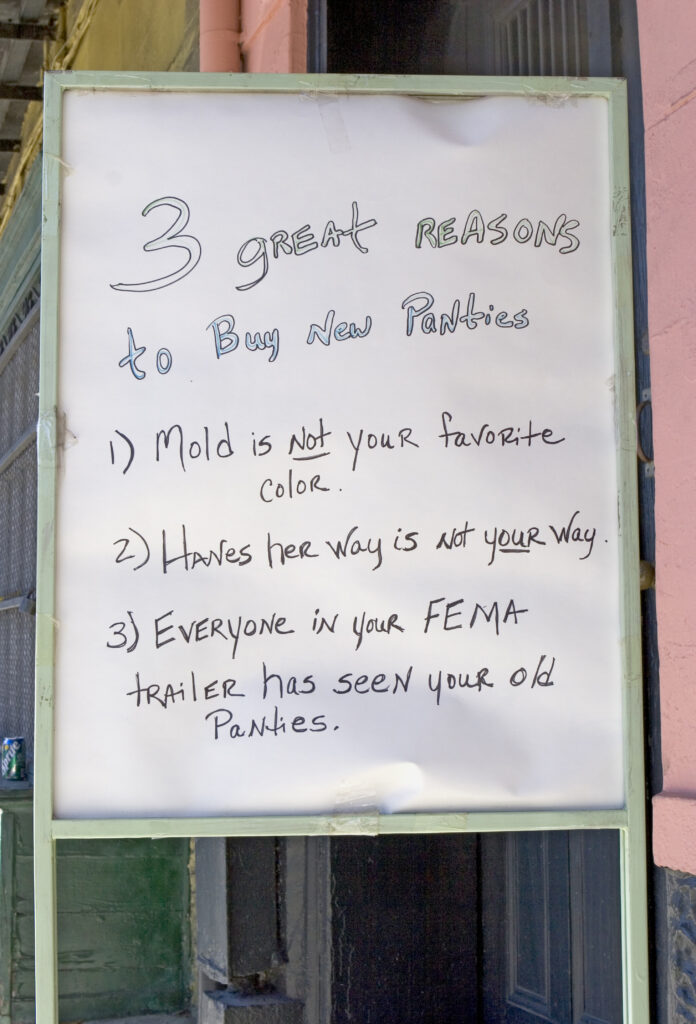
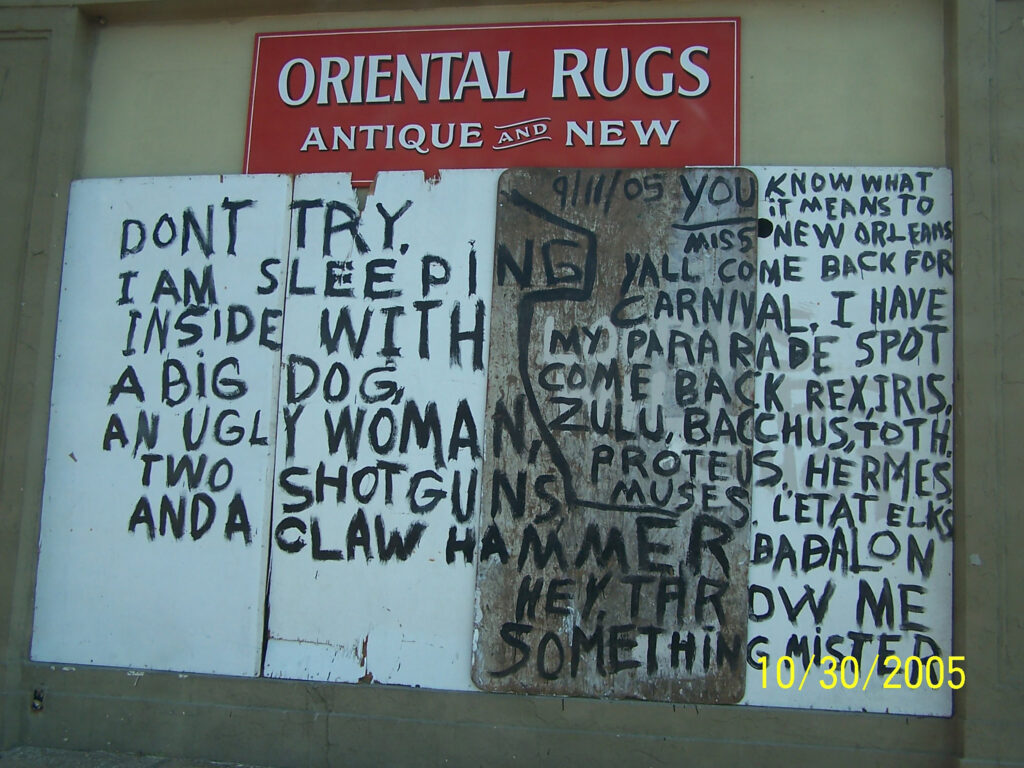
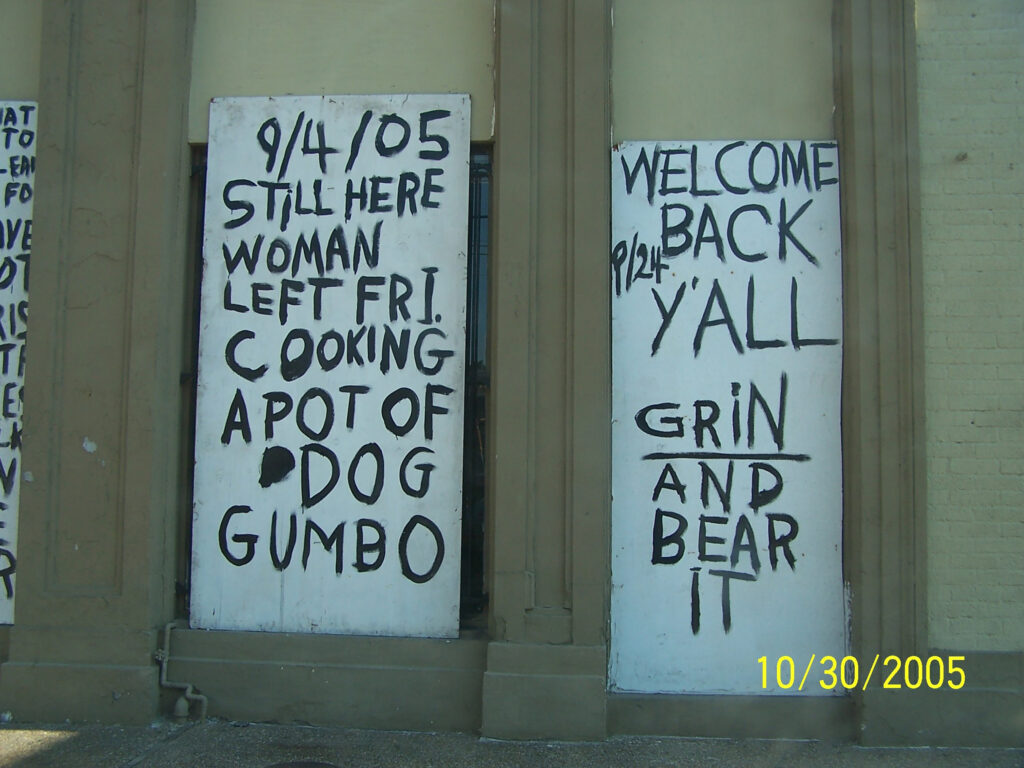
After the storm, any hard surface became a space to leave messages, express frustration, and deflect Katrina’s devastation with humor. Examples of graffitied messages included calls for missing persons, signs soliciting customers to invest in new underwear, and humorous warnings with updates on boarded-up windows along St. Charles Avenue.
The signs the HDMB collected captured not only the upending of everyday life but also the sass with which many residents soldiered on. Irreverent responses to the disaster also surfaced in personal narratives. Five months after Katrina, a woman who identified herself only as “an ‘over-educated’ 30-something white woman with a low tolerance for Republicans and alcoholics” contributed a story about loss of a certain kind in “Katrina Ate My Sex Toys.” Ahead of the storm, she left her toys in a box under her bed. Returning at the first opportunity, in October 2005, wearing a respirator and rubber gloves, she found them “blooming with black mold.” She did what many people had to do with their possessions after Katrina: she placed the toys in a plastic bag and tossed them in the pile of debris on the front lawn. “It went off to the landfill—my own little time capsule of lust.” With no cash and no privacy, she had not replaced the items. “I see much frustration ahead,” she wrote. “Do urban planners factor sexual frustration into their calculations? Rows of FEMA trailers next to each other can’t be healthy.”
National Guarding

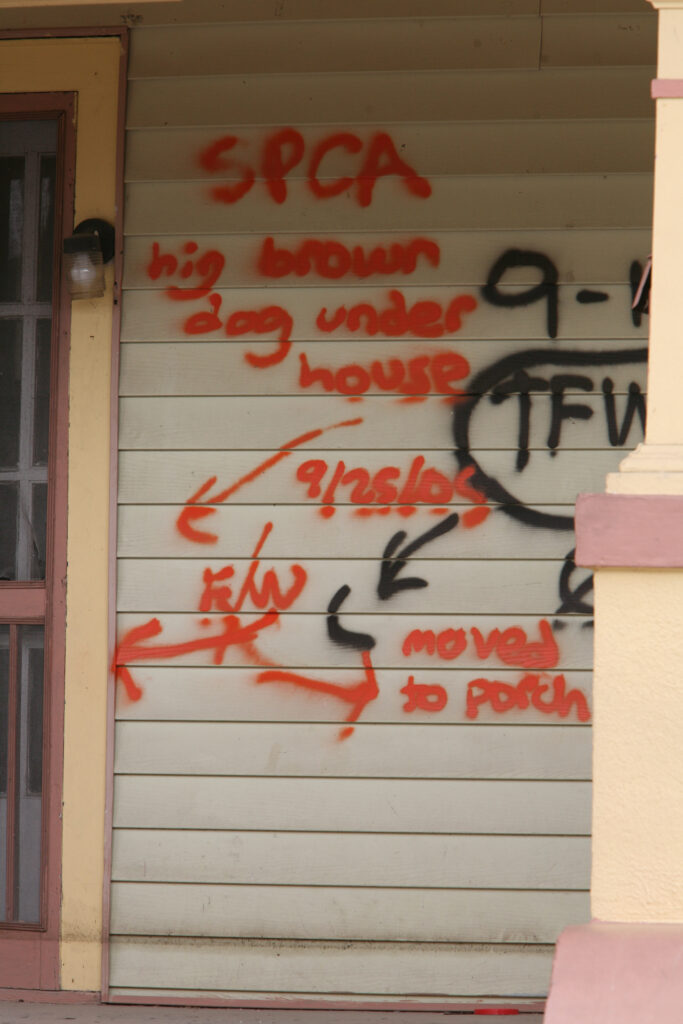
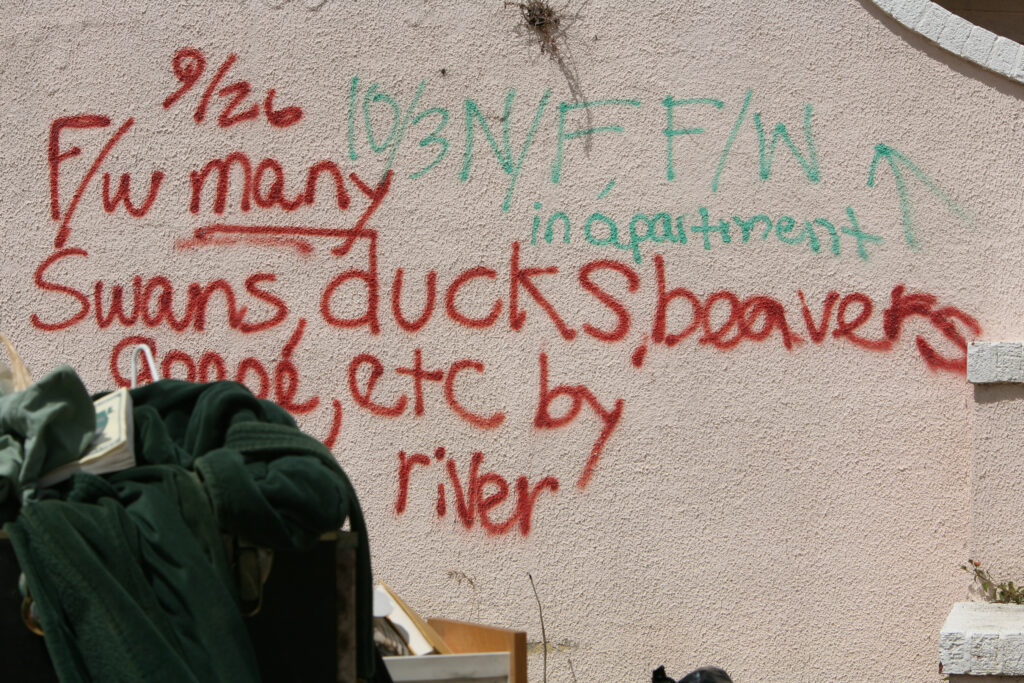
Spray-painted messages left by the National Guard in every neighborhood, at a time when residents were still barred from returning to the city, illustrated their search for people and pets, as well as where found pets had been taken. But the signs also revealed how strange the city’s ecology must have seemed to some of the guardsmembers, who arrived from points well beyond New Orleans. The sign “many swans, ducks, beavers, geese, etc by river” painted on a house in Mid-City was especially funny to locals. The “river” was Bayou St. John, and the “beavers” must have been members of the orange-toothed nutria population seeking high ground.
Katrina’s Kids
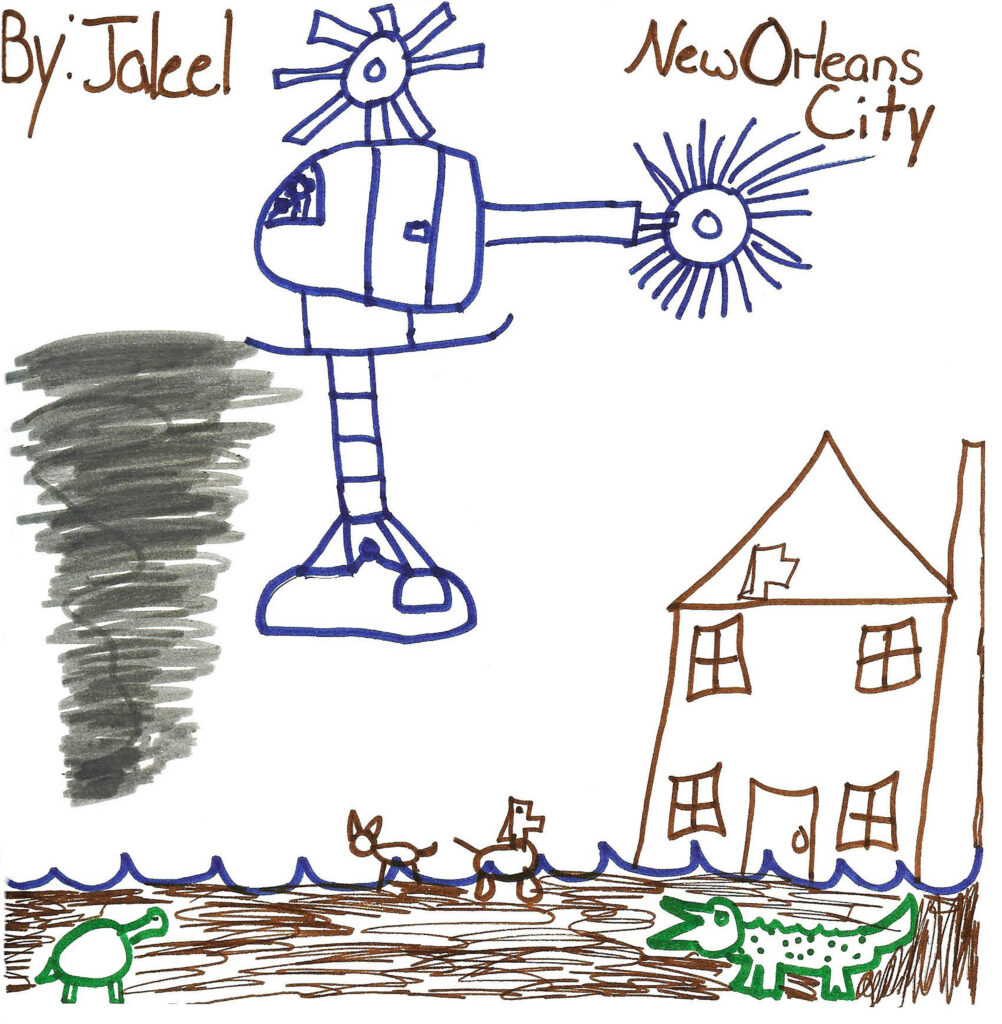
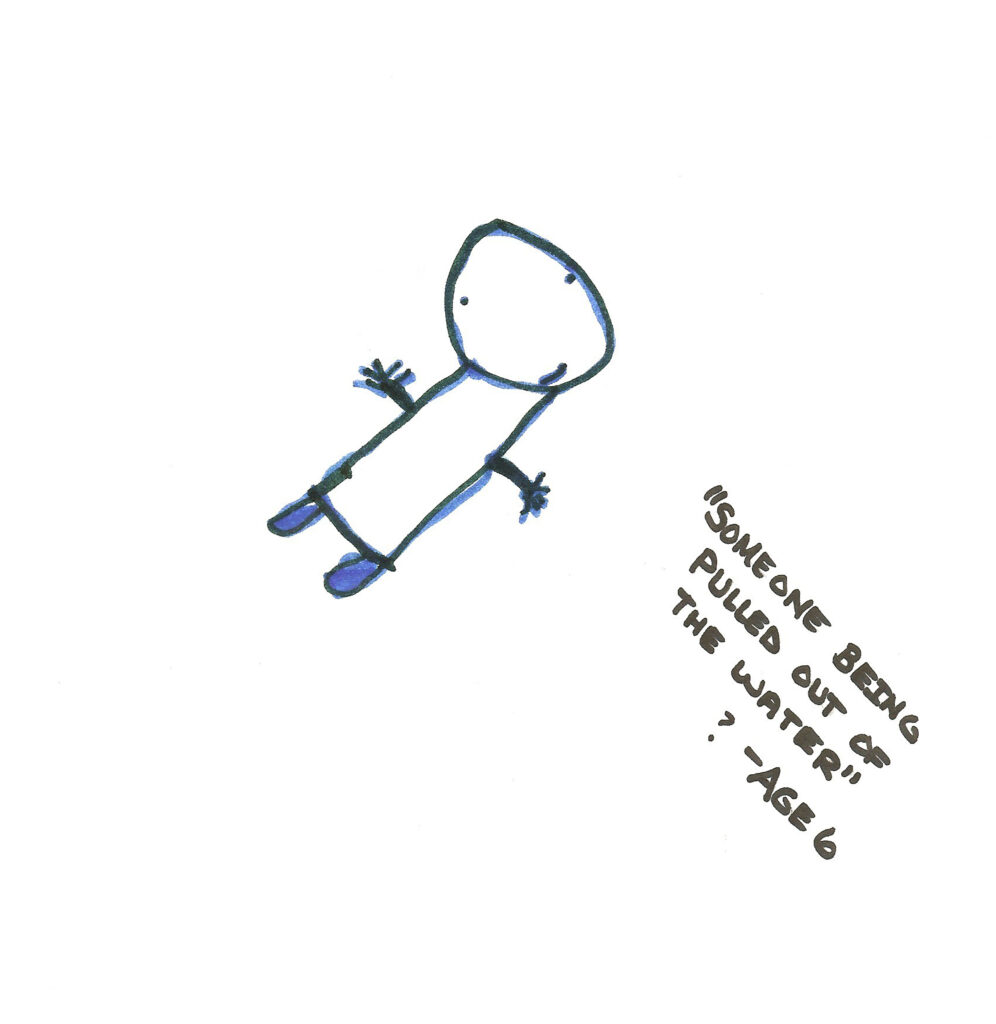
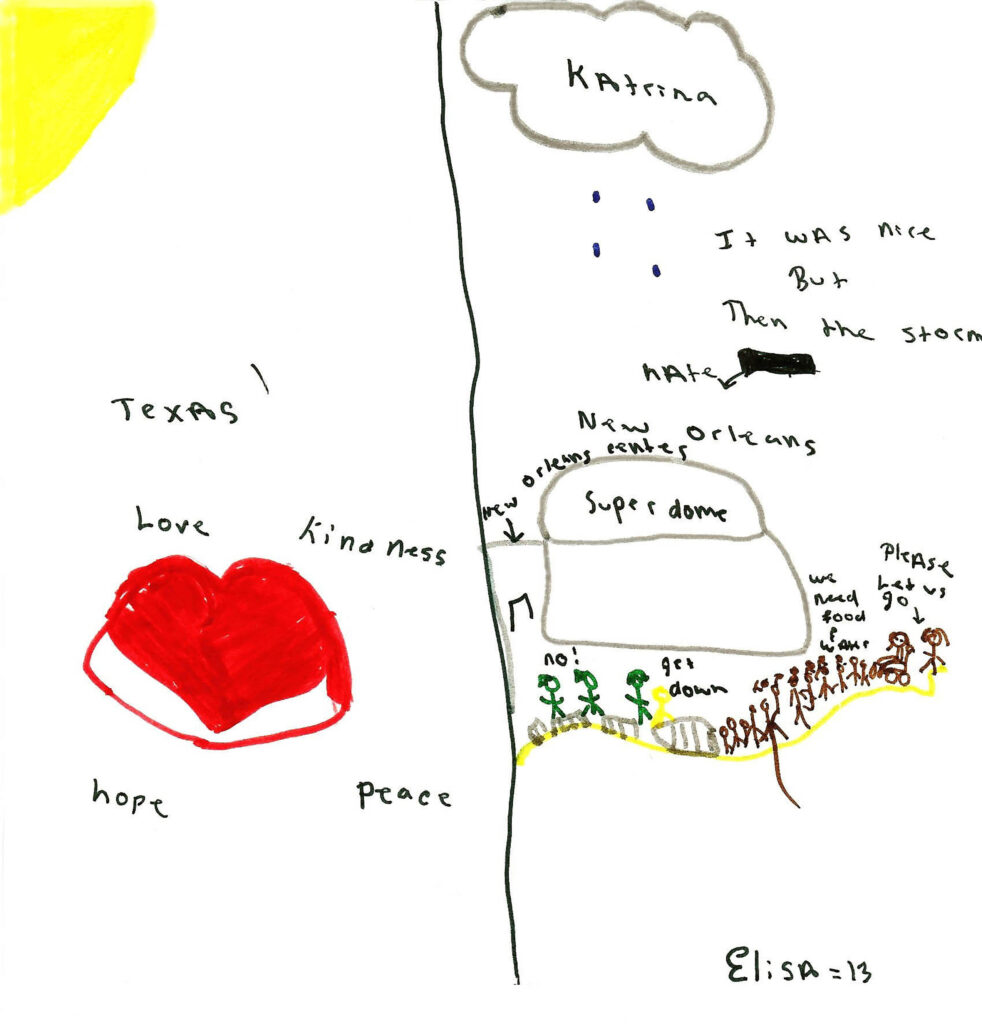
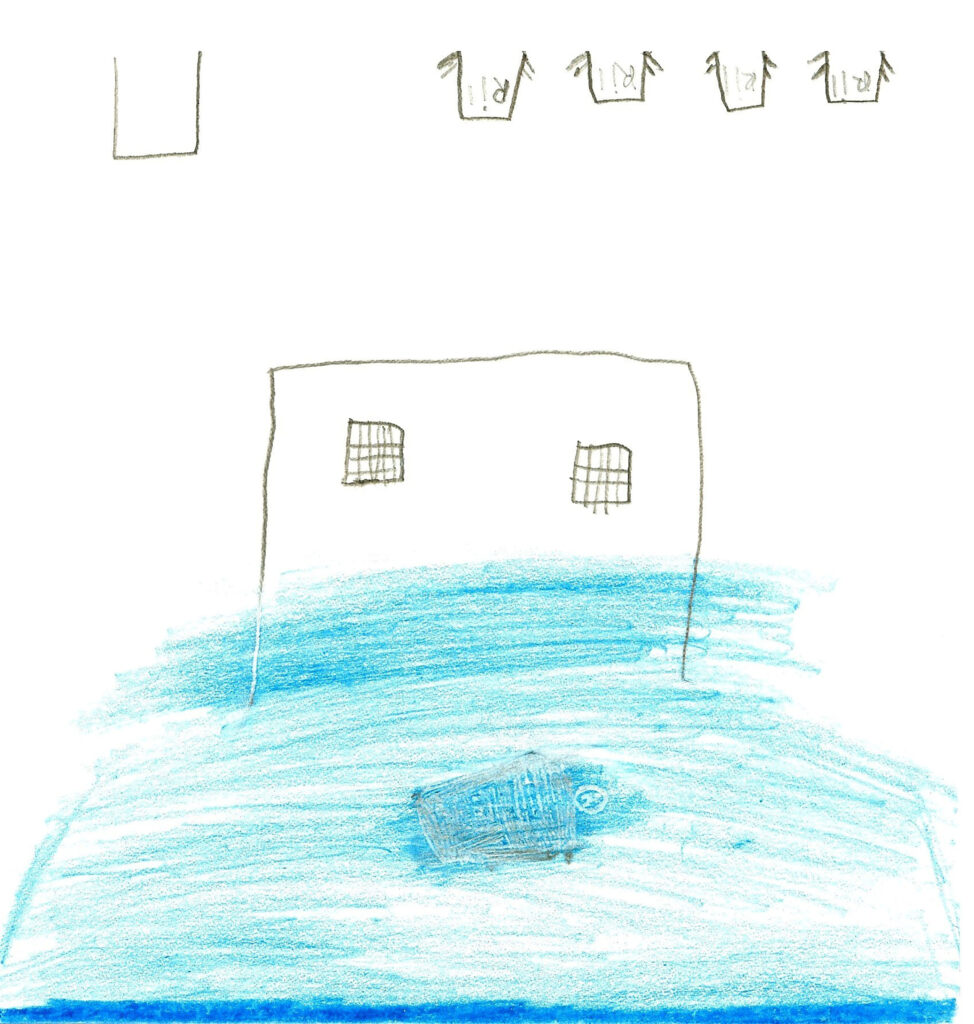
Volunteers often used artmaking to help Katrina’s kids grapple with what happened to them and their city. The HDMB contains a collection of artwork by young people who evacuated to a shelter in Houston. Their drawings reflect thoughts about those who died, about their “new life” in Texas, and about the scary circumstances in which many had fled the city. They regularly featured images of drownings, airlifts, “someone being pulled out of the water,” and dislocation.
According to one teacher, “several of the boys drew alligators,” including Jaleel. The teacher recounted a story Jaleel shared with her: “After the hurricane, they were looking down from the balcony of their home and spotted a huge gator. All the neighbors were watching, and people were throwing things down off the balcony. The next day or two, rescue helicopters came and took Jaleel, two younger children, and a pregnant woman. When they were airlifting one of the boys up, something happened with the harness, and he almost fell. When they re-attached the harness, he was saying blessings because he ‘would’ve fallen right where that big gator was and right into those big ol’ teeth, he’d had me for supper! I was sooo brave in the basket. But my momma, she got real scared!’”

Trying to Get Home
From the beginning, contributors used the HDMB to share their frustrations. As the mother of two stayed in Atlanta, helping her husband, who was on the ground in New Orleans, she recalled not recognizing the city she saw on CNN. “National news does not understand who we are in New Orleans and the Gulf Coast region,” she wrote. “I raged at the government. I cussed at Bush. I cussed at FEMA. I watched people who look like me swimming and fighting for their lives for four days before anyone tried to lift a finger to help.”
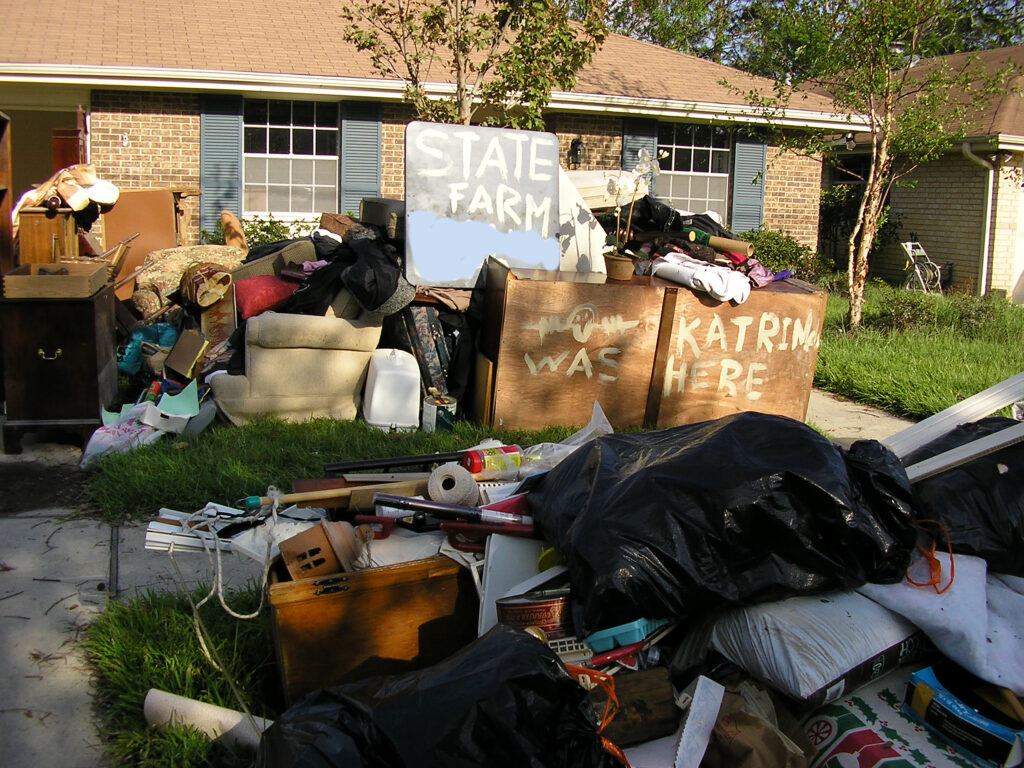
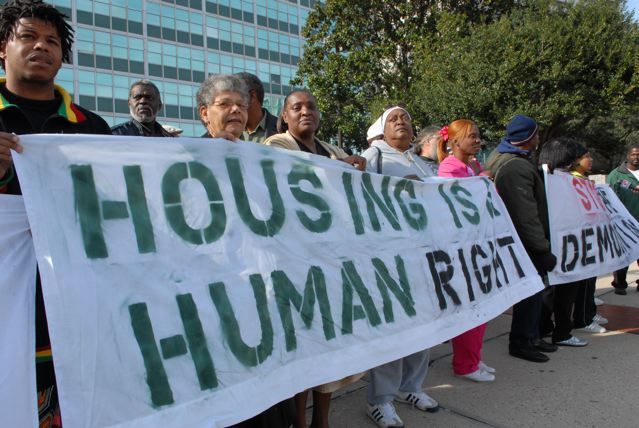

As the HDMB neared the end of its grant funding in 2008, it moved from documenting the immediate aftermath of disaster and recovery to demands for justice and accountability. Homeowners expressed their dissatisfaction over insurance payouts, signaling to their adjusters that “Katrina was here” and parodying State Farm’s jingle. After the storm, New Orleanians fought for housing as a human right, including calls for rent stabilization. The database remained open as a vessel to document community members’ outrage at the actions—and inaction—of the government, insurance companies, and media.
Mardi Gras
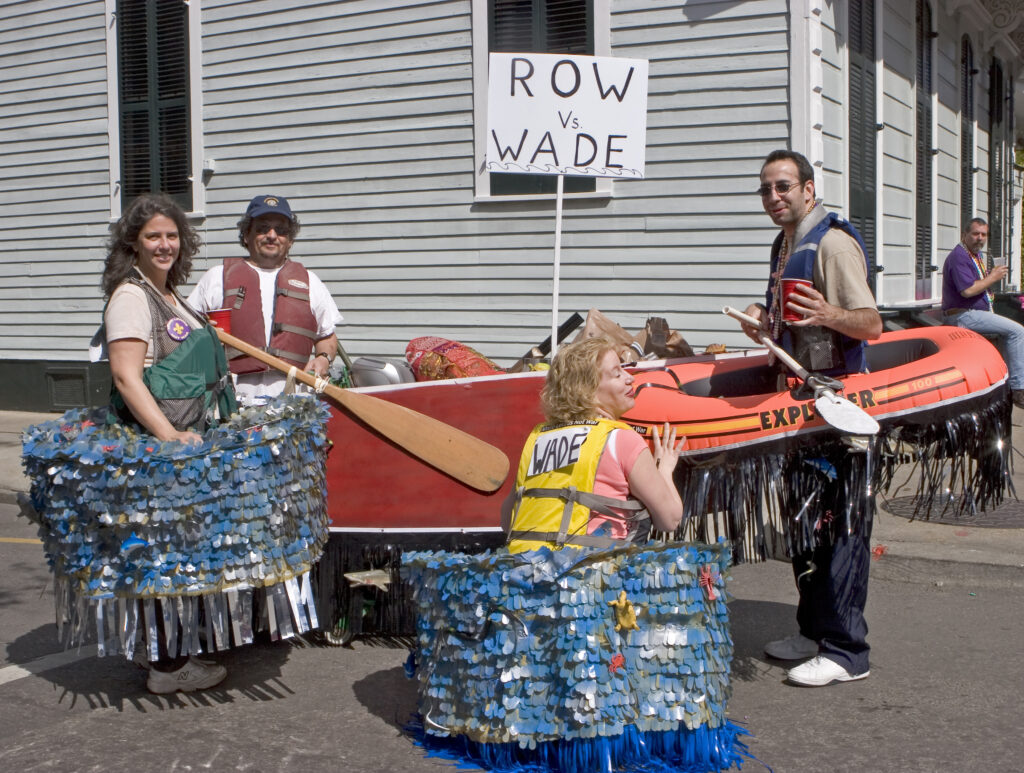
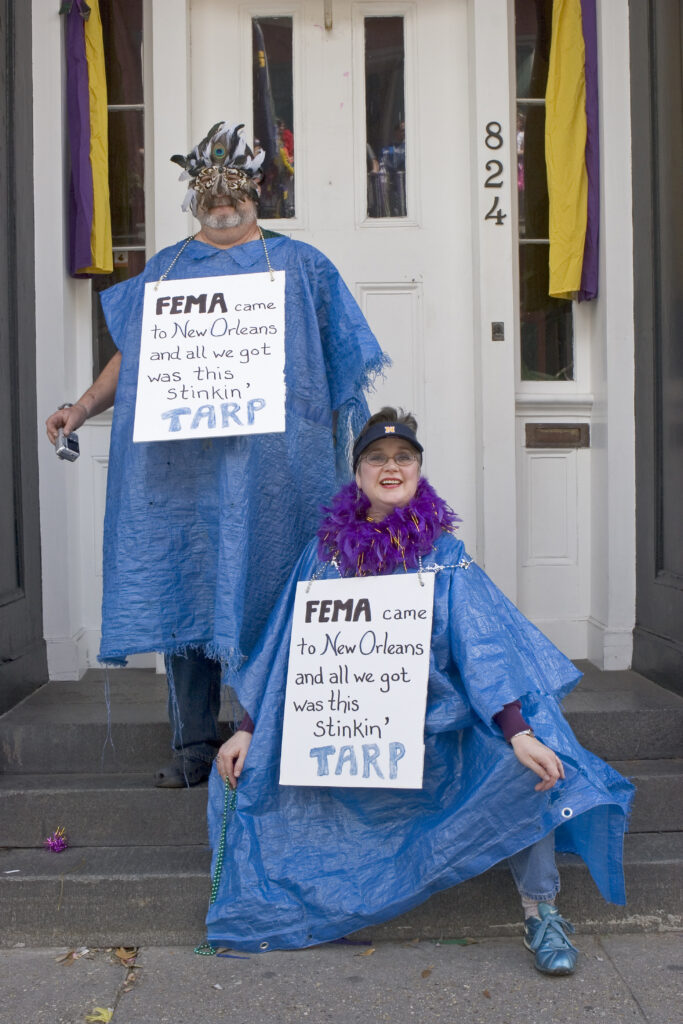
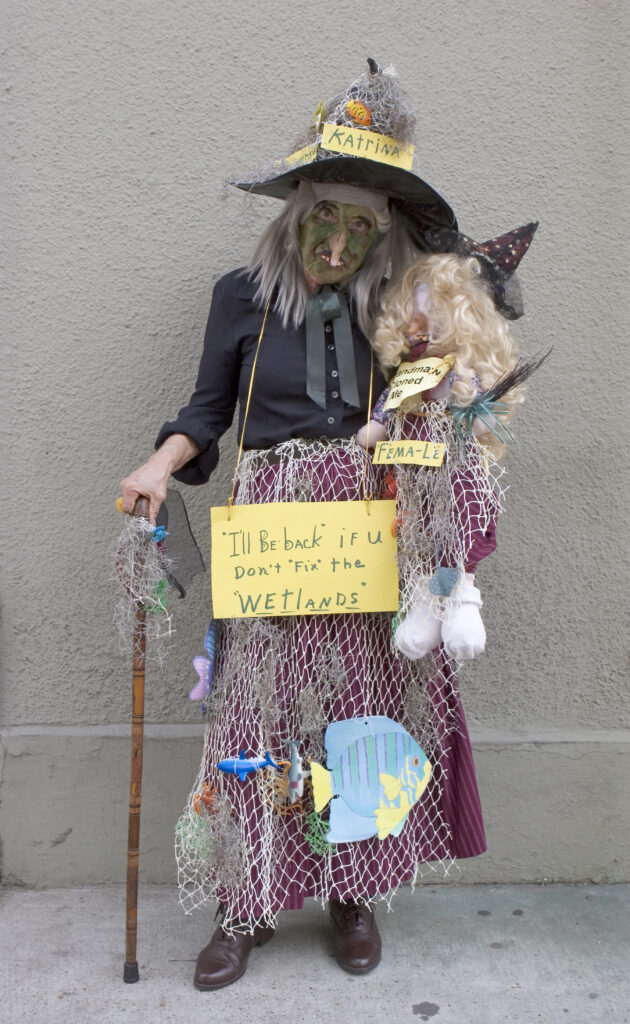
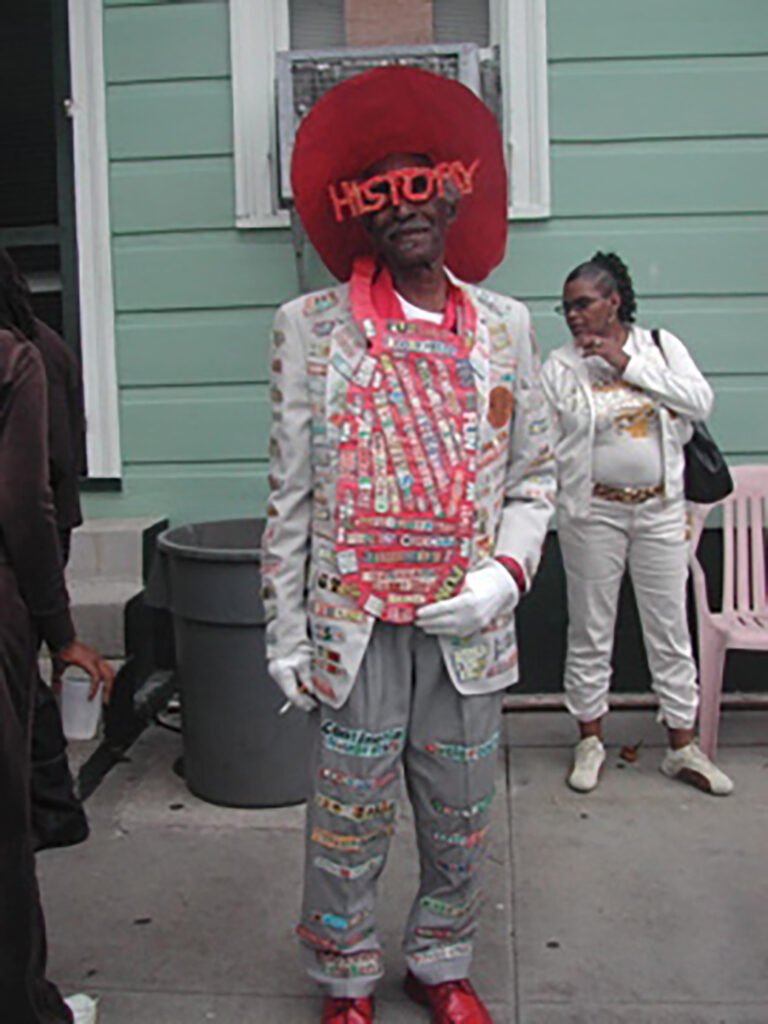
Mardi Gras Day 2006 was diminished in size but not in spirit. Thousands of residents remained displaced or living in FEMA trailers. The failures of the post-Katrina response were a common theme that year, including a critique of the continued presence of blue-tarped roofs, a Katrina witch calling for coastal restoration, a suit of sewn-on memories, and a team of paddling punsters. While the majority of nonresidents associate Mardi Gras with large float parades, “local” Mardi Gras happens downtown in the French Quarter and Marigny. This was especially true in 2006. While most of the city was still empty and dark, the oldest parts of town had come back to life. Many locals’ costumes satirized Katrina, while others expressed nostalgia for lost places and people. A man identified as Mr. Ramsey, for example, wore a suit that commemorated the lost history of the corner bar. He sewed the names of all the bars he knew of that no longer existed onto his suit and punctuated his outfit with “history” goggles. New Orleanians were prone to nostalgia before Katrina, but after the loss of so much to the floodwaters, the local phrase “it ain’t dere no more” took on an extra layer of meaning.
Do You Know What It Means
After Katrina, politicians, urban planners, and the media proposed new visions for the city’s future, often without the input of New Orleanians. Beginning in 2006, a group of artists from the School of Visual Arts in New York City began working with Mizell-Nelson as well as local universities, historical organizations, and neighborhood associations, to organize the “Do You Know What It Means” collection. These grassroots contributions came from communities across Greater New Orleans most impacted by the flood: St. Bernard, Lakeview, the Lower Ninth Ward, and the Bywater. This resulted in a style of collaborative storytelling rarely seen in post-Katrina coverage.5
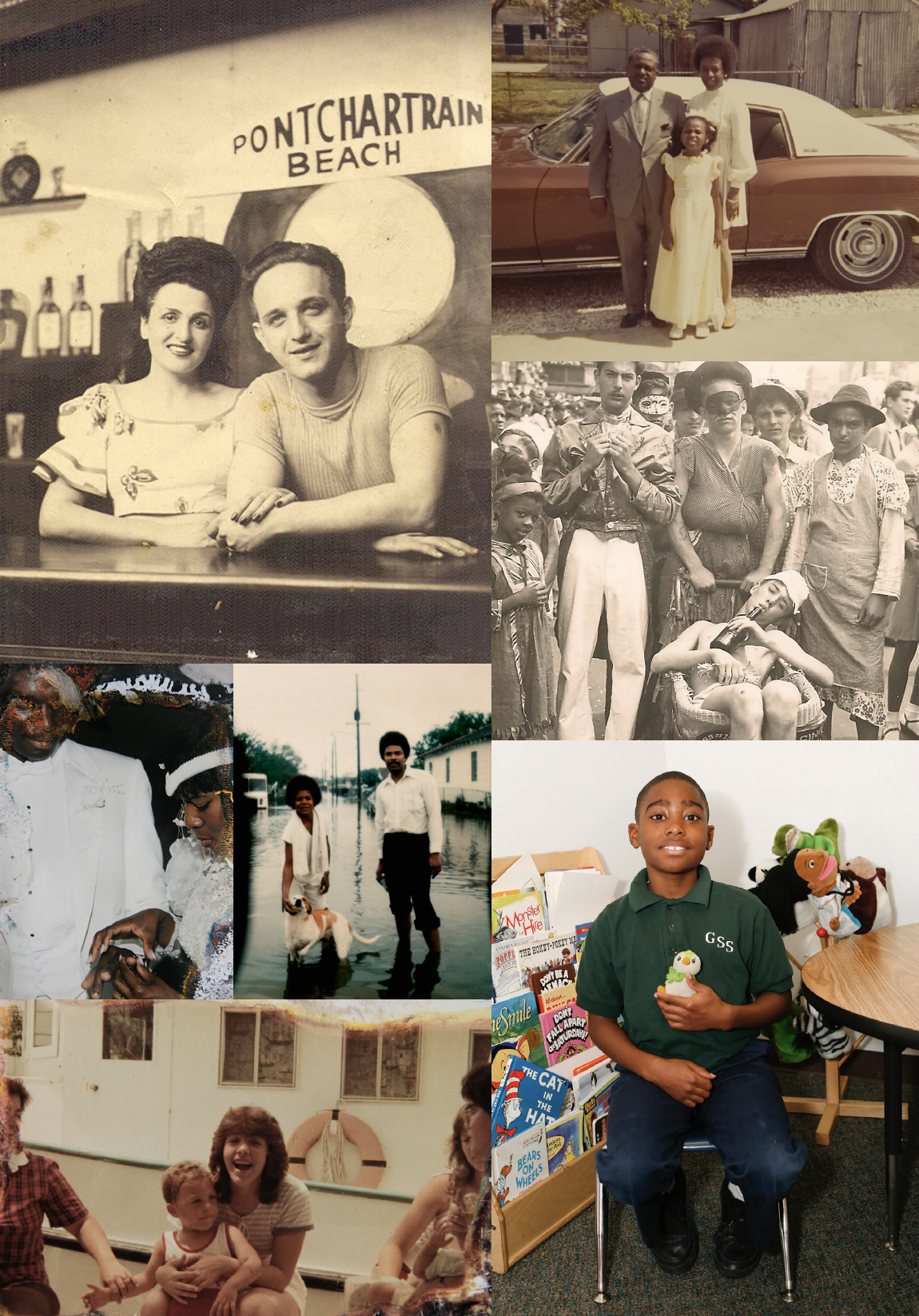
The “Do You Know What It Means” collection contains family photos and other ephemera that together tell the story of the city before the storm and affirm residents’ deep attachment to their neighborhoods and communities. Items include (clockwise, from top left) a couple at Pontchartrain Beach, late 1940s or early ’50s; a family on Easter Sunday at 4100 N. Prieur Street, 1973, collected at a reunion for former Fazendeville residents in October 2006; Mardi Gras, year unknown; Leland Jackson posing with “Green Bruce” in 2006; Fourth of July celebration on a shrimp boat on Lake Borne, mid-1970s; Lionell and Beatrice at their wedding, both from families native to Louisiana for three generations; flood photo on the 2400 block of Flood Street in the Lower Ninth Ward, 1970s; and (right) Clinton Joseph Minor, whose ancestors were longtime residents of the Fazendeville community.
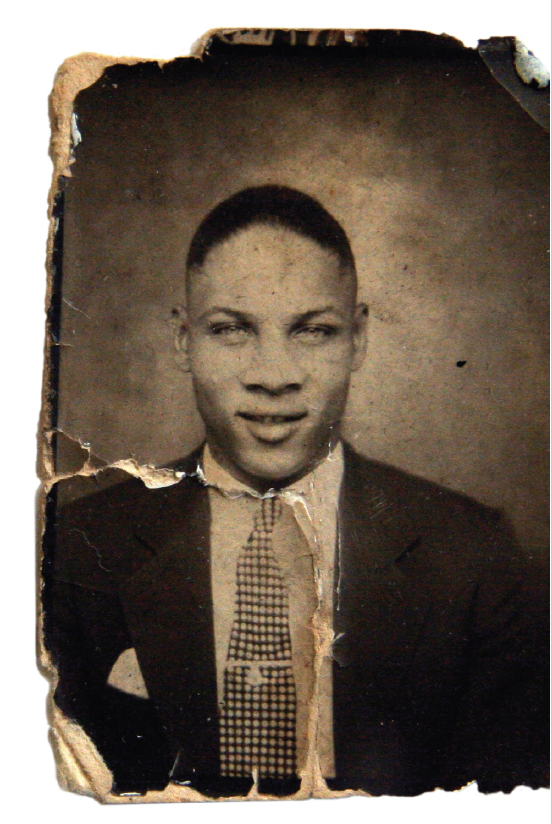
Perhaps the most poignant chord struck by “Do You Know What It Means” is the tenacity with which individuals and communities held on to memories and mementos. Consider the family photographs from former residents of the historically Black Fazendeville community in St. Bernard Parish. Politicians effectively wiped the neighborhood from the map in the 1960s to make way for the Chalmette National Battlefield. Many of those families relocated, reassembling their community in the city’s Ninth Ward, only to be displaced again by Hurricanes Betsy and Katrina.
And then there’s Leland Jackson, who was in elementary school when the storm hit. When he left New Orleans, he held tight to his stuffed animal “Green Bruce”—the one thing he was able to take with him. After returning home, he posed for a photo with his friend: a proud portrait of two survivors.6
Embedded in the metadata of these items are genealogical details, commemorations, and locations now transformed by floodwaters and the passage of time. In the Hurricane Digital Memory Bank, community contributions became a record of determination and destruction— preserving and sharing the memories that Katrina couldn’t destroy.
Acknowledgements
We would like to thank Cathe Mizell-Nelson, Mills Kelly, Sheila Brennan, and Amanda Regan for talking with us about their memories of working with Michael on the project. And thanks to our late friend Madelon Powers, expert on the history of saloons, for her insights about bars post-Katrina. Funding for the writing of this essay comes from the Ethel & Herman L. Midlo Endowed Chair in New Orleans Studies and the Gordon Mueller Professorship in Public History at the University of New Orleans. This piece is dedicated to the memory of Michael Mizell-Nelson. Thank you for leading the way.
Jessica Dauterive is the project manager of the Midlo Center for New Orleans Studies at the University of New Orleans. She earned a PhD from George Mason University with specialties in digital, public, and cultural history. Her current research explores the ways that Louisiana Cajuns used burgeoning culture industries in the mid-twentieth century to build out a vibrant regional identity.
Mary Niall Mitchell (“Molly”) is Ethel & Herman L. Midlo Endowed Chair and the Gordon Mueller Professor of Public History at the University of New Orleans, where she directs the Midlo Center for New Orleans Studies. She is author of Raising Freedom’s Child: Black Children and Visions of the Future After Slavery (New York University Press, 2008).
NOTES
- Hurricane Digital Memory Bank (HDMB), accessed June 16, 2025, https://hurricanearchive.org/.
- To learn more about the development of the HDMB and its place in online collecting, see Sheila A. Brennan and Mills T. Kelly, “Why Collecting History Online is Web 1.5,” Roy Rosenzweig Center for History and New Media, March 2009, accessed October 16, 2024, https://rrchnm.org/essays/why-collecting-history-online-is-web-1-5/; RRCHNM Team, “10 Years After Katrina, the Enduring Value of the Hurricane Digital Memory Bank,” Roy Rosenzweig Center for History and New Media, August 28, 2015, accessed October 16, 2024, https://rrchnm.org/news/10-after-katrina-the-enduring-value-of-the-hurricane-digital-memory-bank/; and Sheila Brennan, “Share Your Story: Legacies of Online Collecting,” Journal of American History 111, Issue 1 (June 2024): 212–221, https://doi.org/10.1093/jahist/jaae089.
- Michael Mizell-Nelson, “Not Since the Great Depression: The Documentary Impulse Post-Katrina,” in Civic Engagement in the Wake of Katrina, eds. Amy Koritz and George J. Sanchez (University of Michigan Press, 2009), 59–77, https://muse.jhu.edu/pub/166/oa_monograph/chapter/144965.
- The project also emphasized that all contributors would retain full copyright and their submissions could not be used in for-profit publications without their consent.
- “Do You Know What It Means” collection, archived August 27, 2016, at https://web.archive.org/web/20160827222402/http:/doyouknowwhatitmeans.org/index.html/.
- Students in Jessica Dauterive’s digital humanities course created exhibits from this collection for the twentieth anniversary commemoration. The entire collection and their work can be seen at https://katrina20.midlocenter.org.

