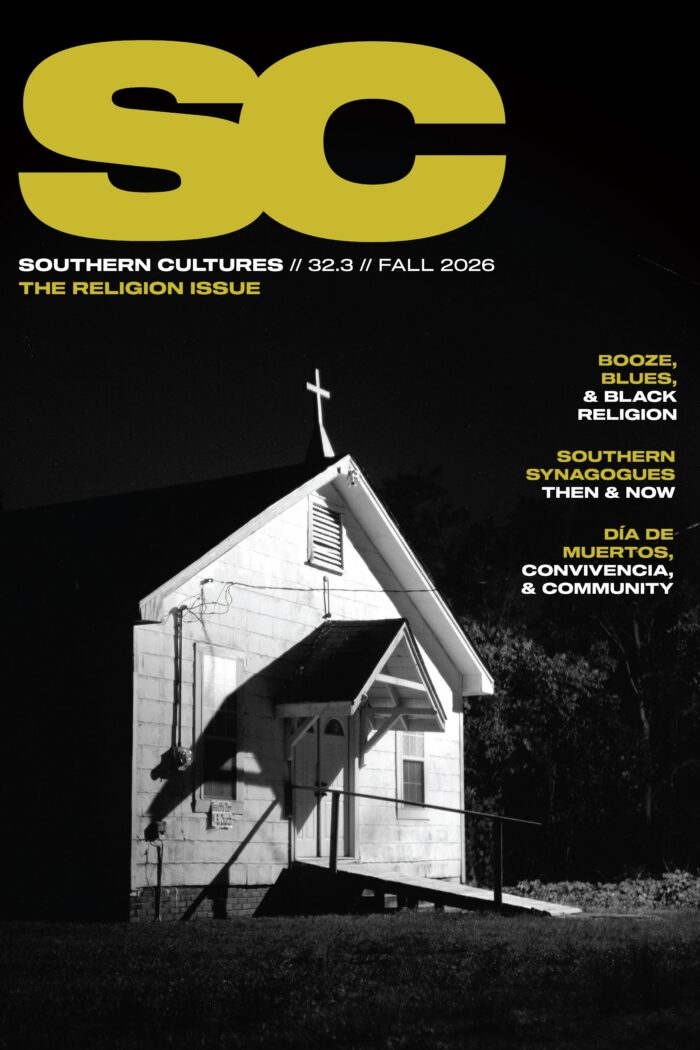
The Religion issue features six photographs from artists that offer a “Snapshot” look at their experience of religion in the South. With gratitude to photographer Emily Rena Williams, who helped curate this special section.
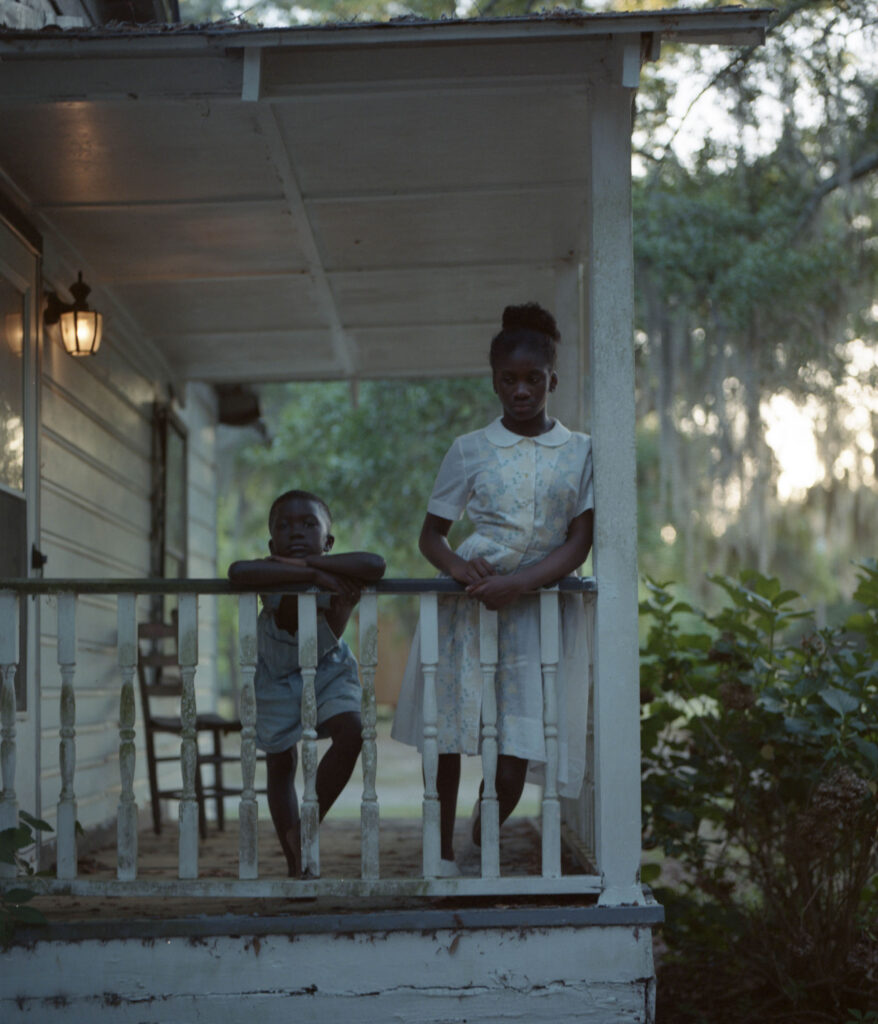
The Water Bring We, The Water Wanna Take We Back
Kennedi Carter | Gullah Geechee Coordidor
The culture of the Gullah Geechee corridor conjures imagery of live oaks draped in Spanish moss, the sweetest low country spirituals carried through humid air, and the slow, wading movement of Black folk in water. It is a place both African and Caribbean, shaped by maroonage and held within an enduring ecology of memory. With its rice fields and ever-shifting coastlines, the Low Country carries an atmosphere of mysticism—one where land, water, and spirit remain in constant relation.
This project takes its title from a Gullah-Geechee proverb: “The water bring we … the water wanna take we back …” The phrase gestures toward water as both origin and return, transport and threshold. In this work, I engage that duality as a framework for understanding Gullah-Geechee life not only as culture, but as an ecology of endurance shaped by displacement, environmental precarity, and spiritual continuity. The photographs construct a visual narrative that considers the resilience of Geechee communities amid the converging pressures of rural gentrification, commercial tourism, and climate change. At the same time, they attend to the ways religious lore and spiritual practice intervene—sustaining a sacred bond between people, land, and sea.
Conceptually, the project is structured through the lens of the Bakongo cosmogram, which maps the relationship between the physical world (ku nseke) and the spiritual realm (ku mpemba), divided by the kalunga line—a watery threshold between the living and the ancestral. Within this framework, the Low Country becomes a site of spiritual cartography, and in the work, the Combahee River operates as a conceptual kalunga line, marking both a cosmological boundary and a historical site of resistance. Through this structure, the landscape is rendered as a living archive where history, cosmology, and environment converge.
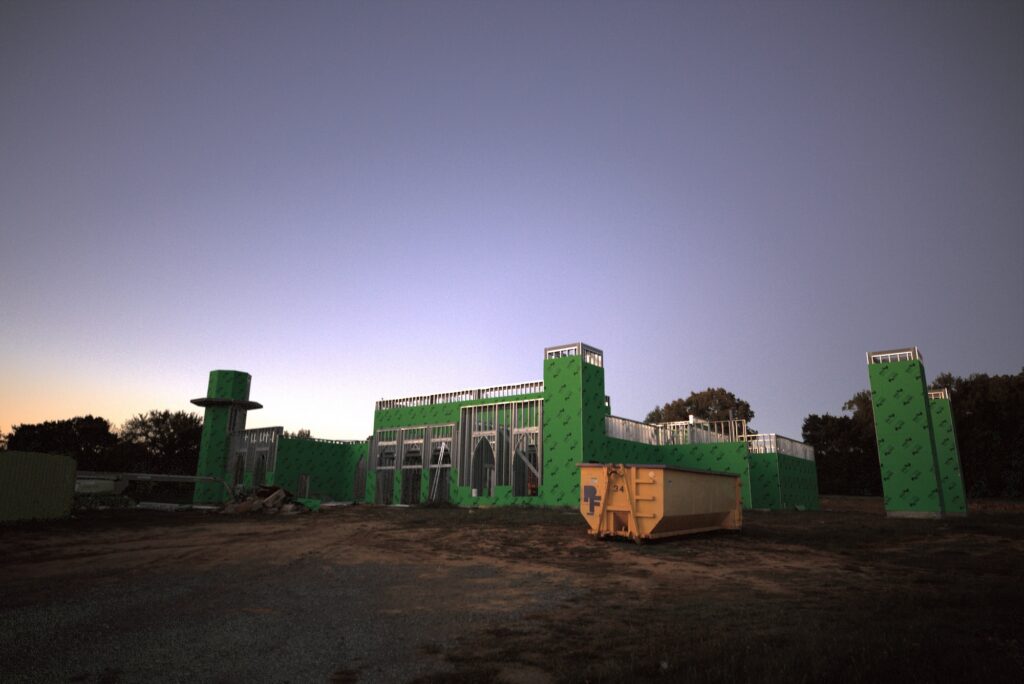
Abraham House of God
Shiraz Ahmed | Abraham House of God, a mosque under construction in Horn Lake, Mississippi, in October 2025, two years after a federal judge ordered the project be approved over the resistance of local officials
Northern Mississippi is home to a small but growing community of Muslims who cross state lines to attend Memphis-area mosques for prayers and holiday services. Abraham House of God is a new mosque and cemetery being constructed to meet the needs of this community closer to home. Organizers behind the initiative faced regulatory roadblocks from local officials, leading the planners to sue, claiming religious discrimination. A federal judge issued a consent decree, ordering the town to allow construction to move forward in Horn Lake.
In the United States, mosques are often the first outgrowths after Muslims move to an area. While chiefly the site of daily prayers, they also provide space for social functions and are a source of pride for Muslims who want to see themselves reflected in the American landscape. Some fundraise and plan over years to complete these projects.
My documentary project, “Closer to Jannah Than Earth,” explores the construction of sites of Muslim religious expression across the American South. From the initial stages of dirt, steel, and concrete to the activities of the people who gather in the completed structures, I seek to capture how the mosque can be both commonplace and divine.
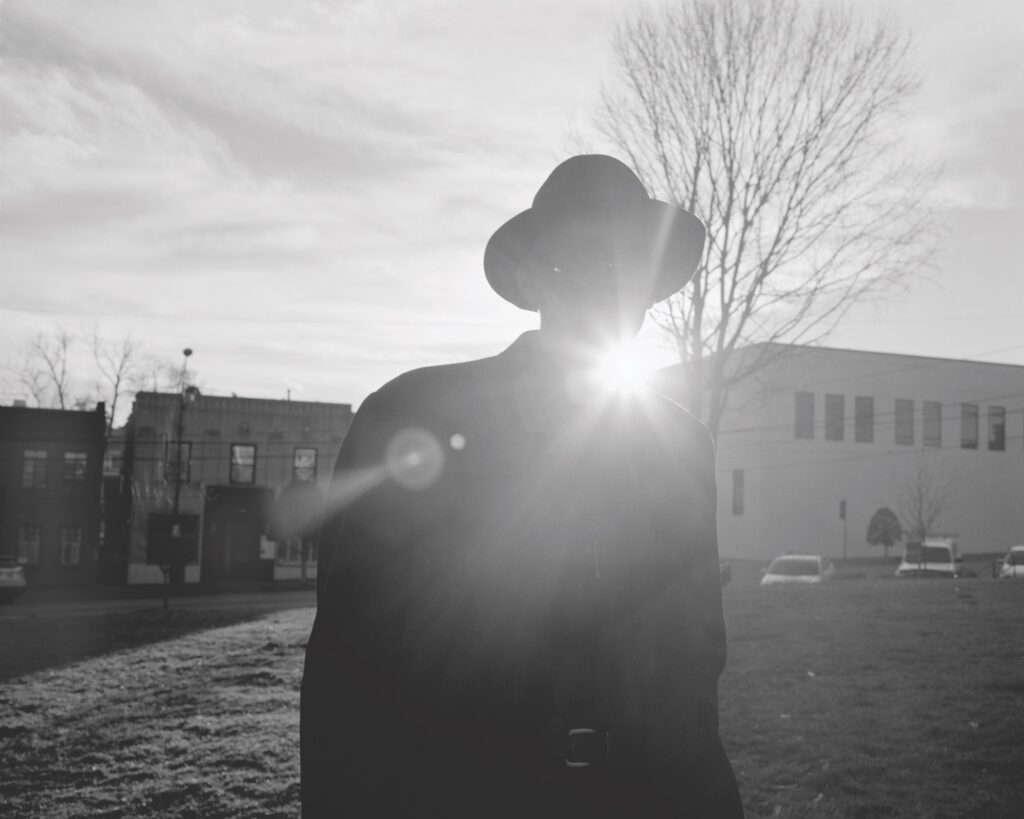
Street Preacher
Aaron Canipe | Morganton, North Carolina, 2015
It was light and sound that drew me to the square: a megaphone echoing through the alleyways and a setting sun bleeding behind the old courthouse. Perched on a readymade lectern, a tinny microphone picks up gusts of mountain wind coming down from the Blue Ridge Mountains. There’s a well-worn Bible with a thousand sticky notes on the stand. It’s late March 2015, and a street preacher sets up for a service in the Foothills town of Morganton, North Carolina. As with many pictures, I didn’t know I was going to make it until I did. I was in Morganton for something else when the photograph came together. The preacher’s black bowler hat, with the matching black coat and shirt, the low-hanging crucifix, the thin-rimmed silver glasses sliding down his nose. For me, art and religion collide when you put trust in your vision and, with some planning and preparation, the world gives you a gift: You learn something you didn’t know before. Good pictures will speak back eventually. In my short time with the preacher, I broke a cardinal rule in photography—don’t aim the lens directly at the sun. But in the flare’s erasure of all the details I was drawn to, I saw something a little more ominous, simultaneously holy and menacing, a possibility of dichotomy that called from a megaphone down the block.
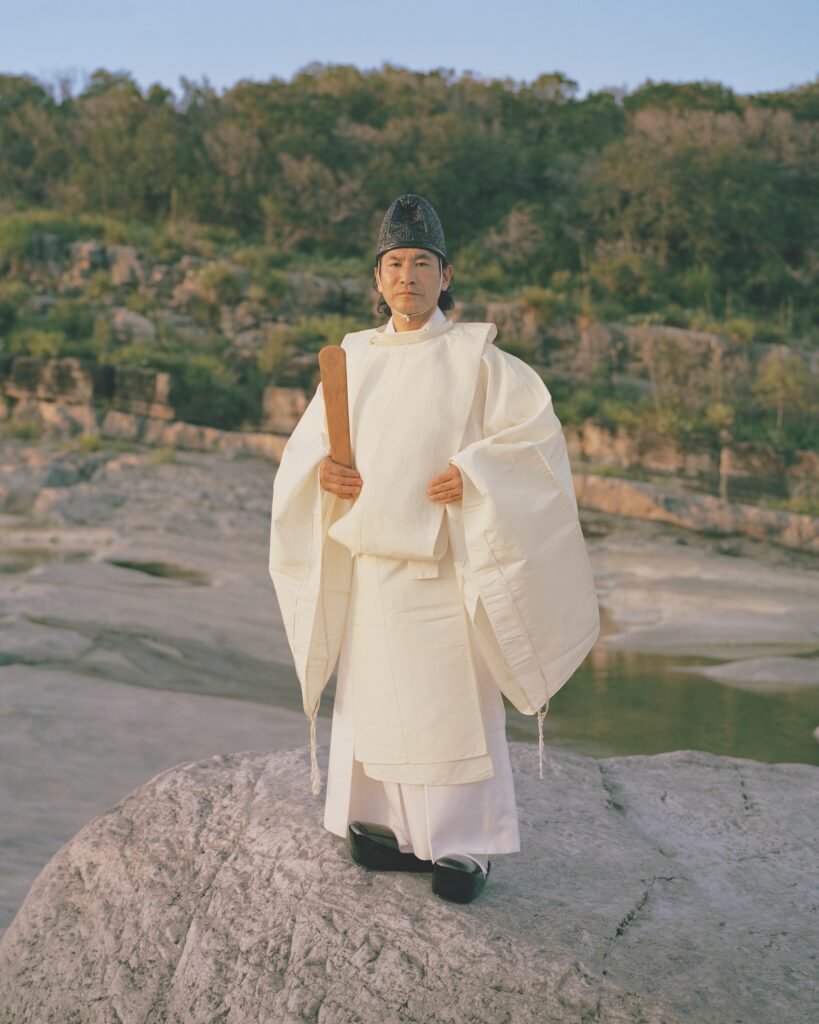
Také Asazu
Harmon Li | Také Asazu, a Shinto priest, restaurateur, chef, September 8, 2025, Austin, Texas
Takéhiro Asazu is a renowned restaurateur and chef in Austin, Texas, of beloved restaurants Komé, Uroko, Sa-tén, and the soon-to-be-reopened Daruma. In 2024, Asazu took a full year away from his family, friends, and work to study Shintoism in Japan and become a Shinto priest. He incorporates his Shinto beliefs into his daily life by instilling a deep sense of gratitude and appreciation to everyone who supports his restaurants and each new day’s opportunities. At his restaurants, Asazu practices Shinto by hosting cultural events and ceremonies that express gratitude for nature, food, and the people who make his work possible.
Asazu and his wife, Kayo, commissioned this portrait to commemorate his year of study and to express his connection to the vast Texas terrain that he treasures and has called home for more than two decades. Asazu’s long-term dream is to one day help in the building of a Shinto shrine in central Texas, where he hopes to keep the Shinto tradition alive while creating meaningful connections to his local community.
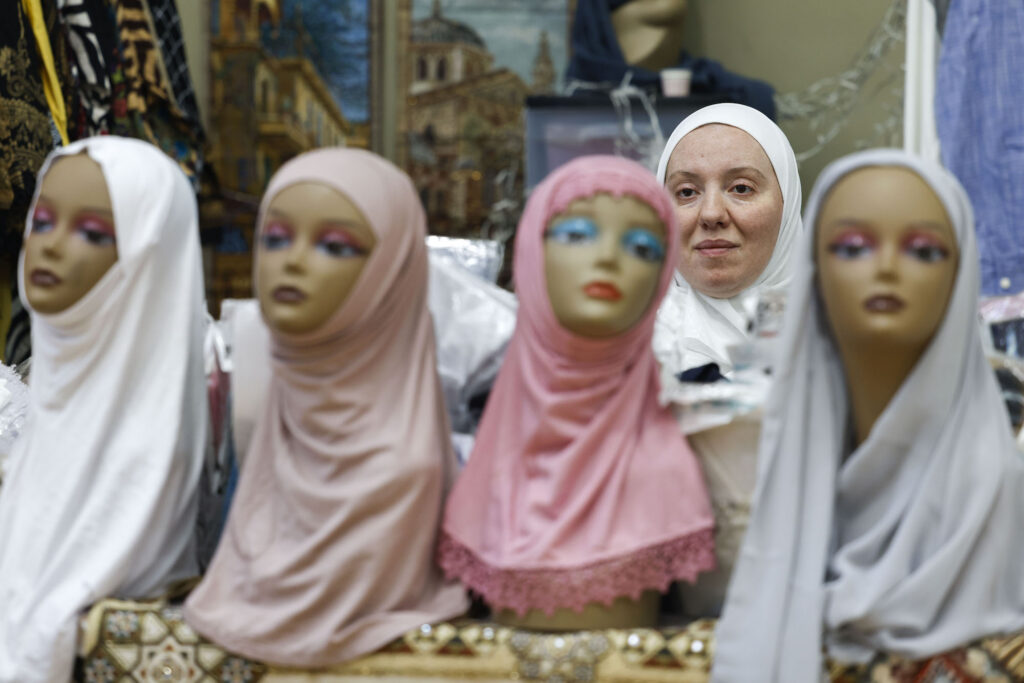
Manila’s Shop
Shafkat Anowar | Manual Almuradi, owner of Manila’s Shop, sits behind the mannequin heads adorned with hijabs during a pre-Ramadan bazaar, February 25, 2024, Islamic Center, Irving, Texas
This photo is from a project that began in 2024 as part of the Dallas Morning News‘s “Asian American Bustle” series. As a Bangladeshi, I aim to document how diverse cultures within South Asia coexist, intertwine, and redefine identity in the rapidly growing Desi population across the metroplex. Unlike cities such as New York, Dallas–Fort Worth’s vast and scattered layout makes it challenging to locate a single cultural enclave. But within the fragmentation, I’ve found countless stories of belonging and a sense of quiet pride.
For decades, the Dallas–Fort Worth area has been a magnet for a vibrant enclave of South Asian Americans—a rapidly growing ethnic group in North Texas. Representing countries like India, Pakistan, and Bangladesh, this diverse population contributes significantly to the cultural, economic, and social fabric of the region. The South Asian community brings its rich cultural heritage to DFW through numerous festivals, events, and organizations. Celebrations such as Diwali, Eid, Holi, and Vaisakhi are widely observed and are often the source of big public gatherings, performances, and food festivals. The area hosts various cultural organizations like the India Association of North Texas and the Pakistan Society of North Texas, which organize events promoting South Asian arts, music, and traditions. This project focuses on how the South Asian community has become an integral part of the Dallas–Fort Worth area, enriching the region with its diversity, traditions, and contributions. As this population continues to grow, its influence on the cultural, economic, and social landscape of DFW will deepen.
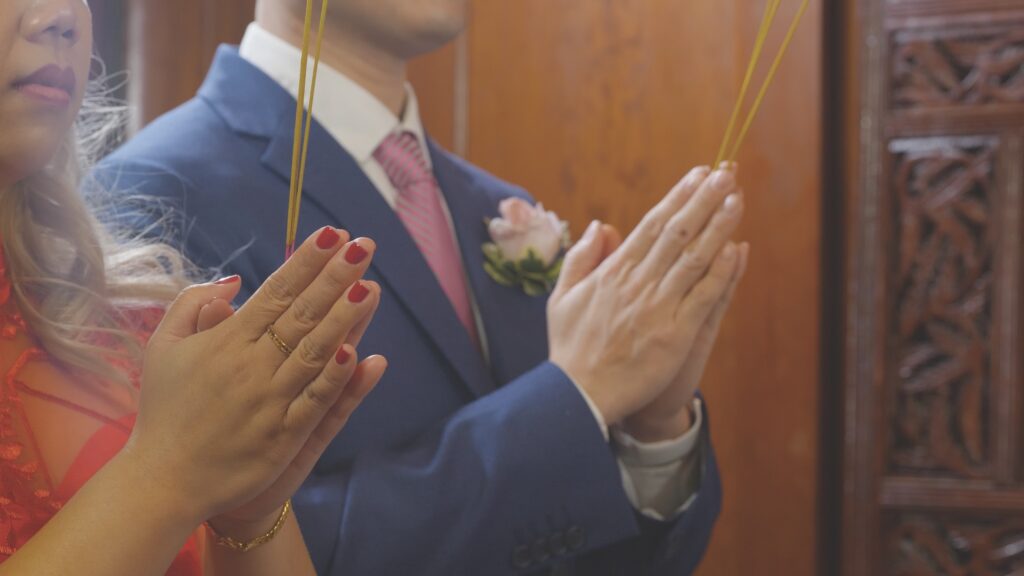
What we don’t talk about
Melanie Dang Ho | Jacksonville, Florida, 2023
I don’t remember asking my parents many questions growing up. They filled my imagination with stories of the place they called home, evidence of war filtering their accounts. I took their stories as just that, a collection of memories, anthologized in the telling. For them, it was proof they had an existence of their own. A time before, a time during. I didn’t understand the weight of their memories until long after they stopped including me in their reliving of them. Maybe they knew I’d perceive the depths of their loss a little bit more, now that I’m an adult.
In less than a decade, I’ll be the age my mother was when she moved to the United States. Especially because of the way she longingly spoke of her đất nước, I wonder—what did it take to seek refuge in an unknown? Does she look at her American-born child and think of Vietnam? There is comfort in the ways my body mirrors hers in routine—palms pressed together in prayer, head bowed, lips mouthing Nam Mô A Di Đà Phật. A calming chant of familiarity, of identity, culture, belonging. I think of Buddhism existing in that gap for me. I feel more Vietnamese.
This still is from my short film what we don’t talk about, a documentation of my sister’s marriage. As she performs the ritual of praying at our ancestors’ altar, I wonder if my parents are witnessing themselves, a mirroring of their past. I use filmmaking as a means to ask the questions I want to pose to my parents but missed the opportunity to do so. In the process of inquiry, I hope to know them. The Greek origin of the word anthology translates to gathering of flowers. I’d like to think of my parents’ stories as imparting flowers to their daughters, my films an attempt at handing them my own bouquet.
Shiraz Ahmed is a photographer and journalist telling stories about social inequities, faith and doubt, marginalized communities, and the unending attempt to better our world. He was previously assistant professor of practice for the Southern Documentary Project in the Center for the Study of Southern Culture at the University of Mississippi. He currently resides in Texas.
Shafkat Anowar is a Bangladeshi photojournalist currently based in Dallas. Born in Dhaka, he immigrated to Hawai’i in 2016 to pursue higher education. Anowar’s path to photography was unexpected, yet his work has become deeply rooted in themes of memory, migration, and belonging. Through his lens, he explores how landscapes, communities, and fleeting moments carry emotional weight. His photographs often move between vast natural settings and intimate human stories, reflecting nostalgia, displacement, and connection.
Aaron Canipe is a photographer and designer based in central North Carolina. He earned his MFA in Experimental and Documentary Arts from Duke University. Deeply rooted in family and place in the Piedmont, his photographs and books have been exhibited throughout the Southeast and are included in collections at the Telfair Museums, the Do Good Fund, and Cassilhaus, among others.
Kennedi Carter is a photographer and visual artist based in Durham, North Carolina. Working across photography and archival practice, her work explores the aesthetics, spirituality, and sociopolitical dimensions of Black life in the American South, with particular attention to intimacy, embodiment, community, and ecology. Carter is the grand prize winner of the Hariban Award. Her work has been exhibited internationally and is held in public and private collections including the Museum of Fine Arts, Houston, the Nasher Museum of Art, the North Carolina Museum of Art, Huis Marseille, the Wilson Centre for Photography, the Wedge Collection, the Rhode Island School of Design, and the Weatherspoon Art Museum, among others.
Melanie Dang Ho is a Vietnamese American filmmaker with roots in Florida and Mississippi. She has navigated much of her life through observation, a relationship with the act of looking and making connections to memories reflected in her own work and artistic practice. She is Assistant Professor of Practice in Documentary Expression at the Center for the Study of Southern Culture at the University of Mississippi.
Harmon Li is a photographer based in Austin, Texas. He focuses on portraits, editorial, and post-documentary work. Showcasing one’s surroundings is an essential element in the work he creates, whether for publications or his own personal projects.
Emily Rena Williams is an artist and educator who investigates memory, identity, and placemaking through photography, writing, and audio. She holds a BA in fine arts and history from Haverford College and an MFA in photography from Louisiana State University. Her work has been shown nationally and has received support from the Southern Jewish Historical Society, Texas Jewish Historical Society, the Alabama Folklife Association, Texas State Historical Association, and the Carolina Center for Jewish Studies.