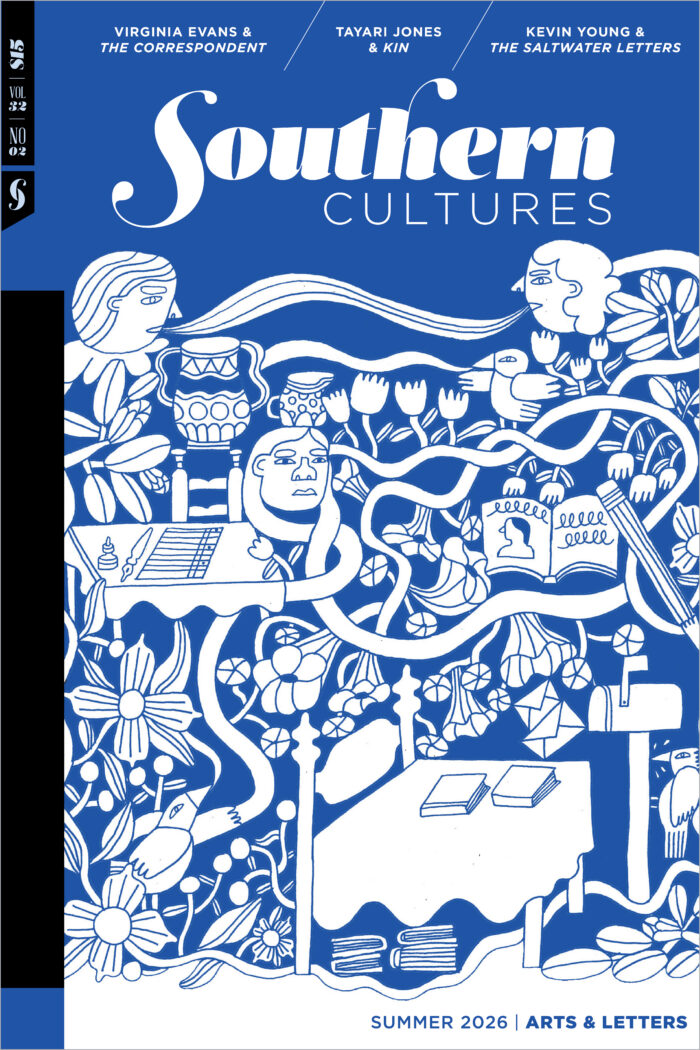
“Moving through the world as a writer is, I think, an experience of moving through the world with your eyes open to observe.
Charlie Lovett: The Correspondent is your debut novel, [but] it was not your first attempt at writing a novel. Can you tell us just a little bit about the road that your life took to publication day?
Virginia Evans: I started writing my first novel when I was nineteen years old and I’m thirty-nine. I was living abroad in Italy with my best friend … in a tiny little apartment in Siena. It takes a couple of years to write a novel, usually. And I would write a novel and then get to the end, and I didn’t know what you did with the novel once you wrote it. I didn’t know the language of publishing for a long time, and I remember, maybe with my second or third novel, saying, how do you print it, [meaning] how do you [get] published?
I wrote novel after novel. I always had other jobs. And then my children were born, and I wrote in the early morning before I would go to work or before I would get going with mom things. I just did it every day for a really, really long time for no good reason at all. I think I knew I would get to the finish line sometime, but it took a really long time.
I started to understand the language of publishing. I sort of taught myself how to write a query letter, how to get an agent, and how to figure my way through. I had an agent at one point, and then that fell through, and we had a low moment as a family and decided to move abroad. I applied to graduate schools in English-speaking countries and was accepted to Trinity College in Dublin. We like to say we burned it all to the ground. We sold the house, we loaned my car to my brother, we loaned out our dog, we gave away most of our belongings, and moved abroad. When I tell people about that, the most common response I get is, “I could never do that.” And you can do that. It’s very hard, but you can.
I studied with Claire Keegan, who I think many of us know as one of the great living writers, and I studied with other great professors. I wrote another novel as my coursework. That novel didn’t sell during COVID. And then I wrote The Correspondent in a townhouse we were renting [in Winston-Salem, North Carolina] from some friends. And these townhouses were built in the ’90s, so they’re open concept, meaning there are no rooms. It’s all one big, glorious room. There was no place for me. So, I shoved my desk into my closet, and I wrote The Correspondent in that little closet in the townhouse. And then it sold, and here we are.
CL: The Correspondent is one of my favorite forms of novel or storytelling. It is epistolary. My father taught eighteenth century literature, and the eighteenth-century people wrote epistolary novels. People wrote letters. I don’t do much letter writing anymore, sadly, but letter writing was a big part of my life. There’s somebody sitting in the audience who’s here because we wrote letters back and forth to each other. So tell me, why did you decide on writing an epistolary novel? And does letter writing play a role, or has it played a role, in your life?
VE: The letter writing was my first step into this book. That’s where I started. It didn’t start with the story of the main character, Sybil. I read a book with my book club called 84, Charing Cross Road. That book is written in letters, and it’s about an academic researcher in New York City, [who needs] this one specific type of material that’s only carried by this very small store found at 84, Charing Cross Road in London. And so [the writers created] this friendship over, I would say, twenty-five years, that these letters span. They’re just these short little back-and-forths [that] hinge on her research. But it’s really this unbelievable way of telling the story of two people’s lives over time in the subtlest shadows of what they mention in these letters.
CL: And creating this wonderful relationship between two people who never meet.
VE: Yes, they never meet, that’s right. And it’s just—that book is a gift. My last book was out for sale, and it wasn’t selling. And I knew I was needing to start writing something else. When you’re a writer, you write what you want to read. I read that book, and I remember at the end of that book, I was forlorn that it was over. That book is perfect in itself, but I just thought, I wish it was longer, I wish it was more, I wish it was a bigger story, I wish I knew more, and so then I thought, well that’s alright, so that was when [I started The Correspondent]. And then I am a letter writer. It’s not my primary form of communication, but I will write a letter when I want to say something that I want to last. You know, if I have something I want to say and I want that person to be able to keep that thing I said.
CL: Let’s talk about letters for a minute, because one of the things that I admire about this novel is that it’s not just a novel of letters from one or two people. There’s a lot of different people who write letters in this novel. The one I want to talk about is the one where the writer knows that it’s the last letter they’re ever going to send. What’s it like to craft that sort of letter from a dying character who knows that this is their last chance to say what they need to say?
VE: When I was writing The Correspondent, I would set my alarm for 4:30. It was pitch black, I would hit snooze, and then I would stand at the coffee maker. And the standing at the coffee experience for me is like—you’re standing there with your eyes closed, kind of waiting for the coffee, with the dread of going to your desk. And then getting into the closet, closing the door, and it’s dark, it’s night. And then emerging, and the sun is out, the dog is walking around, and the kids are awake. It’s a very jarring experience. But I remember writing that letter, and a couple letters, being in this tunnel, head down, [then] coming out, and somebody said, like, “Could you make me waffles?”
The experience of writing The Correspondent was so cathartic for me. A lot of people actually argue with me about this, even though I wrote the book. I am the god of the book. [laughter] It’s about a lot of things, but the central artery is about grief and disappointment. I was writing the book out of the soil of myself, and I had never really done that before. I was never going to show this book to my agent. I had no plans to try and publish this book. It was this exercise of getting all of this stuff out, like every painful thing that had been deposited into me over the course of my life found its way into this book. Similarly, all the beautiful things that I know and have learned and the wisdom that I’ve gained is also deposited in this book.
And so that letter is really so dear. There’s something very beautiful about it and comforting, even though it’s a letter at the end of this woman’s life. But it just felt cathartic to kind of deal with it. And I’m proud of that letter. There are a few other letters that, when I wrote them, it took a lot out of me. I had a hard time approaching some of the letters. You know, there’s one letter where Sybil really gets into the nitty-gritty of what happened when her child died. And I circled that letter for weeks. I just thought, I can write that, but I do not want to write that. I remember hearing Maggie O’Farrell talking about when she wrote Hamnet. She said she wrote the whole book, but she never wrote the scene of the son dying until [one day] she said, “Maggie, you have to do it today.” She said, “I took myself out to my writing shed, and I said, ‘You are not allowed to leave until you write this scene.'” And I had a similar experience with this book in some of the letters. What you’re doing when you write from that space is writing out of the fear of what you know and face, or [what the] people you love face. It felt sort of beautifully comforting to write a fictional story about death and loss and sort of see that it could be okay. You know, it could be beautiful, it could be really rich, even though it’s scary and painful.
CL: I think for me, sometimes the hardest passages to write are the ones that I know are going to be hard for the reader to read emotionally. Like, can I really do this to these people?
VE: And then we do!
CL: And then we do. Right before I read The Correspondent, I listened to Griffin Dunne’s memoir, and of course his aunt is Joan Didion, so she comes into that book quite a bit. And then I picked up your book and [Sybil] is writing letters to Joan Didion. And to Ann Patchett. There’s this subset of the letters that are written not to fictional characters but to real people. Can you speak to how that experience differed? And I’m curious to know if those real people have contacted you.
VE: It’s funny. There are so many things I did writing The Correspondent that I don’t think I would have done if I knew I was going to publish the book. And writing to Didion was one of them and having [her] write back. I was on the New York Times Book Review podcast with Gilbert Cruz, and he was like, “That was a big swing!” And I thought that was exactly what it was. I think I did those things because I didn’t think anyone would ever read [them]. I didn’t think anyone was going to read my voice of Joan Didion and my voice of Larry McMurtry. I was just having fun. So much of the story is very reachable to me in my own life, and I’ve written letters to people that I have no business writing letters to. I think it feels kind of fun to think like, oh, I also love that book, or I also read that book, or I also love Joan Didion. It adds this layer of reality to the book, even though the book is fiction, that makes it a little bit more fun to read.
When I originally wrote the book, there were other letters written back to Sybil by people who are living, and I was told that is illegal, so I deleted that. You can only write about the letters to the dead, you cannot write about the letters to the living. So, the only two that write back to Sybil are Larry McMurtry and Joan Didion. I looked into them and their way of communicating, and did they respond to letters from readers or did they not? And they both did. There’s references to other authors who responded to Sybil who I know also will respond. I’ve never heard back from the estate of Joan Didion. I would probably not be courageous enough to open an email that came to me from them. But I got an email from a man a couple of months ago. He said, “Dear Virginia, we read your book … and we are convinced you must have known Larry, because the letter that you penned was so identical to his voice. Did you know him?” I didn’t. And then he said, “I’m the official biographer for Larry McMurtry. We’re down here at the Larry McMurtry Center,” which is this big literary center [where] they do all this really cool work. And he said, “Everybody at the Larry McMurtry Center and his children are really jazzed because, since your book got so big, Lonesome Dove is back on the bestseller list.”
CL: That’s pretty good. So, I wish that I hadn’t been sixteen years old at the time and that I understood what a big deal it was, but one of Larry’s kids was one of my high school classmates.
VE: What?
CL: And Larry came and spoke to us. They showed us The Last Picture Show. We’re like sixteen-year-old boys watching The Last Picture Show, and Larry came and talked to us, and I was like, “That’s the dad of some kid down the hall.” And now I wish I could remember it. But you do talk about Lonesome Dove. One of the aspects of Sybil I want to make sure we get to tonight is that she shares something in common with everybody in this room. Sybil is a reader, and it’s a big part of who she is. And I love the fact that she reads certain books, and Lonesome Dove is one of them, over and over again, and talks about how it’s a different experience each time at different times of life.
One of the things I find really fascinating in writing a novel is information management. That sounds kind of technical, but it’s what does the reader know, when do they know it, and how does that differ from what the character knows and when they know it. And I think managing information in an epistolary novel is a very specific kind of challenge. Can you talk a little bit about how you met that challenge?
VE: I think what makes a book good is exactly what you’re saying, which is the unspooling of the carpet and how it’s done. Elizabeth Strout said in an interview [that] every moment, every page has to leave you with an appetite for the next page. And I think, for me, when I read, [sometimes that can] be done too fast, and then you’re almost getting your feet out in front of you if it’s too fast. It’s like running downhill and you start to get your upper body in front of your lower body, and then you’re rolling and that isn’t it, because there’s something very greedy about getting that, but you also miss a lot. And then I think obviously the alternative is it’s too slow, and then you just don’t want to read it because it’s boring. It’s that even kind of drawing out [that works best]. And I think with this book, it was really intuitive, and part of it was because I was learning the story as I was writing it. I don’t outline, I don’t plan ahead, and so I was sort of figuring it out as I was going.
I knew that the book was going to be sort of a portrait of her whole life, and what you had at the end was the whole picture of what had happened. But there was a way that you had to care to want to know what the whole picture of her life was. And so the way the book is easily broken up into letters, it felt like, okay, at the end of this letter, here you are sort of knowing this but wondering about this. Well then, what’s the next way that I can satisfy that a little bit but then leave [the reader] with the next question, if that makes sense. I didn’t think about it this way [at the time, but] I think this is storytelling. It’s storytelling in spoken word, it’s storytelling in nonfiction, it’s storytelling in movies, it’s storytelling in fiction. That is what good storytelling is. You’re saying to the reader or to the viewer, follow me, stay right here behind me, and you will see this thing or you will learn this thing, and that is what we want when we read or watch or listen. That’s the feeling you want, that you’re staying right up behind the storyteller to see what’s going to happen next.
CL: You mentioned that Sybil is not a young person. I get asked a lot, because I’ve written books with female protagonists or with a queer character, what it’s like to write across gender or sexual identity. But I find that the hardest thing for me is writing from the point of view of somebody who’s a different age. Can you talk about what that was like to try to put yourself in the shoes of someone who was almost twice your age?
VE: This is a funny story. Early on, nobody cared about this book when it was published. I didn’t know what to expect, so the day it was published I felt like the queen. I mean, I thought I was doing great. And I remember I would check in with my editor, and I would say, I think these sales are great! And she would be like, yeah, okay! [laughter] The first events I did, one event had eight people, one event had twelve people, and one event had four people. Okay? So that was what we were doing. And I walked into this bookstore, and there’s a sign outside that says this event tonight is with Virginia Evans, author of The Correspondent, and they said, “This is a ticketed event.” And I said, “It’s me.” And she was like, “No, I’m saying the bookstore is closed for a ticketed event.” And I was like, “No, it’s my book.” And she was like, “What? I assumed you would be very, very old.” Now my face is associated with this, so people know, but early, in the first few months, nobody knew what I looked like or what to expect, and so I got that a lot.
When Sybil came into my brain, she came into my brain fully fledged. I knew exactly who she was. I knew what she was like. I knew what her voice was like. I knew her personality. I knew that she was sort of direct and confident not messing around. But that all of that was this sort of defensiveness, that she had to keep you away from her white-hot center, which was sad and lonely and very, very full of shame. And I knew those things about her. The second I sat down to write the first letter, when she says, “Dear Felix,” and she wrote it to her brother, I just wrote it, I didn’t really change it. I knew exactly who she was, and she didn’t feel hard for me to figure out.
When I think about that, it’s kind of two things. I think, as a fiction writer, you are always moving through the world with one eye in the moment you’re in, with the people and in the situation, but the other eye is roving for material. And that’s happened that way since I was very young, like very sort of observant, always kind of like reading the room and trying to understand the why.
My life has been full of women older than me—women that have loved me, women that have been in my family, women I’ve worked with, women that have been around me. And so, accessing Sybil didn’t feel hard. I sort of feel like I knew exactly what she would think. And I knew exactly how she would feel when her daughter said you should move into a retirement community. I knew exactly what she would think if she had to be taken to the hospital. I’m always listening and depositing things into the big cistern that’s inside me, which is the stuff that I pull from whenever I read fiction.
The other thing is just the imagination. Moving through the world as a writer is, I think, an experience of moving through the world with your eyes open to observe. And when you are moving through the world that way, it’s an exercise of gaining empathy. I will say, other characters in the story were much harder for me to write. Sybil felt really easy for me to find. Other characters, it felt like an archaeology dig—carving it out and dusting it away and trying to figure out who these people were.
CL: So what Virginia is saying is that none of you are safe from us. [laughter]
VE: That’s right.
CL: So some of you may remember that I had a podcast called Inside the Writer’s Studio, which I kind of put to sleep after my grandson was born, because it was more fun to play with him than it was to do a podcast. And at the end of every episode, I would ask the same ten short-answer questions. So here are the ten questions. What word do you love to work into your writing?
VE: That’s so good. What word do I love to work in …
CL: The easiest one for The Correspondent is “dear.” [laughter]
VE: Okay. I feel like this is very quickly overused, so I don’t use it a lot, but the word that I would most feel satisfied using, which I love, is subsequently.
CL: What word do you hate to encounter in other people’s writing?
VE: Okay, um, I have a lot. [laughter] I’m like, we can do better than this, we can do better than this. I hate anything that’s “he said, gladly,” “she said, happily,” like adding a … What even kind of speech is that?
CL: Adverb.
VE: I’m not going to look it up, I’m sorry. [laughter] Like, all you need is “he said,” or no tag. Orient the people, anchor the characters. If there are two people and you know that the one guy said, “What’s your name?” then you could follow the lines. [laughter] Drives me nuts and then I—that will make me put a book down.
CL: Well, you told us about this a little bit. Where’s your favorite place to write?
VE: For an artistic, creative person, I live a pretty militaristically disciplined life. I have a writing room. I’ve always tried to have a room of one’s own—that’s a Virginia Woolf idea—and I do think you need a room of your own. And so now, we moved recently, but I have this small sun porch off my bedroom that has this slanted ceiling and all these windows around, and it feels like you’re in a tree house, it’s very high, sort of off into the trees. And right now, it’s the time of year when the carpenter bees are like boom, boom, boom all day. And so I have this big old farmhouse kitchen table. I need a really big surface because I spread so much out, like pages and notebooks and sticky notes, I like to every morning push it all out. And I have always, you know, written in some random chair, but this year, after all this happened with [the book], I bought myself the nicest desk chair. I mean, it’s really nice. [laughter] And it cost a lot of money, and [when I saw it in] this furniture store, I thought, that is the most beautiful piece of furniture I’ve ever seen. And I sat in it, and then I had to have it. So that’s where I write. And then if I’m on the road, I’ll write in a hotel room bed.
CL: Where could you never write?
VE: Anywhere with noise. I can’t write with any noise. Like, I can’t go to a coffee shop, I can’t go anywhere with any noise.
CL: It’s a funny thing, everybody thinks we write in coffee shops, and the most common answer to that question over one hundred and thirty-six episodes of the podcast is never in a coffee shop.
VE: I can’t have any noise and I think, like, any distractions. I think it’s because I trained myself to write at 4:30 in the morning. It’s silent and dark, so I really need it to be very, very quiet. If you ever see me in a coffee shop on my computer, I’m just avoiding talking to you. I’m not writing. [laughter]
CL: Okay, to what rule of grammar do you pay the least attention?
VE: Commas, periods. I’m pretty good on periods. I am not a fan of a comma. I think the comma is very overused. And so I will tend to go comma-less over overcomma-ing.
CL: What was the first book you remember reading?
VE: I think the first book I remember was read to me by my mother, with my sister. We shared a room, and we would be in the same bed, and she would read us The Chronicles of Narnia.
CL: That’s a pretty cool little story.
VE: Yeah. And I remember the story, and I remember her telling us the story, like, wet hair, pajamas, and bed.
CL: By the way, there’s an audio version of that that’s read by all these famous British actors, and [the series] counts as one book, and it’s like thirty-five hours or something. Okay, well this is a loaded question because you already answered it, but I have to ask it because it’s one of the ten questions. What are you reading right now? [laughter]
VE: I told you about The Paradox Club. [laughter] You can pre-order it. I just think this is great. I have one more chance to say it. I’m not kidding. You should read The Paradox Club. [Ed. note: Evans received an advanced reader copy of Charlie Lovett’s novel The Paradox Club, to be published by Hyperion Avenue in September 2026. Evans called it “the most enjoyable book I have read in the last year.”]
CL: What book would you like to have written?
VE: I think I really wish I had written Rebecca. I wish that was mine.
CL: I wish I had made the movie. What sort of book would you like to write but probably never will?
VE: I would love to write—okay, I know, this one is very specific—probably the book I’ve always wanted to write and never will, because I’m not smart enough, is a space / NASA book. Like a fiction book that is really accurate and is about the trip to space and the going and the people. Space is my favorite topic for watching or reading. I just am obsessed with it. And books I’ve read that do it well, I just read in awe. And then I think there’s so many books that I quit that don’t do it well. Ann Patchett said in her essay “The Getaway Car” about writing [that] whenever you write, you have this idea, this perfect story on the big screen in your mind, and part of the writing life is an experience of grieving that you will never write the book you want to write. You will write the best book you can write. And I know that what I imagined myself writing about NASA and space and going to space and the shuttles and the astronauts, I can picture it in this beautiful perfection, and I can never do it, so I won’t try.
CL: You told me I need to read Project Hail Mary.
VE: Oh, yeah. Yes.
CL: And the final question is what would you like to hear a reader tell you?
VE: I think it feels the best when someone says about The Correspondent, because that’s the book that’s out right now, that if they’re Sybil’s age or they’re the age of another character, that you got it right. That is what feels the best, because that’s really what I care about.
Editor’s Note: Authors Virginia Evans and Charlie Lovett gathered before a packed house in Winston-Salem, North Carolina, on April 21, 2026, to discuss Evans’s bestselling debut novel, The Correspondent (Crown, 2025), a poignant tale of an indomitable woman making sense of the world through letters. Our gratitude to our friends at Forsyth County Central Library and Crown Publishing and to Virginia Evans and Charlie Lovett for generously lending their voices to this issue. This conversation has been edited for length and clarity.
Virginia Evans earned a bachelor’s in English literature from James Madison University and a master’s of philosophy in creative writing at Trinity College (Dublin, Ireland). She studied under Carlo Gébler, Eoin McNamee, Claire Keegan, Harry Clifton, and Kevin Power. She lives in Winston-Salem, North Carolina, with her husband, Mark, two children, Jack and Mae, and her Red Labrador, Brigid.
Charlie Lovett is a New York Times best selling author, award-winning playwright, and scholar. His six novels include The Book-man’s Tale, The Enigma Affair, and The Paradox Club. His plays have been seen in over five thousand productions worldwide. The author of Lewis Carroll: Formed by Faith and other works on Carroll, Lovett owns one of the world’s largest Carroll collections.