It’s a Tuesday afternoon at Southpoint Mall in Durham, North Carolina. As I window shop, I notice LeAnn Rimes’s “Nothin’ Better to Do” playing from the speakers. It’s followed by a pleasant but unassuming mix of songs from Kenny Chesney, Miranda Lambert, and Kacey Musgraves. This is a country music playlist.
On my last two Target runs, I’ve also heard Lainey Wilson both times, alongside Blake Shelton, Thomas Rhett, and Zac Brown Band. Business minds will recognize these playlists are no accident and instead the result of detailed market research that is tailored to create desirable shopping experiences for chosen consumers. When it comes to the mall and Target, it appears market researchers have reached a consensus that their ideal shoppers prefer a country music soundtrack to accompany their consumption habits.1
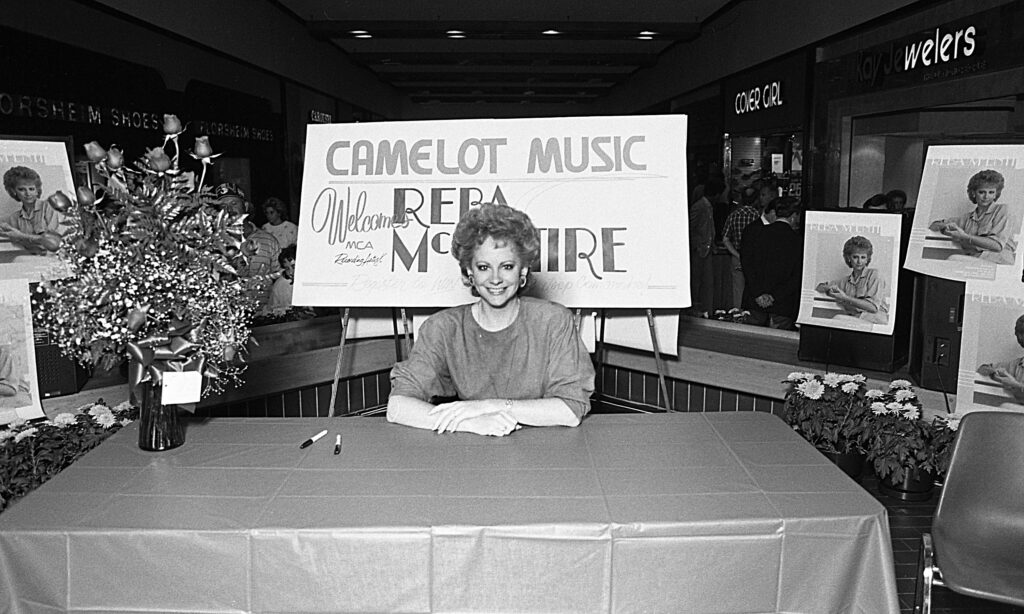
From the perspective of influential figures in the country music business, Target and mall patrons—that is, predominantly female consumers with disposable incomes—are precisely the sort of consumer they’ve sought to associate with the music for generations. Country radio, often considered the most influential wing of the country music industry, has prioritized this demographic because of its high investment value to advertisers, who perceive women as the most profitable consumers to sell products to. In one marketing research presentation from 2022 at Country Radio Seminar, the annual meeting dedicated to those working in country radio, the audience demographics that panelists emphasized pointed to a high prevalence of female listeners (54 percent), those aged 55+ (34 percent), and those who identified as Caucasian (84 percent). Last year, the senior director of country programming at SiriusXM Pandora described country listeners along similar (albeit younger) lines, explaining that “the core country audience is still that 35-to-45-year-old soccer mom.” These female consumers are the same demographic high shopping centers, such as malls and Target, seek to attract, making a partnership with country music sensible. The relationship between country music and Target has become especially acute in recent years. According to Influencer Intelligence, an influencer marketing platform, Target store shoppers are identified as “predominantly female (83%), of a broad range,” with an interest in “American football, country music, talk shows, interior decorating, makeup, show business and coffee.” In recent years, Target has also secured a number of store-exclusive releases related to country music, including a version of the 100 Years of Grand Ole Opry book and limited edition special albums from Lainey Wilson, Morgan Wallen, Chris Stapleton, and several others.2
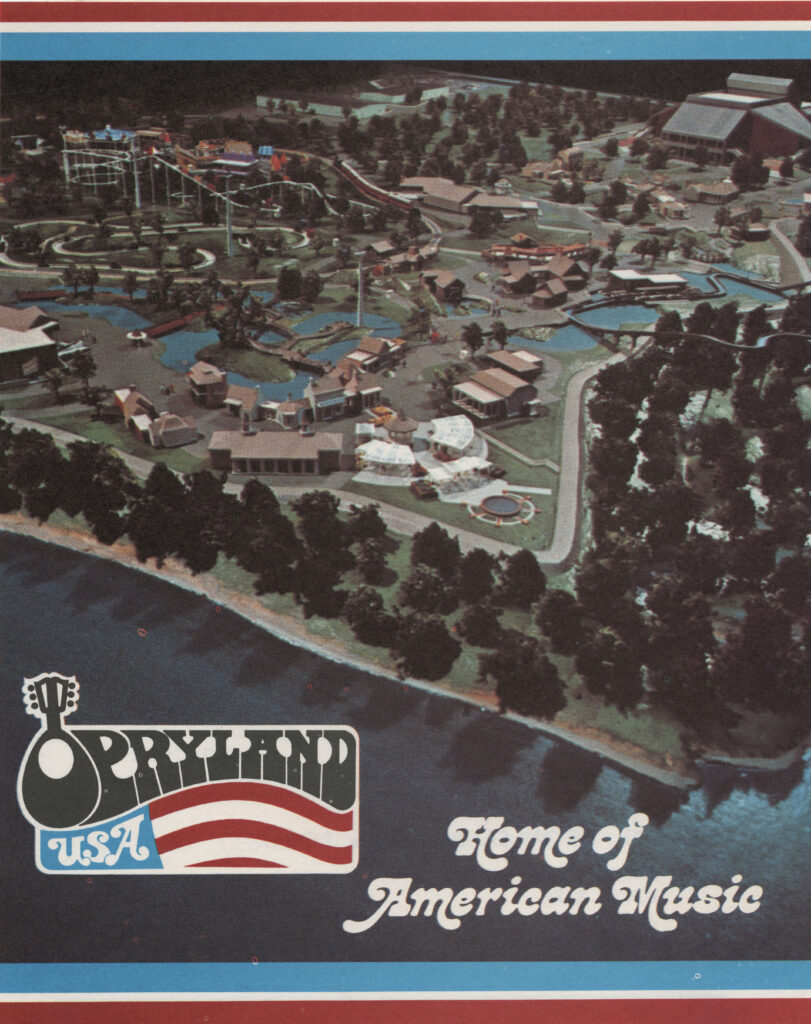
The suburban landscape that houses these shopping meccas has likewise appeared in country music lyrics in recent years, hinting to a renegotiation of space in the genre that has shifted away from images of a rural past or present. On the title track of her 2017 album The Lonely, The Lonesome, and the Gone, Lee Ann Womack uses the mall as a modern backdrop for heartbreak, a common trope in country music, describing how “There’s a place down by the mall / But it ain’t what you’d call a honky-tonk.” The song questions why country songs have not adapted to contemporary images of sorrow, asking: “I don’t know why no one sings about / Drowning in pitchers and half-priced wings / And trying to wish back everything they’ve lost.” In 1986, Tom T. Hall placed the mall at the heart of Americana, singing: “It’s America in motion / It’s a portrait of the times / You can find us all down at the mall.” Half a decade later, Hee Haw, famous for its cornpone humor, exchanged its iconic cornfield backdrop for a shopping mall in an effort to boost declining ratings. And in 1997, when Opryland USA closed its theme park (located on the same property as the Grand Ole Opry), it was replaced by a shopping mall that continues to flourish today.3
In the modern era, country music’s relationship to these contemporary shopping landscapes indicates how the genre has evolved over time, especially when it comes to its regional and class definitions. Perceptions of who constitutes the average country music listener have shifted throughout the music’s history. When it was first introduced as a marketing category in the 1920s, what we now call country music was initially labeled “hillbilly” and “old-time” music, and it was associated with poor, white, and rural consumers from the South. In these nascent years of commodification, its listeners were described in one 1924 Variety magazine article as “illiterate and ignorant, with the intelligence of morons,” and “of ‘poor white trash’ genera.” Though the genre today hasn’t fully shed these marginalized class politics, the fact that country now blasts from such beacons of mainstream respectability as the mall and Target reveals how the genre now also functions as a symbol of urban and suburban middle-class America.4
The mall is a strange place to be in a moment of political crisis. It can be disorienting to browse along an artificial urban pedestrian street lined with bright shops, and suggestive of a secure, if sterile, community, amid war in Gaza, ICE raids, rising tariffs and inflation, climate disaster, and a general constitutional crisis actively sowing chaos in our home communities. Assuaging these tensions via “retail therapy” aside, Americans have long been instructed that shopping is what they’re supposed to do in times of crisis. During the Cold War, as fear raged over communism, consumption became increasingly synonymous with American patriotism. Following 9/11, President George W. Bush memorably urged patriots to keep shopping. And in the pandemic, people were told to spend to keep a bruised economy afloat.5
Historically, Americans have turned to country music time and again in moments of fear and uncertainty. During the Great Depression, and later into World War II and the Cold War, the singing cowboy was a source of comfort in popular culture. Throughout the economic recession of the 1970s, Americans increasingly listened to country music, culminating in the “Urban Cowboy” boom that ushered in the Reagan era. After 9/11, the genre was invoked as a symbol of patriotism that morphed into jingoism. Since the COVID-19 pandemic began, country music has again entered another period when the genre’s popularity has reached new heights. Over the past half decade, the country music industry has hit new commercial breakthroughs, with tourism spending in Nashville breaking record numbers in 2024, with rising streaming levels, and with country songs by artists like Morgan Wallen commonly topping Billboard’s Hot 100 chart.6
Country music has often functioned as a tool to drown out the chaos. In 1996, journalist Bruce Feiler claimed that “Country became the de facto soundtrack of white flight,” adding that “it’s not angry at the world, just oblivious to it.” Feiler spent years reporting on the country music boom of the nineties. He questioned why so few Black artists achieved commercial success in the genre, and how country fans and industry professionals could remain unaware of such disparity. His summations point to the troubling racial politics that continue to define country music. For as much as the genre has evolved, there is one way it hasn’t. Though its regional and class politics have transformed, its racial affiliations have not; country music is still largely thought of as music exclusively performed by white musicians and consumed by white audiences. But while country music was once wholly associated with a marginalized whiteness—marked as impoverished, rural, and southern—the music can now comfortably reside in more “respectable” white spaces. Country music’s class politics have achieved a level of social mobility, and with that, a level of privilege. Though country music is often cited for its weaponization during politically polarizing moments—such as Toby Keith’s “Courtesy of the Red, White and Blue (The Angry American)” following 9/11, or Jason Aldean’s “Try That in a Small Town” as a backlash anthem in the Black Lives Matter era—a longer trajectory speaks to Feiler’s summation that defines the genre’s mainstream, modern politics as oblivious to the world around it. But arguing that country music might be more apolitical than deliberately conservative is of course a form of politics itself, and one that signals a benefit to be able to disregard the news. The country radio professionals working to court today’s soccer moms have followed market research suggesting their consumers prefer using the music to tune out. A 2002 report on country radio’s female listeners from the marketing research firm Arbitron concluded that “even though women are heavily pressured for time and responsibility, they remain optimists. So, don’t play the negatives.”7
The country music audience, however, has always been far more nuanced and difficult to define than members of the country music business may have understood or sought to attract. Country’s fans have continually crossed lines of race, region, age, and political affiliation. It is a myth to suggest that the genre’s listeners are limited to suburban women, as much of the country music industry has maintained for decades. The modern mythology of the mall as a space where country music resides today comes after decades of work by the country music industry to improve the image of its audience, transforming a genre once associated with a marginalized class politics into one that is valued by advertisers. This strategy, though commercially successful, has created lasting consequences for the cultural impact of the genre in popular culture and politics. But although prominent figures in the country music industry have had a key role in shaping public perceptions about who and what has defined this music over the past century, they have been far from the only players to do so.8
It is an apt moment to reflect upon country music’s mythmakers of the past and present. This year, 2025, marks the centennial for one of country music’s biggest mythmakers and champions, The Grand Ole Opry. Debuted as a program beaming from Nashville’s WSM radio in 1925, the Opry has come to bill itself as “the show that made country music famous” for the pivotal role it played in helping popularize country music and its stars. In this issue, Brooks Blevins offers new insights into early lore about the origins of the Opry, as told by its founding architect, George D. Hay, well known for his embellished storytelling. Also tracing this early era of commercial country music is Cameron Knowler, who considers the marketing and branding behind an often-overlooked early star, Riley Puckett. Sonya Abrego further delves into these initial decades of country music, considering the role of fashion and how overalls functioned as an early costume of choice to project the genre’s image. Together, these essays show readers the integral role “fabricating authenticity” played in the first years of commercial country music.
From its beginnings, the country music genre has embraced elaborate storytelling, and many listeners have found a home in its lyrics and artists. Sarah L. Morris explores this phenomenon through one of country music’s best-known songs, “Country Roads, Take Me Home,” a revered anthem of West Virginia that’s loved and claimed throughout the world. From “a region of the mind,” we move to country music’s geographic home, where the South continues to define the genre. Sarah Carter writes about what this looks like in the modern era, when country music and Southeastern Conference football work in tandem as two of the region’s most visible and defining cultural exports. And from a fan’s perspective, Sharony Green shares her personal journey to finding herself in country music.
But while fans across lines of identity have always found a home in country music, not all have been openly welcomed. Since country music was first consciously created along racial lines a century ago, Black artists and listeners in particular have been denied participation in the country music industry. And yet, they’ve always been present, as musicians who have continually fought to achieve recognition in the genre and listeners who have wholeheartedly embraced the music and supported the inclusion of Black artists. In this issue, three generations of Black women in country music—Frankie Staton, Rissi Palmer, and Holly G—discuss what challenges have and (more so) haven’t changed for Black artists and other industry professionals working to achieve commercial success in Nashville. In the post–Cowboy Carter era, Joe Z. Johnson considers the history of Black reclamation in country music through the modern chapter of the Black Banjo Renaissance.
Collectively, this issue shows us how country music’s myths of the past and present have been constructed, and on whose terms. These essays reveal the contested and evolving terrain that has always defined country music—whether articulated by the industry, artists, or fans. Time and again, its “authenticity” has been constructed and reconstructed. The genre remains impossible to neatly characterize, but Tom T. Hall’s 1974 song “Country Is” may provide the most succinct description: “Country is what you make it / Country is all in your mind.”
Amanda Marie Martínez is an assistant professor of American Studies at the University of North Carolina at Chapel Hill. Her forthcoming book is a history of the country music industry between the late 1960s and 9/11. She has also published essays on country music with NPR, the Los Angeles Times, and the Washington Post.
Header image: The mall backdrop used on Hee Haw, 1992, photographer unknown. Courtesy of the Grand Ole Opry archives.
NOTES
- Andrew Matson, “Who Picks the Music You Hear at the Mall?,” NPR, November 28, 2012, https://www.npr.org/sections/therecord/2012/11/28/165947927/who-picks-the-music-you-hear-at-the-mall.
- Diane Pecknold, The Selling Sound: The Rise of the Country Music Industry (Duke University Press, 2007), 133–167; MRC Data, “Talk Data to Me,” presented at Country Radio Seminar, Nashville, Tennessee, February 2022; Chris Willman, “The Country Format Is Bullish on Beyoncé’s ‘Texas Hold ‘Em,’ Top Radio Execs Say,” Variety, February 15, 2024, https://variety.com/2024/music/news/beyonce-country-format-radio-bullish-texas-hold-em-1235913252/; Dale Barnett, “Target V T. J. Max: A Brand Analysis,” Influencer Intelligence, accessed October 13, 2025, https://www.influencerintelligence.com/blog/T8x/target-v-t-j-maxx-a-brand-analysis.
- Jack Hurst, “New Backdrops Bring ‘Hee Haw’ Out of the Woods,” York Dispatch, November 14, 1991, E12.
- “‘Hill-Billy’ Music,” Variety, December 29, 1926, 1. For more on the evolution of country music’s marginalized class politics, see Pecknold, The Selling Sound; Nadine Hubbs, Rednecks, Queers, and Country Music (University of California Press, 2014); and Jeffrey Lange, Smile When You Call Me Hillbilly: Country’s Struggle for Respectability, 1939–1954 (University of Georgia Press, 2004).
- Lizabeth Cohen, A Consumers’ Republic: The Politics of Mass Consumption in Postwar America (Vintage Books, 2004).
- Stephanie Vander Wel, “The Lavender Cowboy and ‘The She Buckaroo’: Gene Autry, Patsy Montana, and Depression-Era Gender Roles,” The Musical Quarterly 95, nos. 2/3 (2012): 207–251, http://www.jstor.org/stable/41811627. Joseph M. Thompson, Cold War Country: How Nashville’s Music Row and the Pentagon Created the Sound of American Patriotism (University of North Carolina Press, 2024). For more on backlash The Chicks faced for their disapproval of the Iraq War, see Gabriel Rossman, “Elites, Masses, and Media Blacklists: The Dixie Chicks Controversy,” Social Forces 83, no. 1 (2004): 61–79, http://www.jstor.org/stable/3598233. Andrew R. Chow, “The Pandemic Could Have Hurt Country Music. Instead, the Genre Is Booming,” Time, October 28, 2020, https://time.com/5898001/country-music-streaming-numbers-coronavirus/. Nashville Convention & Visitors Corp, “Tourism in Davidson County Generated Record $11.2 Billion in Visitor Spending in 2024,” Visit Music City, August 26, 2025, https://www.visitmusiccity.com/media/press-release/2025/tourism-davidson-county-generated-record-112-billion-visitor-spending-2024; Billie Schwab Dunn, “Country Music’s Popularity Is at an All-Time High,” Newsweek, March 2, 2024, https://www.newsweek.com/country-music-popularity-beyonce-lana-del-rey-1873893.
- Bruce Feiler, “Has Country Become a Soundtrack for White Flight?,” New York Times, October 20, 1996, H38. Feiler’s reporting resulted in a book, Dreaming Out Loud: Garth Brooks, Wynonna Judd, Wade Hayes, and the Changing Face of Nashville (HarperCollins, 1998). Neil Strauss, “The Country Music Country Radio Ignores,” New York Times, March 24, 2002, Section 2, Page 1.
- Nadine Hubbs, Rednecks, Queers, and Country Music (University of California Press, 2014); Amanda Marie Martínez, “Redneck Chic: Race and the Country Music Industry in the 1970s,” Journal of Popular Music Studies 32, no. 2 (2020): 128–143.