Ethnographic Archives and Speculative Black Geographies
by Ashanté M. Reese
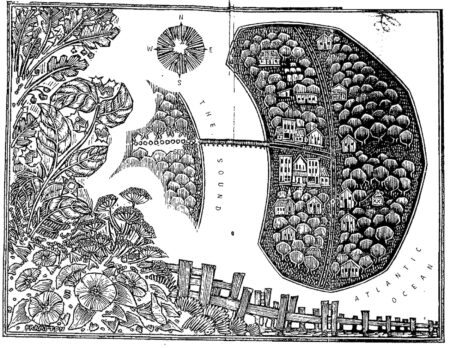
In April 2018, I returned to the neighborhood in northeast Washington, DC, where, over the course of six years at that point, I had conducted ethnographic fieldwork. It was not my first time returning. Every time I went to DC after relocating, I tried to visit, at least stopping into the small grocery store where »
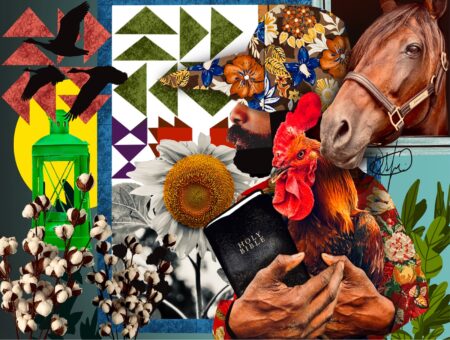
The King James Bible as Black Placemaking in the Rural South
by Priscilla McCutcheon,
LaToya Eaves
On a hot Sunday in August 1990, LaToya stood inside an underground baptismal pool, surrounded on three sides by a canopy of North Carolina pine trees, the wooden-floored church building, and the community of parishioners that made up the churchgoers and leadership. At the rural church located just outside the one-stoplight town of Waco, North »
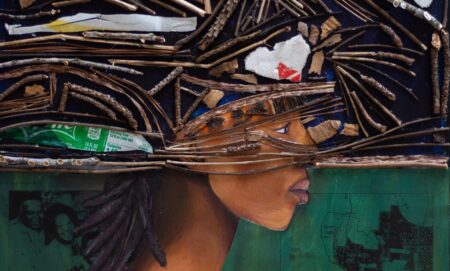
Political Art and the Making of Black and Muslim Worlds
by Darien Alexander Williams
“Political artwork produced by the Nation of Islam routinely invited readers to develop political and spiritual desires and expectations contingent on transformed relationships to an African homeland and life in the South versus the North.” Black people living in the Post-Reconstruction South endured some of the most concerted and refined white supremacist political violence in »
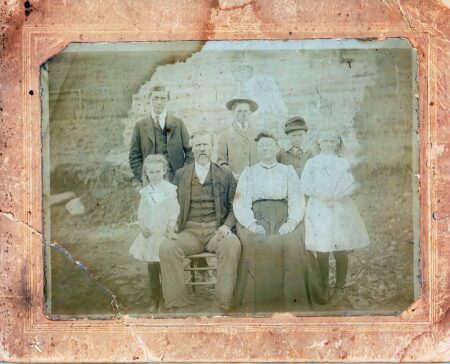
A farm on Peak’s Knob in Appalachian Virginia has shaped for generations the descendants of my great-great-grandfather Thomas Russell. Born enslaved in 1834, he purchased fifty acres only fourteen years after freedom. Over the years, members of my family grew Russell Farm to the two hundred acres presided over by James Arthur Russell, Thomas’s grandson »
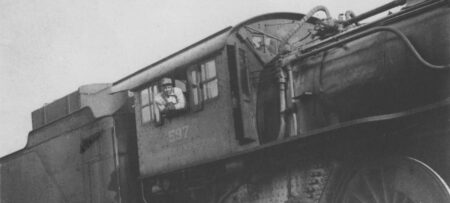
“We would play tennis even after they turned off the lights on the courts,” my father told me, as he reflected on his days in the Panama Canal Zone (PCZ). Tennis became their sport; my father, his sister, and his brother perfected their craft and became so good that they and other neighborhood youth all »
I was a tween when I first heard Lupe Fiasco’s “Kick, Push,” a song that describes the liberatory feeling soaring on skates provides. That song introduced me to the culture of Black street skating. During the summer of 2006, I took my hand-me-down pink-and-purple Barbie rollerblades and journeyed from my backyard to the neighboring cul-de-sac »
I am hopelessly bad at geography. I can hardly tell north from south and latitude from longitude, let alone try to name cities, states, and countries on a map. Nevertheless, the course I love teaching is “Treasure(d) Maps: Writing the American South,” designed in 2018 when the English Department at Duke University invited me to »
Ethel Westbrook Guinn Williams moved north twice in her lifetime—once from around West Point, Mississippi, to Memphis, Tennessee, and the second time from Memphis to Detroit. She had two husbands, eleven children she raised mostly by herself in a little house she owned in Memphis, and a third-grade education, which she remixed with her own »
Hear Camisha L. Jones read “What We Be” from the Disability issue (vol. 29, no. 1: Spring 2023). An Ekphrastic poem after Beyoncé’s Lemonade We the exhaleOur confidence We the pot of greensOur hands We the floorWe every grief We the waitOur mouths We the magnolia tree the submergea ripe orange the salt porkclean the »
“I witness the ‘absent presence’ of disability evident in the many walkers, canes, hearing aids, caregivers, silences, missing partners, and repetitive stories that fill the hallways and dining room.” “I am perfectly able to care for myself,” my ninety-seven-year-old mother, Huddy, says to me with a deep sigh. I hear the frustration and anger in her »
“The same lack of services my ancestors said drove them to institutionalize Wade—the want of anyone to walk with him and make sure he got home safe—still drives disabled people into facilities today.” 5′ 10″. Dark hair. Gentle and easygoing. At the time of his death, in the ’60s, they said he had schizophrenia, but »
Charles Carrington and the Sterilization of African American Men in Virginia, 1902–1910
by Shelby Pumphrey
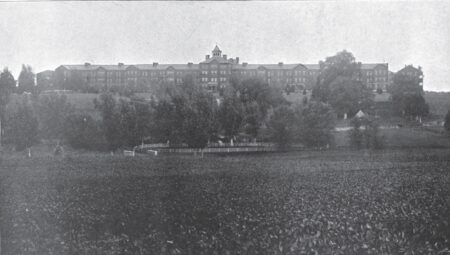
“White medical professionals saw Black resistance to white supremacy as an exhibition of mental disability, extending a similar view of Black resistance during enslavement.” The decades between 1880 and the opening years of the Great Depression brought about a period of profound change for all Americans. But improvements in the availability of social services, the »

 Essay
Essay