Southern things have been very loud of late. Like a scene from any one of the dystopian television series so popular right now in an anxiety-ridden America—imagine a Deep South setting for The Leftovers—”things” are misbehaving. Across the South, a number of iconic southern landscapes and objects are shifting in meaning, and we cannot turn »
For almost thirty years, my parents ran an antique shop in an old two-story house in downtown Greensboro, North Carolina. When I was little, stuff arrived and departed by way of my mother’s van, a matte-green 1970s camper, stripped of its bunk and golden burlap curtains. It had no air conditioning and smelled of cigarettes »
Loy Bowlin’s bejeweled dentures—a different color rhinestone on each tooth, two front teeth framed in gold—were a prelude to his creative output. Born on a cattle ranch in Franklin County, Mississippi, in 1909, Bowlin was a shade-tree mechanic and former used car salesman, who, upon retiring, took on a persona as McComb, Mississippi’s “Original Rhinestone »
When Bryan Giemza, director of the Southern Historical Collection (SHC) at UNC-Chapel Hill, visited the State Archives of Yucatán in Mérida, Mexico, he had an “a-ha” moment. Pouring over Mayan-language transcripts of nineteenth-century court depositions and hacienda (plantation) records, Giemza found a cultural bridge. “This is very reminiscent of the kind of materials we have »
UNC University Libraries’ Southern Folklife Collection (SFC) is an archival resource dedicated to collecting, preserving, and disseminating traditional and vernacular music, art, and culture related to the American South. The SFC is one of the nation’s foremost archival resources for the study of American folk music and popular culture. Its holdings extensively document all forms »
Like the rest of the nation, we at Southern Cultures and the Center for the Study of the American South are reeling with shock and horror at last weekend’s events in Charlottesville, Virginia. The invasion of this peaceful town, home of Thomas Jefferson himself and his iconic University of Virginia, by hordes of armed neo-Confederates »
“Shortly after I set up my first studio, I asked Cynthia Bringle if I could visit her to talk about my work. She took the time to hear my story, look at my [ceramics], and discuss what was working successfully and what was not. Then, Cynthia generously opened her personal book of glazes and slips »
Threads would cling to them,pants, purses, yokes of dresses,as they walked or trotted across the parking lot, releasedby the four o’clock bell. In the building at my backI could feel the throb of second shiftworking the fine strandsthat, which was it?, held them upor held them back from better lives. Country tunes trailed them out »
After the eighth chicken and dumpling bowl was stacked back in the cupboard and the rest of our extended family had departed for home or a nap, Mema and I took long walks on Sunday afternoons through endless pine and oak in the backcountry of southeastern North Carolina. Out of my Sunday dress and into »
Although other issues structure the party system in the southern United States, the dividing line of race, more than any other factor, accounts for the relative electoral strength of the Democratic and Republican parties. After the end of Reconstruction (circa 1877), the southern Democratic Party maintained the racial status quo through massive Black disfranchisement. But »
Tracing Scarcity in Asheville's East End Neighborhood
by Nina Flagler Hall
In 2000, to usher in the new millennium, my husband and I bought a crack house in Asheville’s East End. This was not a glib assessment of one of those abandoned houses you see with overgrown bushes in the front yard, a sad, sagging porch, and a rumored history of violence, although the house had »
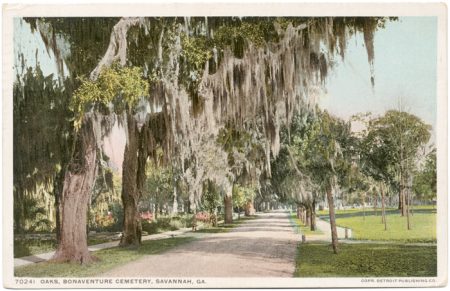
In 1869, twenty-nine-year-old John Muir left his home in Indianapolis and began to walk south. With Florida as his goal, Muir botanized his way through Kentucky, Tennessee, North Carolina, and Georgia, before stopping in Savannah. There, he ran out of money and had to spend almost a week “camping among the tombs” in Bonaventure Cemetery, »

 Essay
Essay