How a Fish Came to Represent the Coushatta Tribe of Louisiana
by Denise E. Bates
The garfish is a “prehistoric hang-over,” a living fossil that has inhabited southern waterways for millennia. Archeologists have found gar fossils, up to 9, 000 years old, from sites throughout the Southeast and have identified five different species that range in size from the smaller Florida gar, measuring approximately two feet long, to the alligator »
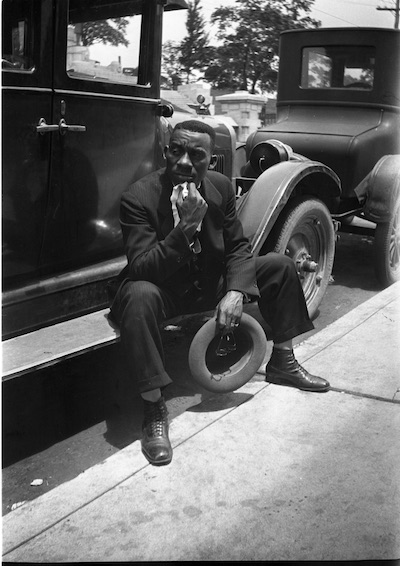
Automobiles in the Photographs of Reverend L. O. Taylor
by Emily Ridder-Beardsley
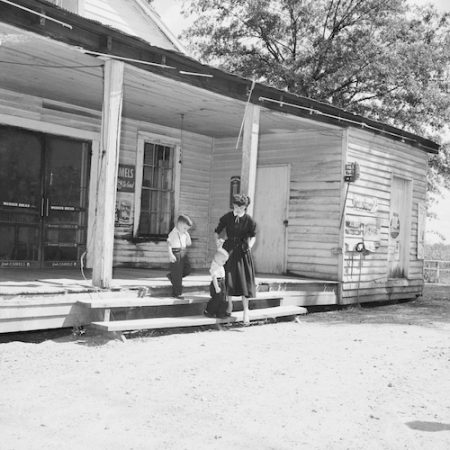
In one of his most compelling and enigmatic photographs, Reverend Lonzie Odie Taylor (1899–1977) sits on the running board of his car, fist under his chin. A Baptist minister and self-taught African American photographer, Taylor’s photographs—including his self-portraits—reflect desires and aspirations for material success in a rapidly modernizing South, including for cars. In offering mobility, »
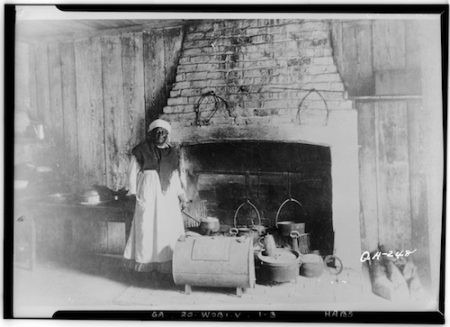
Last year, I bit the bullet, so to speak, and bought two Le Creuset pots that the upscale neighborhood chain calls “Dutch ovens.” After more than thirty years of use by me and at least that many by my Aunt Exa before that, my WearEver aluminum set had become pitted and just about worn out, »
Jim Shaffer’s shop is dusty and smells like a horse stable—a comforting olfactory association that I suddenly realize has less to do with horses than with the rolled and bundled straw I see stacked high along the walls. Though the pole barn that houses Shaffer’s Charleston Broom and Mop Company is just a few miles »
Chris Luther's Bridge Bowl and the Seagrove Tradition
by Trista Reis Porter
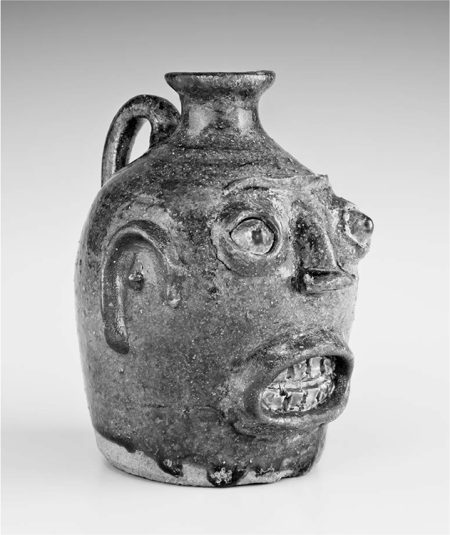
Just as the most iconic or familiar of things have the capacity to complicate and contradict what we know of southern life, unpredictable things can exemplify both paradoxical and iconic realities. This is the story of Chris Luther’s Bridge Bowl, an unexpected southern thing, both a container and a bridge itself. Made in Seagrove, North »
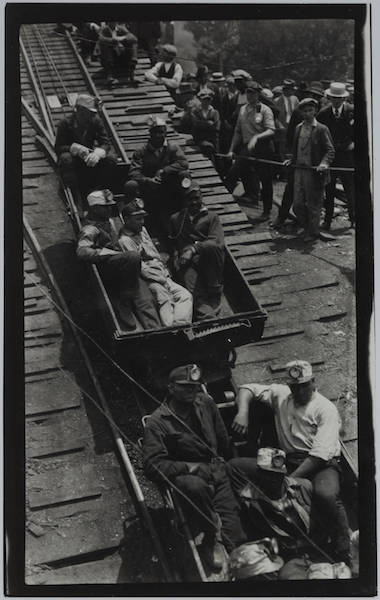
When Sam Hall arrived for his morning shift at the Coal Glen coal mine on the morning of May 26, 1925, it was just another day on the job. He had been employed for some months as an underground miner, laboring thousands of feet from the sunlight every day, extracting the Deep River’s “black diamonds” »
The ruins of Bryant’s Grocery & Meat Market and the beautifully restored Ben Roy’s Service Station stand sixty-seven feet apart from each other on the southern edge of Money, Mississippi, the small hamlet visited by Emmett Till in August 1955. Both stores are now owned by a trio of siblings with a personal investment in »
This is the story of two silver bowls whose journeys since the decade of the American Civil War make interesting narratives in themselves because they follow closely what the late French historian Marc Bloch called “the vicissitudes of life.” The tale is one of return, and of loss averted, reassuring to white southerners, Christians and »
The headstone marking the grave of Philip N. J. Wythe now lies flat on its back, face to the sun, partially hidden among the tall grasses at the Barton Heights Cemeteries in Richmond, Virginia. The marker’s form is deceptively simple. Made of coarsegrained sandstone, it features no pictorial symbols, no death’s head or cherub or »
Oranges and the Politics of Reconstruction in Harriet Beecher Stowe's Florida
by Shana Klein
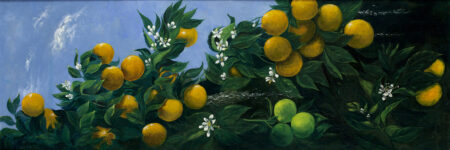
In the years following the Civil War, famed author and abolitionist Harriet Beecher Stowe painted a number of canvases of Florida oranges. One in particular resembles the view from Stowe’s window, displaying a cluster of fruit cascading down a leafy tree. Stowe completed this painting after 1867, when she purchased an orange grove in Mandarin, »
Manifest is an ongoing project, a portfolio of nearly one hundred photographs of African American material culture held in public and private collections throughout the United States. These repositories have accumulated diaries, receipts for the purchase of humans, hair, a drum, a door, photographs, figurines, and other artifacts—some with great historical significance, some the commonplace, »
Material culture is best understood as the history and philosophy of objects. It proceeds from the idea that objects, tangible and imagined, locate the entirety of human experience and understanding. We are simply creatures that know and make sense of the world and our places within it through things. Southern things superintend the vast and »

 Essay
Essay