1. Abiding Metaphors When I was three years old, I nearly drowned in a hotel pool in Mexico. My earliest memory is of what seemed a long moment, as if I were suspended there, looking up through a ceiling of water, the high sun barely visible overhead. I do not recall being afraid as I »
“The documentary artist attempts, however imperfectly, to do something about what they witness, how they feel, what they are compelled to say.” For many years I’ve forbidden students in my photography courses from coming to class and talking about an image they saw but didn’t take. In a class built around the making of pictures, »
“People want to study [the South’s] differences and continuities, its joys, tragedies, and outrages, to affirm the significance of place in a world of displacement.” This issue carries Southern Cultures through its twenty-fifth year and past our four anniversary issues: Backward/Forward, Inside/Outside, Left/Right, and Here/Away. We hope our readers have enjoyed these special numbers as »
“the air smells each day of some newness” For scant weeks in spring when the ground has had time to get warmer,and all the white flowers whose forms are so hard to imagine are coming to bloom, and the air smells each day of some newness,a sweetness whose name, like the scent, flags the tip »
This interview was excerpted from “Speaking of Feminism: Today’s Activists on the Past, Present, and Future of the U.S. Women’s Movement” (UNC Press, 2019). Andrea Pino and Annie Clark both attended the University of North Carolina at Chapel Hill, a prestigious public university with a beautiful campus of tree-lined quads and rhododendrons that burst into »
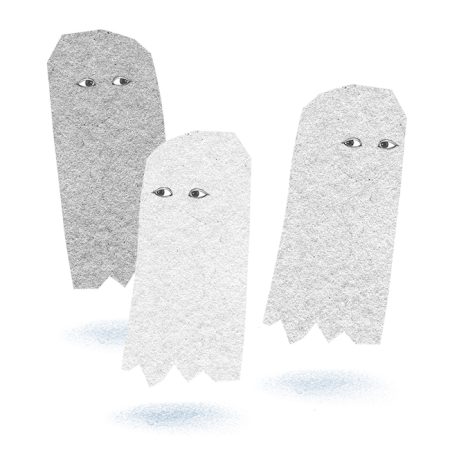
1. When I was five and my brother Jason was three, we lived in an old white farmhouse near the James River in Varina, Virginia. I was too young to believe in the idea of ghosts; otherwise, I’m sure I would have been convinced I was seeing them in every dusk-dim corner of the property—by »
“I love when I hear the sound of resistance, how the drum informs how people navigate space. The body reveals what’s happening in society.” Home. That was what I felt when I first met Millicent Johnnie almost twenty years ago. We laughed too loudly to care, talked about food, and shared memories from our Louisiana »
Favorite stories from the year. Clickety-clack. These are the stories our online readers turned to again and again in 2019. Not all of them were originally published this year, but new and old, they continue to resonate. They are poems and stories about finding a voice, as in “The Rime of Nina Simone,” Tiana Clark’s »
Endearment Laud a bad guy, dub a gal ugly– a bad day, glub by glub. Lay by a glad day— a dab, a daub, a gaudy bud. Land ably, ladybug. Endearment Better nab a tea urn, a batter beater, a bun tub, a neater tenet. Beat a taunt, rebut a brute. An upbeat nature, an utter ebb— Tune, retune, bee tureen. Turn true, tuna beret, benter tuba, butter bean. Endearment Lover, let our love rule »
“The sky had lightened. It was then that I realized that not only did I not have any idea where I was, but that neither did anyone else. Luis was not the least bit concerned.” I’ve never wanted to get married, but if I ever did it should probably be to Luis. I can’t even »
Dishing the African Diaspora in Brazil and the United States
by Olivia Ware Terenzio
“As a national dish, the melting pot narrative of feijoada bolsters the image of Brazil as a racial democracy.” At a Brazilian restaurant in Astoria, Queens, a steam table simmered with collard greens, stewed okra, cornbread, and a meat-specked stew. “The seats were packed with Brazilians speaking Portuguese,” Francis Lam wrote in the New York »
The United Farm Workers in Florida Citrus, 1972–1977
by Terrell Orr
“If labor organizers had learned anything from decades of small victories and stubborn failures in the US South, it was that interracial unions were hard work.” “I have your letter of June 1 [1974] and suggest that if you really want to know what is involved in organizing a Union, you should put some time »

 Memoir