This article has been condensed from a longer essay that first appeared in the Winter 2018 Issue. Access the entire essay via Project Muse (link below). It was W. C. Handy, as much as anybody, who was responsible for gifting us with the mythology of Mississippi as ground zero for the blues. Virtually every blues »
The following works were included in the exhibition People Get Ready: Southern Lens at the Nasher Museum of Art at Duke University. The images coalesce around an untitled photograph from William Eggleston’s series The Democratic Forest. This photograph captures Eggleston’s “democratic” perspective that engaging imagery could be found in any subject at nearly every turn »
How the Mardi Gras King Cake Came to Represent the Crescent City
by Anthony J. Stanonis,
Rachel Wallace
In November 2016, the New Orleans Zephyrs announced a name change after fans of the minor league baseball team submitted over three thousand suggestions to a rebranding contest. “Our goal was to give the baseball fans of New Orleans a team and identity they can call their own,” said Zephyrs President Lou Schwechheimer. “New Orleans »
“All the South’s cultural strands have continuity with whatever came before, and all of them have changed to meet new conditions. That’s how we can recognize something called the South from one generation to another.” Culture is a creative process, but that’s not always how we think about it. We tend to see culture as »
In their introduction to the inaugural issue of Southern Cultures, editors Harry Watson and John Shelton Reed noted that they’d given the journal a plural title for a reason: there are multiple Souths, many southern traditions and cultures, and lots of ways to be southern. On the eve of our 25th anniversary, it is fitting »
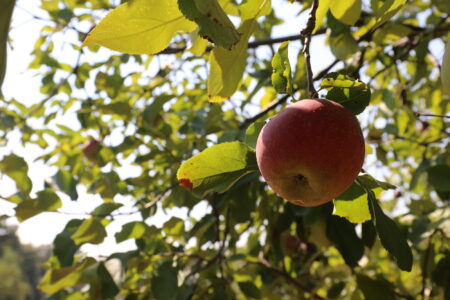
A basket of Whippoorwill Beans sits on Lee Calhoun’s Chatham County North Carolina kitchen counter alongside the last red peppers from his backyard garden. More than forty years ago, that same garden inspired Lee and his wife Edith to plant apple trees and begin a journey into an unexplored corner of the South’s agricultural history. »
On August 14, 1970, Richard Nixon treated New Orleans, a city keen on parades, to a campaign-style motorcade. With Nixon standing and waving through the sunroof, his limousine moved slowly down wide Canal Street, then through narrow Chartres Street. Thousands of people lined the sidewalks to cheer and be near the President of the United »
Save the Date: Tish Hinojosa will join us the Nasher Museum of Art on November 1st to launch the Music & Protest Issue. More details below. San Antonio native Tish Hinojosa recently spoke with Brendan Greaves, guest editor of the Music & Protest Issue, about her long career as a writer and performer blending border, »
Argument How a Slave Ship was driven by capitalism and racism inside the triangle of the transatlantic slave trade; and of the strange things that befell; and in what manner Nina Simone came back from the dead to her own Country to stop a graduate student on the way to workshop. * * * I »
Latinx Musicians and the Politics of Music in Charlotte
by Samuel K. Byrd
“‘We rock whatever hats we want.’” In the past decade, Charlotte’s Latinx rock musicians have moved from a politics of acknowledgement to a politics of engagement with the larger music scene and the city itself. A recent article about Latinx musicians on Charlotte’s Spanish-language news website Hola Noticias noted, “It’s been almost a decade since »
“Fifty air horns could help change the course of an election.” The first time we set off the air horns, several of us got frostbite. We didn’t expect it, because we were standing outside of the North Carolina Governor’s Mansion in short sleeves, already contending with the sticky warmth of springtime. Giddy and naive, we »
“I’m in my fifty-second year as an organizer—civil rights, environment, labor, community. You know, if it moves, I try to organize it.” I’m walking down the hall in the Library of Congress, wondering what I’m going to do, and I see a sign that says, “Archive of Folk Music.” I went in the really raggedy-ass »

 Music
Music