The Soundscape of Barbara Kopple's Harlan County, U.S.A.
by Grace Hale
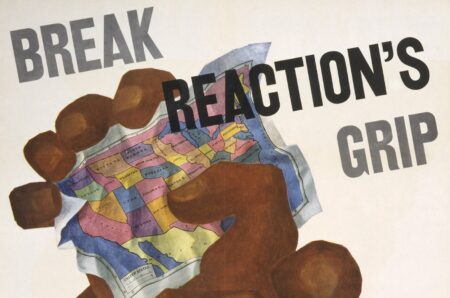
The most shocking moment in Harlan County, U.S.A. (1976) looks at first like an abstract painting. An organic shape, small and shiny and pinkish white, sits on a dark, rough ground. Even after an enormous disembodied finger pokes into the frame, the visual alone remains indecipherable. Previous scenes have shown striking miner Lawrence Jones lying »
On August 26, 1967, the Lads of Liverpool (a.k.a. the Beatles) yielded the no. 1 spot on Billboard’s pop chart to an unknown musician. Mississippian Bobbie Gentry’s iconic song, “Ode to Billie Joe,” remained in that space for four weeks. During that time, her audience latched onto what seemed to be a mystery in the »
For the 10th anniversary of the BP Oil Spill and the 50th anniversary of Earth Day, we share Andy Horowitz’s 2014 article, which includes oral histories with those directly impacted by the environmental disaster around Empire, Louisiana. As resident Karen Hopkins told Horowitz in an interview, “Protect what you have while you have it and »
Rural Comedy, Public Persona, and the Wavering Line Between Fiction and Reality
by Sara K. Eskridge
“‘A mother and a little boy were walking along, and I could tell the minute the recognition hit the little boy,’ Nabors told the LA Times. ‘As he walked by holding his mother’s hand, he said in a real loud voice, ‘Look, Mother. There goes an old Gomer Pyle!’” Walking through Chicago’s O’Hare airport, Jim »
While researching his 1885 biography of Edgar Allan Poe for Houghton Mifflin’s American Men of Letters series, George E. Woodberry discovered that Poe had enlisted in the U.S. Army in 1827 under the name of Edgar Perry. As is now well known, Poe was shipped to Sullivan’s Island, South Carolina, a barrier island on Charleston »
“America is Mississippi,” Malcolm X asserted in 1964, as he appeared in Harlem alongside Fannie Lou Hamer. “There’s no such thing as the South—it’s America.” Over the summer and fall of 2022, as this issue of Southern Cultures took shape, Mississippi produced an extraordinary archive of moral manifestos that echoed this conflation of the state »
Opryland U.S.A. and the Importance of Home in Country Music
by Jeremy Hill
“Nixon’s visit (only five months before his resignation) was seen by national journalists and politicos to be a trip to one of the few places where he would still receive a warm reception, and it was quite warm indeed. Nixon took the stage, played two songs on the piano, and bantered with Roy Acuff.” As »
It may seem impossible, given climate change and ISIS, mass shootings and growing inequality and disregard for Black life, sexual assault and Russian hacking and the opioid epidemic, to worry about any other single thing, but history too is in trouble. I do not mean history as content. Beloved television shows and films take place »
In the United States, why is wealth—especially financial wealth—held by white households so disproportionately and, in particular, by the most affluent ones? Racial wealth inequality is no accident of history. Rather, it is the intended result of the southern Democrats in Congress who controlled federal tax policy throughout most of the twentieth century. Beginning in »

 Film
Film