Faith is often least understood when our footing is firm and most clearly revealed when that footing gives way beneath us. It does not spare us the furnace, nor prevent the fiery arrows from being loosed. Rather, it offers the quiet assurance that when our own strength fails, we need not stand alone. The language »
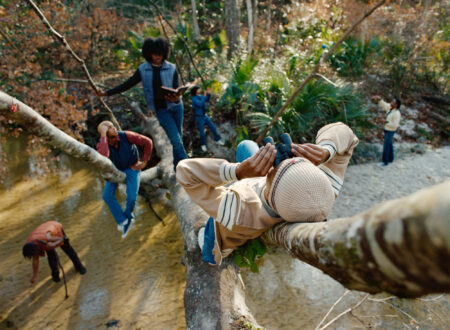
The Religion issue features six photographs from artists that offer a “Snapshot” look at their experience of religion in the South. With gratitude to photographer Emily Rena Williams, who helped curate this special section. The Water Bring We, The Water Wanna Take We Back Kennedi Carter | Gullah Geechee Coordidor The culture of the Gullah »
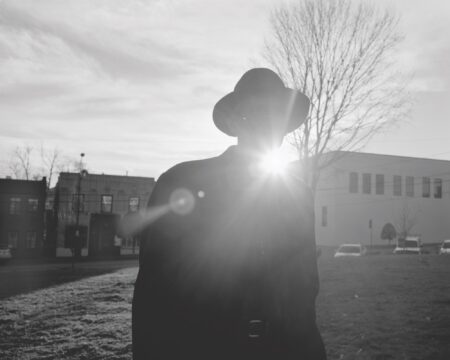
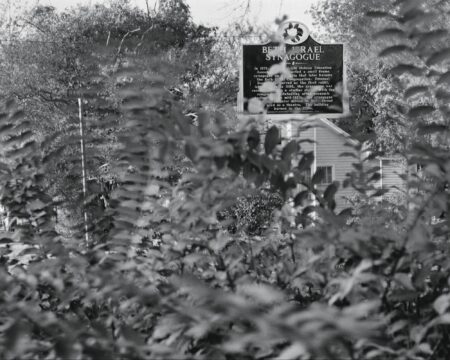
שיר אינסופי / Infinite Poem is an exploration of Jewish placemaking, both literal and metaphorical, in the Deep South. This work seeks to understand how Jewish communities in rural areas and small towns across Texas, Louisiana, Mississippi, Alabama, and Georgia have preserved their traditions while forging a unique identity in places that are often perceived »
“The Welty House speaks to the author’s love of travel, art, music, and the centrality of family to her life. But it is, above all, a home designed for work, which, in Welty’s case, meant reading and writing.” Twenty-five years after the author’s death, Eudora Welty’s home phone number remains the same as it ever »
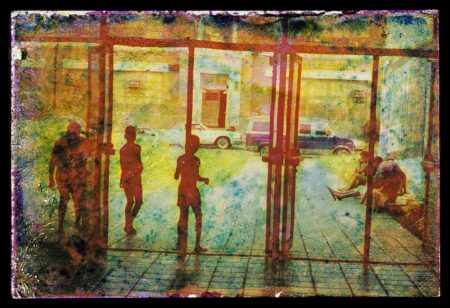
For the past five years, Florida has been my studio and my muse. It is something I’ve been circling, leaving, returning to, and trying to understand. I moved here from Canada when I was three, and I grew up with that strange double feeling. I was an insider because I was raised in the Sunshine »
Our work centers on everyday people whose lives are rooted in the soil and woven into the fabric of American society. We are drawn to photography for its power to convey stories—how a single image can speak volumes. Through our lens, we spotlight the builders, planters, caretakers, and laborers of the Deep South—those who nurture »
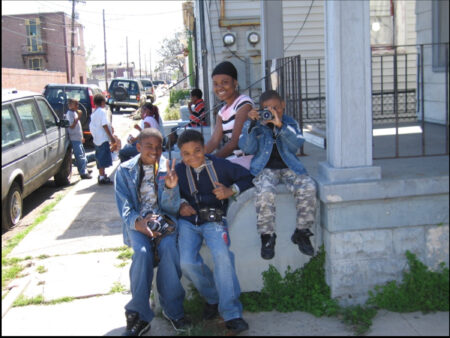
I don’t remember much of how the actual city of New Orleans looked when I was a child, especially my surroundings before Hurricane Katrina. Growing up, my lens of the city was my family’s home in the Ninth Ward. Sometimes it felt like my siblings and I were in our own bubble. We usually just »
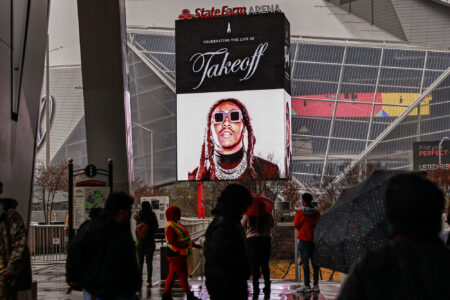
“Southern hip-hop has always straddled the line between the struggle and the party, and the culture takes the same approach to how it mourns as a collective.” If I hadn’t known better, I would have assumed that the crowd of Black people walking toward State Farm Arena on November 11, 2022, were headed to a »
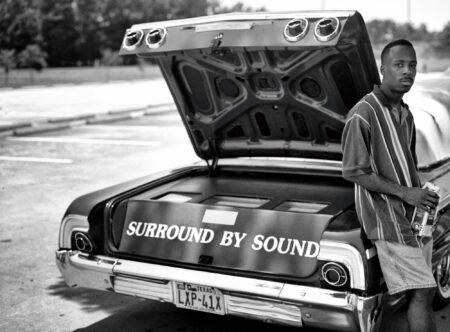
“I didn’t fully realize that I was creating a visual archive of a time when hip-hop was deeply rooted in localized lived experiences.” I began my career in photography in Houston, a city where hip-hop was steadily emerging onto the national stage in the 1990s. What started as an underground movement gradually gained momentum, and »
We came together on Sapelo Island through a vision of how heritage agriculture could help try to save a culture; we came together because Cornelia Walker Bailey had this vision, and this vision required us to work together. We started this work from the conviction that geography, culture, and history are always dyed, stitched, and »
Born and raised in the American South by a white Northern family, I have felt my experiences and identity straddle a line between the two, even while identifying with both. Growing up, my father took the initiative to teach and cultivate a deep appreciation of history and culture, taking the family to the many historical »
“What does a liberated life mean for queer southerners and for the folks around us? When will home accept us?” As a child in Birmingham, I saw girls visit my masculine-presenting neighbor at night. They talked through the screen at her bedroom window. I wondered why I’d never see them enter the house, and it »

 Art
Art