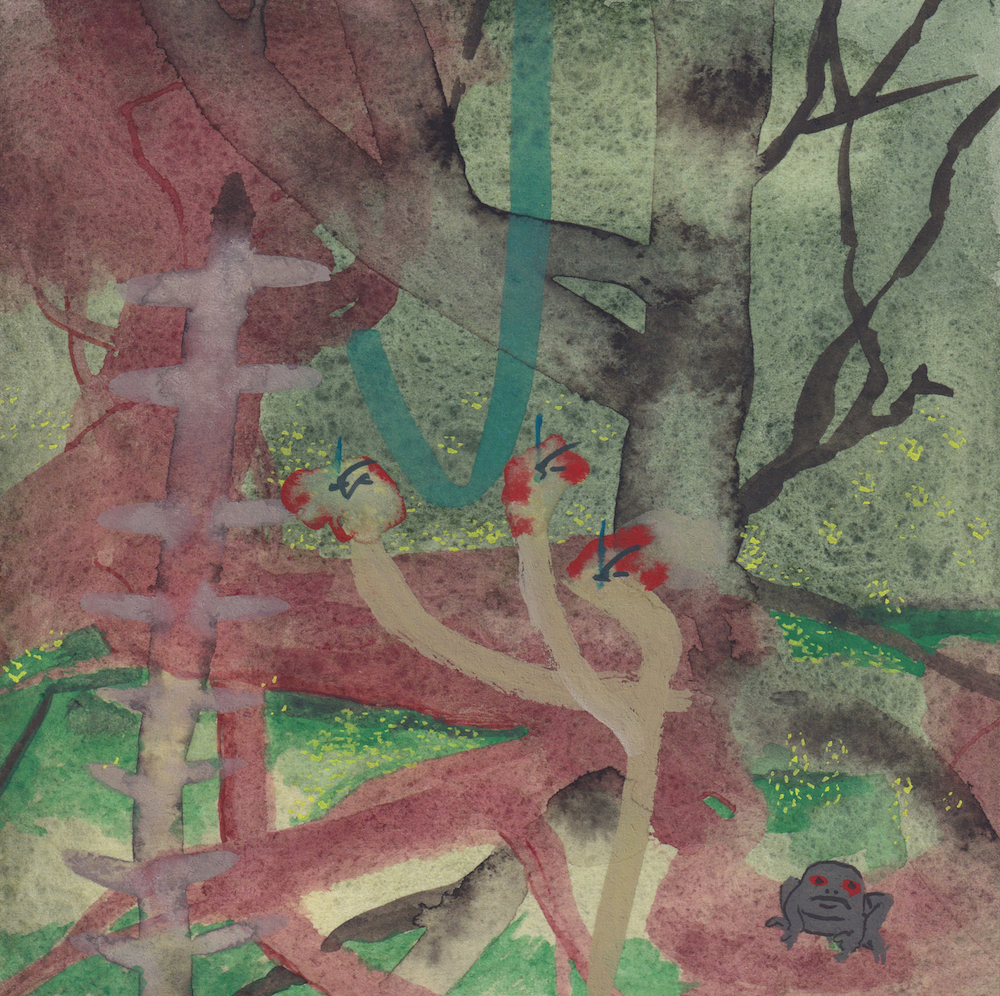
The art works represented here are housed in the Souls Grown Deep Foundation. William Arnett, the Foundation’s founder, assembled the collection over a thirty-year period, during which he travelled throughout the South and interviewed the artists. Arnett selected the artworks illustrated here, offering a commentary on each one in a recorded conversation in 2013. In »
“At every turn in this country, there was a branch, a slough, a poquoson, a swamp, and most of us sensed that we did not simply live near swamp—we belonged to it.” Gaither’s Lagoon, a small, dark backwater off the Pasquotank River in northeastern North Carolina, was less than two blocks from my childhood home »
“[T]his issue is about southern water, the vital fluid that shapes its land, contours, and boundaries, brings it life, and makes it livable. An early traveler to Carolina called it a “watry Country,” and so it remains, its liquid and solid selves each depending on the other and each indispensable in giving place its character.” »
For the 10th anniversary of the BP Oil Spill and the 50th anniversary of Earth Day, we share Andy Horowitz’s 2014 article, which includes oral histories with those directly impacted by the environmental disaster around Empire, Louisiana. As resident Karen Hopkins told Horowitz in an interview, “Protect what you have while you have it and »
Coastal Development & the Making of the Modern South
by Andrew W. Kahrl
“Call this a first draft of tomorrow’s history of today’s South—one that places the coast at the center of the story and seeks to understand how beaches came to reflect and influence broader changes in the region’s cultures and political economy.” “And everyone that heareth these sayings of mine, and doeth them not, shall be »
“my father, as yours, deep in the pit, my mother silent as plums . . . “ (as Ezra Pound’s adaptation, from the Chinese,of Li Po’s “The River-Merchant’s Wife, A Letter”)“Southern women have alabaster skin.” —Li Po We were from the same town, Cowen,along the Gauley, WebsterCounty—church, twice of Sunday,Wednesday evening prayer meeting.
“When real representational samples of African Americans and Latinos are included—and the default assumption of ‘southern’ as white is challenged—there are very few differences of note between the South and the rest of America.” In 2001 the talented up-and-coming rock band Drive-By Truckers released Southern Rock Opera, a critically acclaimed album that was produced only »
“‘The white testimony is a blank to me. I don’t think it meant anything. I don’t think it had any impact. As soon as Fannie Lou Hamer started, it was all forgotten.’” I first met Former Vice President Walter Mondale on October 14, 2010, at the Westminster Town Hall Forum in Minneapolis, Minnesota. He delivered »
He who lives by the song shall die by the road. —Roger Miller (1) Even before he became the “King of the Road,” Roger Miller reigned as the undisputed king of the dashboard poets. By his own recollection, he composed his first solo hit, “You Don’t Want My Love,” on the road from Fort Worth »
“These wartime memorials represent the earliest efforts to [illuminate] the sentiments of soldiers who memorialized their very recently fallen comrades and the heroic events of the war on the very ground where the historic actions occurred.” The New York Times was wrong in more than one respect when it heralded the dedication of two monuments »
Rural Comedy, Public Persona, and the Wavering Line Between Fiction and Reality
by Sara K. Eskridge
“‘A mother and a little boy were walking along, and I could tell the minute the recognition hit the little boy,’ Nabors told the LA Times. ‘As he walked by holding his mother’s hand, he said in a real loud voice, ‘Look, Mother. There goes an old Gomer Pyle!’” Walking through Chicago’s O’Hare airport, Jim »
“A founding family? Check. A harmless eccentric? Check. A local folktale? Yes, see ‘The Legend of Bocephus’ explained on Lake Sumter’s boardwalk.” The Villages, a planned retirement community, lies about an hour’s drive northwest of Orlando in the lake-studded landscape of central Florida. Imagine one of its community members—a Villager—enjoying a stroll on a warm »