by Kristofer Graham,
Jessica Peacock,
Christina Spears,
Keisha Worthey
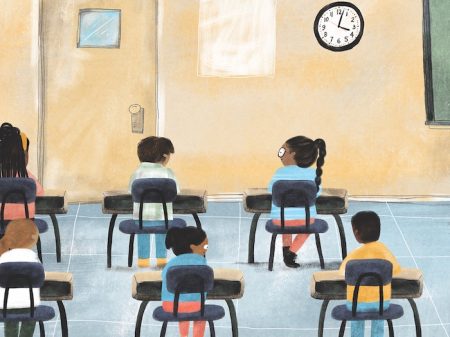
Silence is both a noun and a verb—defined as the absence of sound and the prohibition of speech, respectively. Silence is a gift and a curse. It is a tool for liberation and a tool of oppression. Silence is complex; it can communicate both rest and labor, compliance and resilience, humility and pride. Silence is »
Like many white Xennials, I learned about Gram Parsons late at night in a college dorm room, stoned and listening to somebody’s hippie parents’ records. Parsons played in the Byrds and taught the Rolling Stones about country music. He killed his pain with drugs and Jesus and wore bright Nudie suits sequined with tributes to »
The Sweet Subversive Sounds of HBCU Marching Bands
by Antron D. Mahoney
“The music is a gift; it makes room for us.” As a young Black queer male growing up in South Carolina, I was fascinated by marching bands at historically Black colleges and universities (HBCUs). Involved in music programs at an early age, many of my music directors were HBCU alumni—South Carolina State, Savannah State, Fayetteville »
I. I grew up between Minneapolis and a small farm just outside the city on the occupied Indigenous homelands of the Dakota people in the Twin Cities and also of the Anishinaabe, or Ojibwe people, to the north. As an adult who has moved away from and returned to Minneapolis multiple times over the past »
Marching Bands and Black Masculinity in New Orleans
by Matt Sakakeeny
Summer is the season when the new recruits arrive. They are kids, eight or nine years old, and most have never touched an instrument. On June 20, 2019, I crowd into an air-conditioned classroom with about thirty of them, sitting on industrial carpet, facing forward. LeBron Joseph stands in front of the whiteboard writing out »
Windy Gap Road twists up Little Brushy Mountain, dense forest on all sides until you crest the top and feel like you’re driving right into the sky. Follow the road a short way until it crosses Cling Johnson Road, named for my great-grandfather, and at the very end, you’ll hit the Johnson homestead: a medium-sized »
Soundscapes of Slavery at the University of Mississippi
by Kristin Gee Hickman
“Mundane practices are what form habits, stabilize norms, and reproduce culture. This begs the question: What culture am I reproducing by repeating the words Ole Miss?” As someone not originally from the South, I find it difficult to pronounce the words “Ole Miss.” Saying it feels like playing dress-up because it forces me, even if »
One thing I did not have on my 2020 Bingo Card was being sonically minstrelized by a white man. A friend asked me to write a short reflection about OutKast and their connection to Afrofuturism for a special issue of a fiction magazine featuring writers of color. My piece talked about the Kast’s use of »
“So much of what is calling to us in the South remains yet unheard.” A Southern Cultures issue on the Sonic South is especially welcome in this moment, so necessary as we continue to listen for what is hidden within the culture and history of the region. And while we listen for these rhythms, the muffled »
As part of Reckoning and Resilience: North Carolina Art Now, the Nasher Museum of Art recorded a conversation between artist Clarence Heyward, whose paintings are part of the show, and Tatiana McInnis, who teaches American Studies and Humanities at the North Carolina School of Science and Math in Durham, NC. This conversation has been edited and condensed »
In advance of two special issues, Regina N. Bradley and Charles Hughes caught up to discuss the hip-hop South and the many ways that their varied interests intersect—from hip-hop histories and futures to riffing and representation. Those issues are now available: The Sonic South (Spring 2022), guest edited by Bradley, and Disability (Spring 2023), guest »
My first exposure to the concept of love was memorizing 1 Corinthians 13 in Sunday school. Even as a little girl, the idea of a love that was patient, kind, selfless, and unconditional sounded like something I wanted to be a part of. Later on, Disney movies and fairy tales filled my tiny head with »

 Essay
Essay