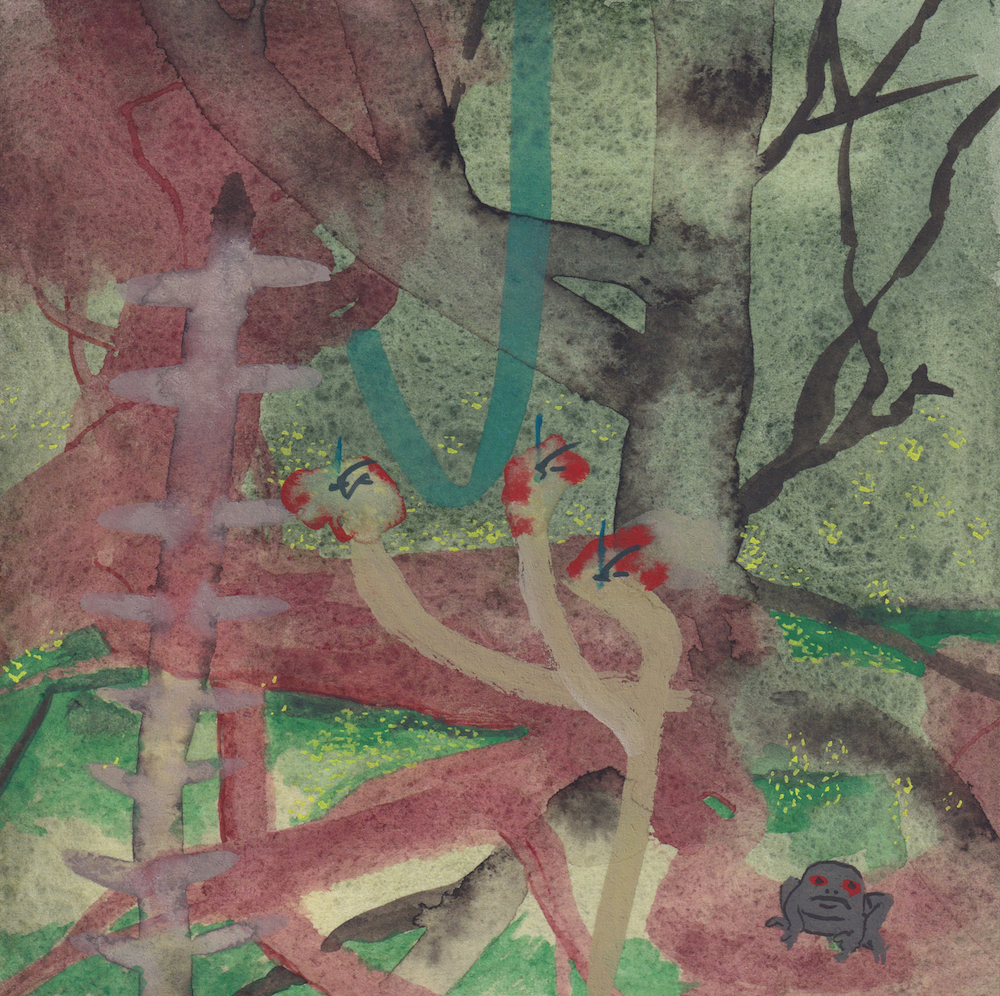
I. The K Reactor at the Savannah River Site (SRS) sits on the eastern bank of the Savannah River, facing west over six miles of woods and swampland, which remain uninhabitable for humans. The reactor is now a tomb for thirteen tons of plutonium, the highly radioactive fuel—and deadliest substance known to us—that powers hydrogen »
Florida at the American Museum of Natural History One Hundred Years Ago
by Henry Knight Lozano
“Frozen in space and time, its artificial landscape literally preserved Florida as a reptilian state on the brink of modernity.” In the summer of 1918, just over a year after the United States entered the First World War, a new exhibit opened at the American Museum of Natural History (AMNH) in New York City. Thousands »
Among the expected turkey legs, fireworks, cotton candy, and Ferris wheels, Dorton Arena presents a familiar yet extraordinary sight at the North Carolina State Fairgrounds. Defined by its double hyperbolic arches, the building looks like an alien spaceship and brings to mind similarly shaped structures in sci-fi flicks or at equally iconic contemporary sites, such »
I have always been drawn to those places that mark the landscape, serve as our monuments of remembrance and guide our way and knowledge of the local, seeming to last in our consciousness even when they have nearly disappeared on a return to their previous unbuilt state. “It’s over there where Cedric’s house used to »
After the fire went out,we kept burning.I confused the embersin your hair for stardust,but who was I, then,to know the log was litfrom the inside,flush with its own grief?I’ve buried myselfin the compost heap. Before the flood swept the lemons away,there was a garden. How temperamentalthe tomatoes were to any change in the weather.We did »
On a winter afternoon in early 2020, SJ Seldin considers their Judaism. “I’ve heard the term ‘earth-a-dox’ thrown around before,” they tell me over the phone. We’re talking from opposite ends of North Carolina; me in Chapel Hill, and them in Fairview, where they tend land at Yesod Farm + Kitchen—a farm dedicated to “earth-based »
It’s been more than eighty years since Doughten Cramer was a student at Black Mountain College. The school is long closed, the landscape has certainly changed. And yet, every time I set foot on Black Mountain College’s former Lake Eden campus, I share that same feeling. I become sensitive to everything. But despite the visceral »
“When Trees Are Dying” is a photography project that explores human impacts on forests. Covering 31 percent of world’s land surface, forests are major carbon sinks and remain one of the most critical ecosystems to preserve. Key to biodiversity, forests are also crucial for water and oxygen supplies, food production, livelihoods, and mitigating the effects »
Circular breather, our dog can whine without ceasing, his tail thumping the wall beside the bed to call me up and out to the yard instead. In moonlight, the hydrangeas’ white blossoms are a zodiac of branch-bound constellations. Once, God called Abraham out from his tent to the open field to count the uncountable lights above, promising offspring bountiful as dust, »
“‘Rhythm is who we are—if we didn’t have that, how could we make it?’” The question is: How do I render sound visible? For me, the answer is ethnopoetics, a mode of presenting performance, ritual, and cultural expression through the tools of poetry. In its possibilities for mirroring moments, and reflecting the spaciousness and impact »
Art provides a powerful historical archive through which we can see our lost environmental past. In 1915, the artist Romare Bearden left the South at the age of four; decades later, he rendered evocative depictions of the southern natural world. His paintings and collages capture the lush bounty of city gardens and the women who »
When I was a kid, my watery sanctuary was a lake. On late afternoons when Georgia’s thick heat made it impossible to do anything else outside, my mom would tell my brother and me to “get ready.” While we put on our swimsuits, she’d pack a brown sack with Chips Ahoys, pork rinds, and paper »

 Essay
Essay