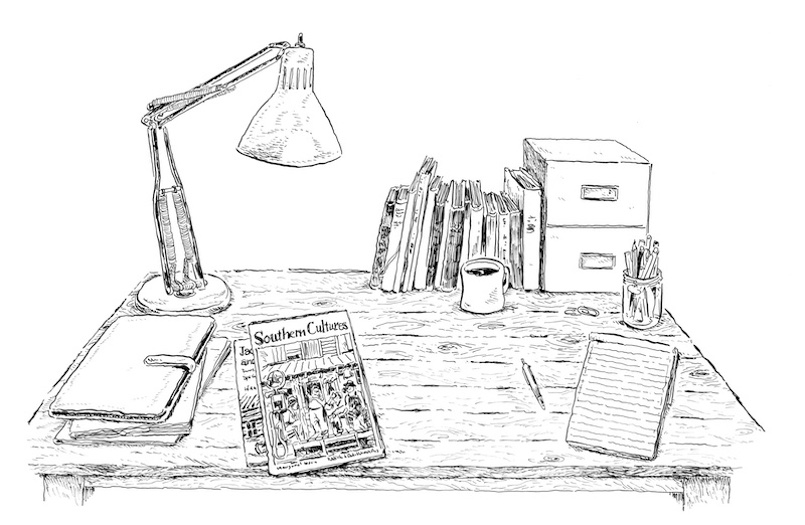
Lessons Learned from Studying the South at the University of Mississippi
by Charles Reagan Wilson
On the occasion of my retirement from the University of Mississippi in 2014, I knew I had to talk about the South, the topic I have spent my career studying, pondering, writing about, and teaching. The more I thought about what to present in a final, university-wide lecture, my personal journey seemed relevant, for I »
by Trevor Schoonmaker,
Stacy Lynn Waddell,
Jeff Whetstone
“Southern Accent: Seeking the American South in Contemporary Art” was co-curated by Trevor Schoonmaker (Nasher Museum of Art) and Miranda Lash (Speed Art Museum). Before the show opened in September 2017, we sat down with Schoonmaker and artists Stacy Lynn Waddell and Jeff Whetstone, both featured in the exhibition. “We have no idea what it »
Honoring William Christenberry (1936–2016) Bill Christenberry was like a spiritual brother who explored his homeland in Hale County, Alabama, with a keen eye. Each summer he returned to document and photograph these familiar worlds. With his meticulous eye, he showed the weight of time on this landscape, tracking change as paint faded and peeled on »
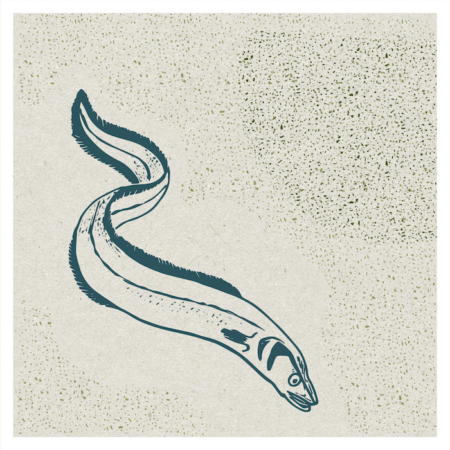
Part I Eels rolled in crushed black pepper and chopped parsley cook in the smoker. Four more culled from the twenty or more in my eel pots chill on ice awaiting the same culinary fate. It’s September and winter holidays start early around here, and smoked eel is a part of the celebration. I always »
Excerpts from Perrow’s essay in Southern Cultures, Vol. 19, No. 4: Winter 2013, appear below. Access the full essay via Project Muse or purchase the issue in our store. Black Mountain College, near Asheville, North Carolina, was an icon of progressive education during its short life, from 1933 to 1956. When I was there, from 1946 »
When my father was a boy during World War II, he says, he was at the movies with his father one evening. The newsreel had just finished and the first chords of the feature’s soundtrack had begun, when the usher came down the aisle, shining his flashlight and saying my grandfather’s name. They followed him »
Without ever stepping foot on southern soil, renowned literary translator Krastan Dyankov made southern writing—its language, narratives, and nuances—come alive in his native Bulgarian. “The translator—not only of fiction, but of any text—is the Pony Express for the culture,” Dyankov said. “A great responsibility and a true knowledge of the matter you work with is »
Southern Cultures is proud to announce Fred J. Porter as the inaugural recipient of the Druscilla French Prize in Undergraduate Creative Writing. The prize will be given annually to a distinguished graduate of the Creative Writing Program at the University of North Carolina at Chapel Hill. Charlie’s last day at work had gone like this: somebody, either out »
It starts with the lamp that lamped our night our dirt. Cause of this (wear-balded) red-mud ring going glow. The old ever-voice (with the tear through it) intonation, riveting. Souls and appetites (from holler, brink, and gully) lured and drawn. The story-man encircling us binding us by lard-torch and ditty. So. In the beginning. And »
Monique Truong’s Bitter in the Mouth and the Twenty-First-Century Southern Novel
by Justin Mellette
“‘My first memory was a taste. For most of my life I have carried this fact with me not as a mystery, which it still is, but as a secret.’” Monique Truong’s 2010 novel Bitter in the Mouth opens with narrator Linda Hammerick reminiscing about her close relationship with her great-uncle, before introducing us to »
“In the predominantly working-class and sometimes rural spaces where Powell’s straight and gay characters cavort together, shoot the shit, or knock each other to the ground, homophobia can exist alongside friendliness and hospitality toward gays, and anti-homophobia can reinforce patriarchy.” Padgett Powell has a habit of saying provocative things, and one such line that struck »
Contemporary Cultural Nakedness and the Rise of Grit Lit
by Zackary Vernon
“The Rough South offers either the illusion of being clothed culturally, if one identifies with the characters of this literature, or an escape to the ‘real South’ . . . if one believes that the working class retains an authenticity that has been largely flattened in the middle and upper classes.” The past three decades »