“Simmons, Aycock, and Daniels used their influence, oratorial skills, and the press to create a rape scare, demonize and humiliate black men and women, spread a violent white supremacist ideology, and reclaim the North Carolina Legislature for the Democratic Party.” In the 1890s, the economic fortunes of farmers were dashed when the cotton market collapsed. »
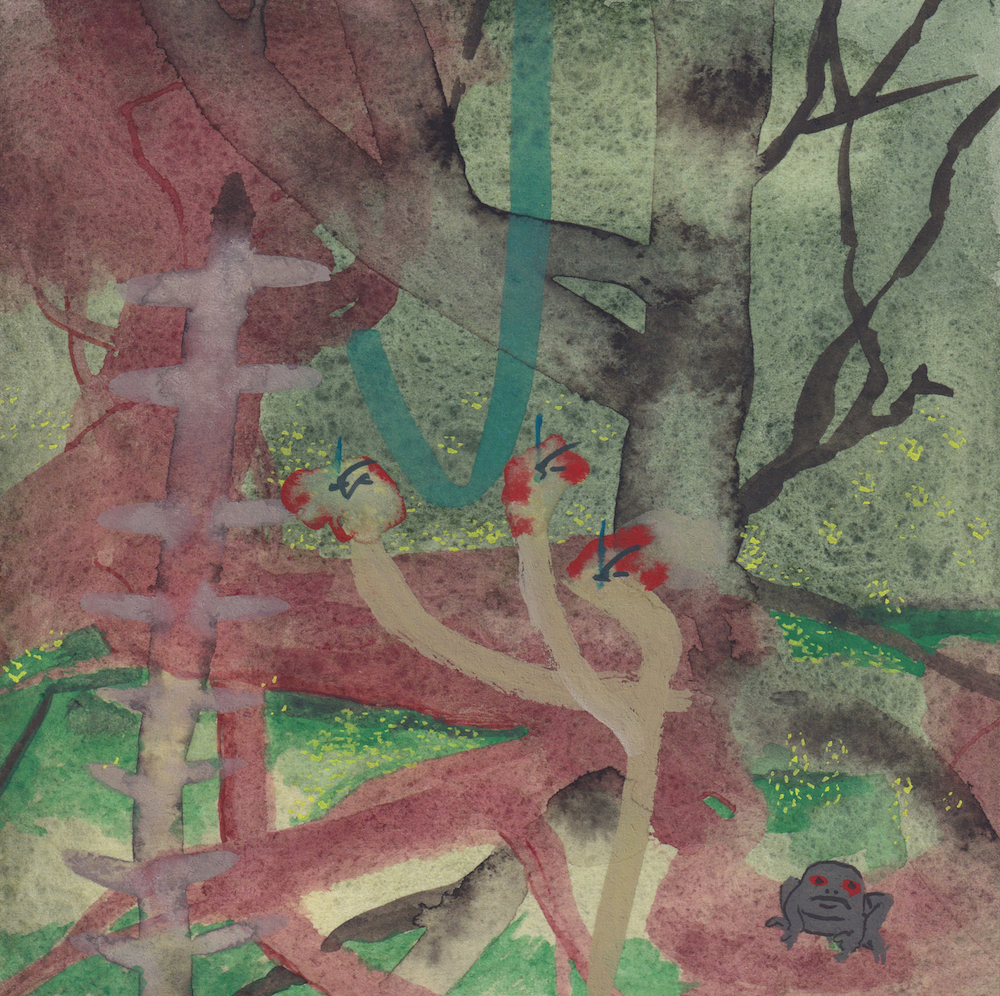
“I drilled until the book was lace.” The gaps between experience and history are filled with unauthorized cosmologies. Worldview. Origins of myth. While artifacts of war are found in pawnshops, artifacts of survival are found in cosmology. Through my work, I chart the southern imaginary—from the Culture Wars back to Reconstruction, from a Food Lion »
The art works represented here are housed in the Souls Grown Deep Foundation. William Arnett, the Foundation’s founder, assembled the collection over a thirty-year period, during which he travelled throughout the South and interviewed the artists. Arnett selected the artworks illustrated here, offering a commentary on each one in a recorded conversation in 2013. In »
“At every turn in this country, there was a branch, a slough, a poquoson, a swamp, and most of us sensed that we did not simply live near swamp—we belonged to it.” Gaither’s Lagoon, a small, dark backwater off the Pasquotank River in northeastern North Carolina, was less than two blocks from my childhood home »
“Pearl spiked her drink. And then I made a painting about it.” Pearl spiked her drink. And then I made a painting about it. I like to think of my paintings as portraits, each one a document of a specific moment in someone’s life. But the people are strangers, and their stories are told in »
“Birds flock, flutter and fly, strut, preen, and roost through the art of Thornton Dial.” Birds flock, flutter and fly, strut, preen, and roost through the art of Thornton Dial, citizens in a remarkable graphic menagerie that speak, sometimes forcefully, sometimes joyfully, to what he termed “hard truths.” Tigers, signifying the artist as well as »
Westview Press, 1997 In 1995 the highly publicized First International Conference on Elvis Presley sent a clear message: Elvis was entering the academy with all the eclectic fanfare that had made him King of Rock ‘n’ Roll. Though controversial, academic status for Elvis seemed appropriate, since his presence had long been felt everywhere else. But »
Corcoran Gallery of Art, 1998 The cultural life of Harlem in the 1920s and 1930s was largely the creation of southern expatriates. Think only of the writers Langston Hughes, Zora Neale Hurston, and James Weldon Johnson; the musicians Bessie Smith, Louis Armstrong, and Eubie Blake; and the painters William H. Johnson, Marvin Gray Johnson, and »
1996 Olympic Arts Festival In William Faulkner’s novel Absalom, Absalom! Shreve McCannon implored his southern-born roommate to “Tell about the South. What’s it like there. What do they do there. Why do they live there. Why do they live at all.”
Smithsonian Institution Press, 1996 Who is Louis Rémy Mignot? In 1983, when the Virginia Museum in Richmond launched the comprehensive exhibition “Painting in the South, 1564-1980,” this Charleston-born artist was not represented. The exhibition included Florida sunsets by Vermonter William Morris Hunt and by the Pennsylvania luminist Martin Johnson Heade, who took up residence at »
New Orleans Museum of Art, 1993 The exhibition catalog Passionate Visions of the American South embraces a diverse and engaging assemblage of contemporary plain artists. From 1993 to 1995 the exhibition traveled to New Orleans, Berkeley, San Diego, Washington, D.C., and finally to Raleigh; the accompanying catalog is a substantial volume. Although it relies too heavily on »
Morris Communications Corporation, 1992. 246 pp. Cloth, $39.95; paper, $24.95. Augusta, Georgia, is home now to not only the most venerable of southern institutions, the Masters Pro golf championship but also to the Morris Museum of Art, which is devoted solely to southern painting. Communications magnate and sixth generation Augustan William S. Morris III established »