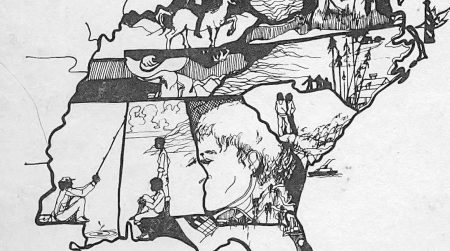
“. . . until his finger pads started bleeding again, fresh calluses splitting as he played . . .” Plunking the rusty washtub basswas simple, tautening or relaxing its ropeso that a few thumping notesrose or fell at the floor of a bluegrass tune.
“There are miracles in this world but they are working-class, Wednesday morning miracles . . .” There are miracles in this worldbut they are working-class, Wednesday morning miraclesthat go mostly unnoticed by the priests.
Now that the salt of their blood Stiffens the saltier oblivion of the sea . . . —Allen Tate We leave Gulfport at noon; gulls overheadtrailing the boat—streamers, noisy fanfare—all the way to Ship Island. What we seefirst is the fort, its roof of grass, a lee—half reminder of the men who served there—a weathered »
” . . . No, I regret nothing because what I’ve lived has led me here, to this room with its marvelous riches . . . “ I regret nothing.My cruelties, my betrayalsof others I once thoughtI loved. All the unlivedyears, the unwrittenpoems, the wasted nightsspent weeping and drinking.
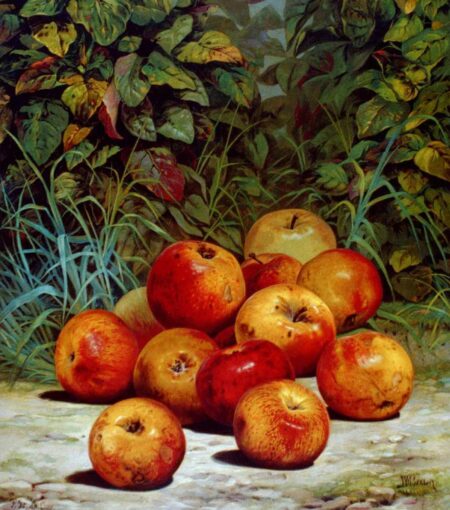
” . . . flavored of tin from the lip of the cup of a dented thermos passed between us—” Apple Slices —eaten rightoff the jackknife inmoons, half moons,quarter moons andcrescents— stillsummon commonsummer afternoonsI spent as my dad’sjobsite grunt, framingfuture neighbors’houses out of 2×4sand 4×6s, and ourbrief and silent »
Ethel Freeman’s body sat for days in her wheelchair outside the New Orleans Convention Center. Her son Herbert, who had assured his mother that help was on the way, was forced to leave her there once she died. Gon’ be obedient in this here chair,gon’ bide my time, fanning against this sun.I ask my boy, »
“my father, as yours, deep in the pit, my mother silent as plums . . . “ (as Ezra Pound’s adaptation, from the Chinese,of Li Po’s “The River-Merchant’s Wife, A Letter”)“Southern women have alabaster skin.” —Li Po We were from the same town, Cowen,along the Gauley, WebsterCounty—church, twice of Sunday,Wednesday evening prayer meeting.
“darkness lends its seasoningto every cast-iron skillet . . .” My mouth won’t ever forget her skill with a skillet,my father’s mother, cookingwith her mother’s skillet.
“Daddy wore a coat and tie when he wasn’t playing golf—even to fight gorillas . . .” Around ten, the phone rang. We were all in bed. I was two.“Joe,” he heard the voice slur, “There’s a fellow with a gorilla down here. Says he’ll play a hundred bucks to anybodywho goes five minutes with »
Lesbian Print Culture in North Carolina, 1976–1983
by Julie R. Enszer
“‘Running this old printing press / with a woman on my mind / it jammed up tight eight times today / and I think this might make nine.’” In the inaugural 1976 issue of the journal Sinister Wisdom, founders Harriet Desmoines and Catherine Nicholson wrote, “We’re lesbians living in the South. We’re white; sometimes unemployed, »
“‘Men say mill folks are rotten / an’ mean down to the core, / But if you seen your chillern starve, / wouldn’t you ask fer more?’” While doing research on textiles during the Great Depression, I found this poem about Ella May Wiggins on the March 8, 1932 editorial page of the Greensboro Daily »
“For fifty years I sweat my dues, / wept salt liquor from the blues. / This story I tell wherever I go.” I never had the chance to stay in school.My daddy said “work,” and his word was rule.This story I tell wherever I go.