Hear Camisha L. Jones read “What We Be” from the Disability issue (vol. 29, no. 1: Spring 2023). An Ekphrastic poem after Beyoncé’s Lemonade We the exhaleOur confidence We the pot of greensOur hands We the floorWe every grief We the waitOur mouths We the magnolia tree the submergea ripe orange the salt porkclean the »
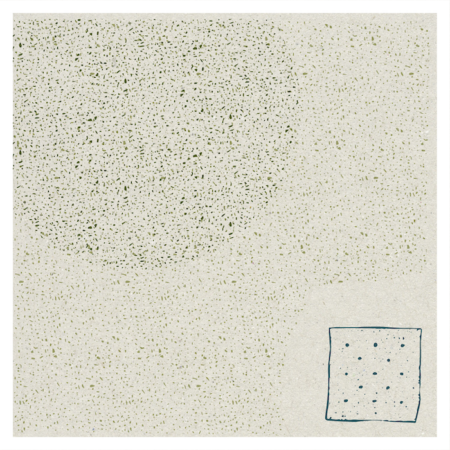
How well its square fit my palm, my mouth, a toasty wafer slipped onto the sick tongue or into chicken soup, each crisp saltine a tile pierced with 13 holes in rows of 3 and 2, its edges perforated like a postage stamp, one of a shifting stack sealed in wax paper whose »
there are different ways to sayscar tissue. pariah.there were plenty of us—I still feel sick when I comeeven when it’s my husband.I am called blank look. they beat us,& oftenin certain textbooksthey say the government wantedvirgins to stave off venereal disease.they gave me a modest sum.I walk with a limp.could be anyone—& I am as »
You grew from your granddaddy’s dirt and evergreen spaces. There are gorgeous collard colored-greens, ripeyellows turning to golden reds, hangingfrom brown and moss-smothered trunks, standing tallall over the land he left. A Black man, last name Jackson, quietly purchasedland from a white man and sold acres of unworkable plotsto your great-granddaddy. Your granddaddy, Silas, filled »
They’d long forgotten to dance—mis abuelos,rigid as the simple white wooden screen door that snappedopen and shut into grandma’s kitchen Apache and Mexicanthey’d both long forgotten to dance—long forgotten any songslong forgotten the fire On Christmas Evemy grandpa and uncles would build a bonfirefrom broken wooden pallets and jagged three-legged chairs or tables,they’d douse them »
I’ll eat when I’m hungry,…..I’ll drink when I’m dry;If the hard times don’t kill me,…..I’ll lay down and die. Those four forthright lines begin “Rye Whisky,” poem number 276 in The Oxford Book of Light Verse (1938), chosen and edited by W. H. Auden. But that can’t be how I first encountered them, on page »
In a dream, you could do that. Hug someone you haven’t seen in years without crying.You could feel like you still lived in your old bedroom. You could go back to before likenothing, like magic, like the reverse of water down the drain. I wish I could have said what I wanted to then, but »
In an interview with NPR, Brenda Graham recounts her experience after her brother was accused in the 1958 “Kissing Case” in Monroe, North Carolina. Yes; right there in the front yard where daddylonglegs skipped across blades of grass, dripping in white mob sweat from the night before; right there in the front yard whereChrist’s wooden frame was »
Nickole Brown is the author of Sister and Fanny Says. She lives in Asheville, North Carolina, where she volunteers at two different animal sanctuaries. To Those Who Were Our First Gods, a chapbook of poems about these animals, won the 2018 Rattle Prize, and her essay-in-poems, The Donkey Elegies, was published by Sibling Rivalry Press »
It is an honor and a pleasure to be welcoming remarkable poet and visionary Destiny Hemphill as Poetry Editor alongside me here at Southern Cultures. Too often poetry journals, or even the small space poetry takes up in larger magazines, become vacuums that amplify the taste of one person. We’ve worked hard to make sure »
said the rabbis, around the Torah. And this worldis lousy with them. More than we can counton our dog walk alone: chainlink and stone and white wooden pickets. Fences to keep people’s bad barking dogsin, to keep our bad barking dog out. His nostrils flaringwide as a twirled skirt as he reads the tales of »
After the fire went out,we kept burning.I confused the embersin your hair for stardust,but who was I, then,to know the log was litfrom the inside,flush with its own grief?I’ve buried myselfin the compost heap. Before the flood swept the lemons away,there was a garden. How temperamentalthe tomatoes were to any change in the weather.We did »

 Poetry