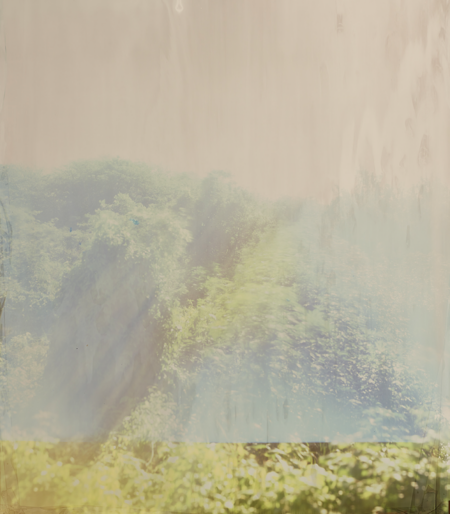
“These landscapes hold the remnants of five thousand distant voices.” If all photographs are abandonings, as the American critic Henry Allen once wrote, then how might we view photographs of lynching sites? Located for the most part in the geographic margins and the shadows of our collective memory, these landscapes hold the remnants of five »
“‘Delinquent’ girls like McNamar became the victim, the problem, the cause, and the evidence of other urban dilemmas within the reform rhetoric and agenda.” When sixteen-year-old Marie McNamar escaped the Virginia Home and Industrial School for Girls in May 1913, she intended to go home. She had gotten word that her father in West Virginia »
Representations of older transgender people are nearly absent from our culture and those that do exist are often one-dimensional. For more than five years, we traveled throughout the United States creating To Survive on This Shore: Photographs and Interviews with Transgender and Gender Nonconforming Older Adults, which culminated in a fine art exhibition and book »
At elegant gatherings and august meetings, I often scan the room and wonder aloud why I am, as people like myself are often given to ask, the Only Negro in the Room, or ONR, as Ta-Nehisi Coates and Natasha Trethewey have been known to note. Surely black intellectuals are central to these types of inquiries, »
“I just want to let you know,” the older white man told me at a late-summer fish fry, “that my family owned slaves, and those slaves were happy.” This was mid-September of 2014, my second year as a postdoctoral research fellow at the University of North Carolina at Chapel Hill. The event was held at »
“The South has much to teach about the dangers and opportunities of belonging and exclusion, of being inside and outside the American experience.” In which I out myself as a southern outsider/insider. Raised a Jewish southerner, I am married to an agnostic folklorist from Mississippi with whom I share progressive politics. My household supports small-scale »
Poems by Jonathan Farmer will appear in the Left/Right Issue (vol. 25, no. 3: Fall 2019). What signify a few lives lost in a century or two? The tree of liberty must be refreshedfrom time to time with the blood of patriots & tyrants. It is its natural manure.—Thomas Jefferson Some people have the idea »
An audio competition from the Southern Oral History Program. The Southern Oral History Program (SOHP), housed across the hall from us at the Center for the Study of the American South, recently invited producers to use interviews in its collections to create new and thought-provoking short-form audio documentaries, sound art, sonic experiments, and aural landscapes »
Drawn At dusk small brown batsfall from the eves of the porchhaving made a home for brownfur. A cloud of mosquitoesrises from the lake. With erraticwing strokes, bats sense their prey,I can only see or understandby what it is not, a small voice as guide.All these years I have resisteda home in the South. I »
Most photographs are born in a fraction of a second. They show a small piece of the visible world as seen from a particular vantage point at a particular moment in time. They reflect an instantaneous present sandwiched between a fixed past and an unknown future. Photographs draw from a world that already exists; they »
It can be an odd undertaking to explore the meaning and mission of an American public university through the lens of history. The concept of a “university of the people”—especially for a southern state university—must begin with a great and unyielding asterisk. The University of North Carolina at Chapel Hill was all male until 1897, »
Black Women, Midcentury Domesticity, and the Films of the Georgia Department of Public Health
by Lauren Pilcher
“If we refuse to overlook the . . . exploitation of black women to modernize midcentury public health, we may grasp something of what it means to imagine and create Souths that embrace difference.” In the early 1950s, the Georgia Department of Public Health (GDPH) sponsored two films documenting black women living and working in »

 Photo Essay